The Strawberry Statement (1970)

- Directed by
- Stuart Hagmann
- Genre
- drama film, comedy drama, romance film, coming-of-age film
- Country
- United States
- Runtime
- 1h 49m
- Rated
- 16
- Rating
- 5.9 of 10 from 42 voters
- Elsewhere
- IMDb
The catalogue in 3D
The film shelves have a room of their own that you can walk around in. The cat behind the counter is the AI Catbot, and they pick real films from the same catalogue when you tell them what you feel like watching. Nothing is for sale, here or in there. Go in from here and this film is already out on the counter, with more like it waiting on the shelf next to it.
How it feels
A lazy college student gets pulled into student protests at a San Francisco university in the 1960s. He becomes increasingly committed to the cause as tensions build over the school's segregated gymnasium.
nostalgicbittersweetenergeticunevendatedearnestmelancholicepisodic
What happens
The Strawberry Statement is a 1970 American comedy-drama directed by Stuart Hagmann, loosely based on the non-fiction account that James Kunen wrote about the 1968 Columbia University protests. Set against the backdrop of 1960s counterculture, the film follows Simon, an initially apathetic college student at a fictional San Francisco university, as he becomes involved in campus demonstrations opposing the construction of a segregated gymnasium. Produced during a time of social upheaval, the film blends fictional storytelling with documentary-style elements, featuring a soundtrack emblematic of the era, including songs by Crosby, Stills, Nash & Young and Joni Mitchell. While it won the Jury Prize at the 1970 Cannes Film Festival, the film polarized critics and underperformed commercially, with many critiquing its stylized direction and commercial tone. Over time, however, it has gained retrospective recognition as a cultural artifact, offering a snapshot of the aspirations and contradictions of 1960s youth movements. (from Wikipedia, CC BY-SA)
More like this
 Getting Straight (1970)
 The Revolutionary (1970)
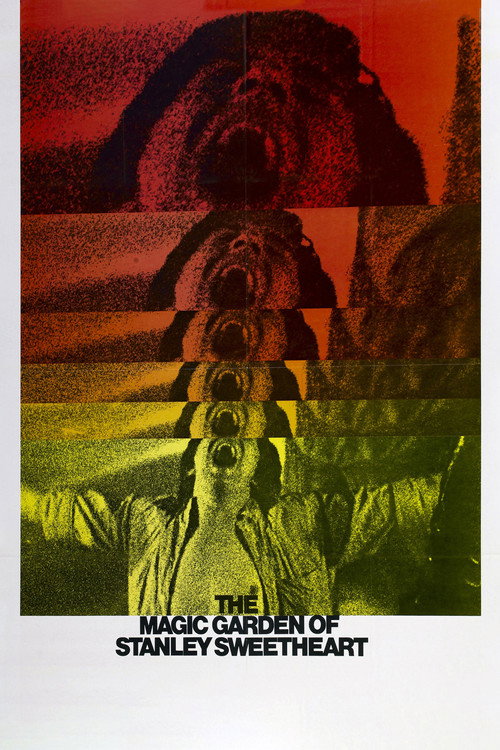 The Magic Garden of Stanley Sweetheart (1970)
 R. P. M. (1970)
 Love Story (1970)
 I Never Sang for My Father (1970)
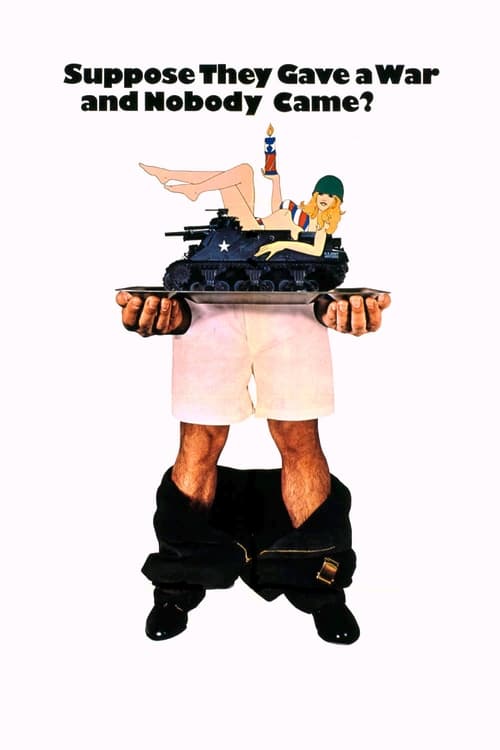 Suppose They Gave a War and Nobody Came (1970)
 Flipped (2010)
- More like this film, on a shelf you can walk up to.It's the lit case on the top shelf.