Don't Look Now (1973)

- Directed by
- Nicolas Roeg
- Genre
- drama film, horror film
- Country
- United Kingdom, Italy
- Runtime
- 1h 50m
- Rated
- R
- Rating
- 6.9 of 10 from 1,192 voters
- Elsewhere
- IMDb
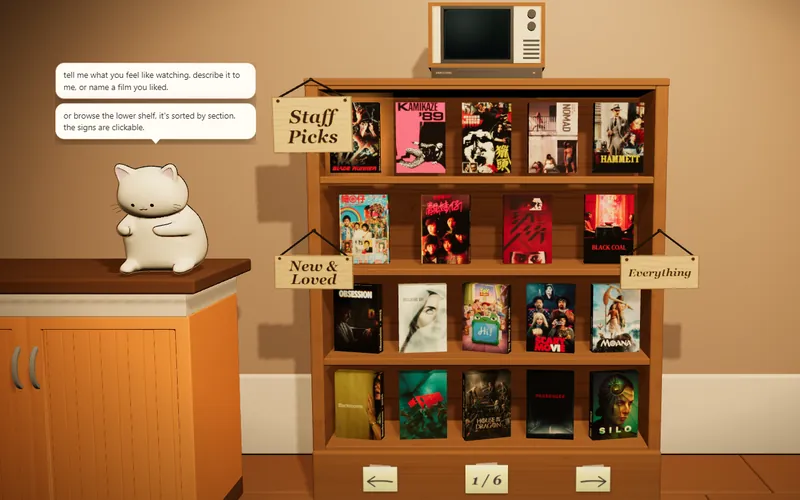
The catalogue in 3D
The film shelves have a room of their own that you can walk around in. The cat behind the counter is the AI Catbot, and they pick real films from the same catalogue when you tell them what you feel like watching. Nothing is for sale, here or in there. Go in from here and this film is already out on the counter, with more like it waiting on the shelf next to it.
How it feels
A couple grieving their daughter's death goes to Venice. They meet two sisters, one of whom claims the girl is trying to warn them.
slow-burntensemelancholicunsettlingdreamlikebleakvisually lushcerebral
What happens
Don't Look Now (Italian: A Venezia... un Dicembre rosso shocking, lit. 'In Venice... a shocking red December') is a 1973 English-language thriller film directed by Nicolas Roeg, adapted from the 1971 short story by Daphne du Maurier. Julie Christie and Donald Sutherland portray Laura and John Baxter, a married couple who travel to Venice following the recent accidental death of their daughter, after John accepts a commission to restore a church. They encounter two sisters, one of whom claims to be clairvoyant and informs them that their daughter is trying to contact them and warn them of danger. John at first dismisses their claims, but starts to experience mysterious sightings himself. Don't Look Now is an exploration of the psychology of grief and the effect the death of a child can have on a relationship. The film is renowned for its innovative editing style, recurring motifs and themes, and for a controversial sex scene that was explicit for the era. It also employs flashbacks and flashforwards in keeping with the depiction of precognition, but some scenes are intercut or merged to alter the viewer's perception of what is really happening. It adopts an impressionist approach to its imagery, often presaging events with familiar objects, patterns and colours using associative editing techniques. The film's reputation has grown in the years since its release and it is now considered a classic and an influential work in horror and British film. (from Wikipedia, CC BY-SA)
More like this
 La Grande Bouffe (1973)
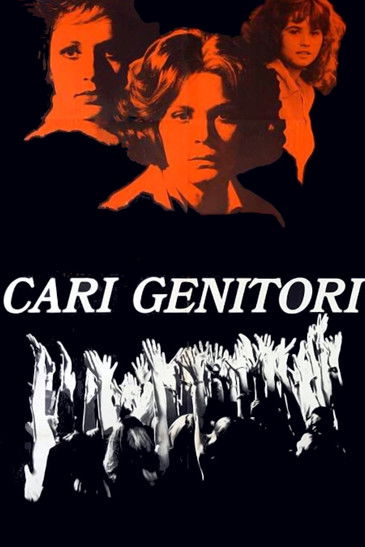 Cari genitori (1973)
 Black Holiday (1973)
 The Off-Road Girl (1973)
 La ragazza dalla pelle di luna (1972)
 Afrika (1973)
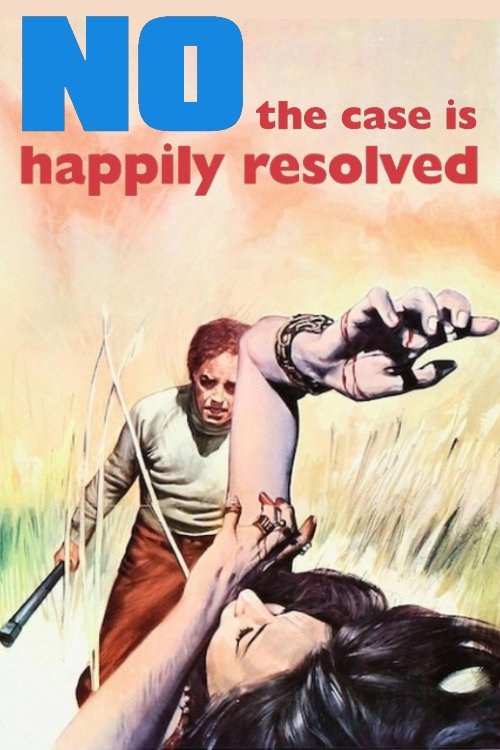 No (1973)
 Long Lasting Days (1973)
- More like this film, on a shelf you can walk up to.It's the lit case on the top shelf.