Amarcord (1973)

- Directed by
- Federico Fellini
- Genre
- drama film, comedy film, coming-of-age film, art film
- Country
- France, Italy
- Runtime
- 2h 07m
- Rated
- R
- Rating
- 7.9 of 10 from 1,224 voters
- Elsewhere
- IMDb
The catalogue in 3D
The film shelves have a room of their own that you can walk around in. The cat behind the counter is the AI Catbot, and they pick real films from the same catalogue when you tell them what you feel like watching. Nothing is for sale, here or in there. Go in from here and this film is already out on the counter, with more like it waiting on the shelf next to it.
How it feels
A boy named Titta grows up in a small Italian town during the 1930s. He observes the funny and strange people around him as the country moves toward war.
nostalgicwhimsicalbittersweetepisodicdreamlikeaffectionatesatiricalwarmmelancholic
What happens
Amarcord (Italian: [amarˈkɔrd]) is a 1973 comedy-drama film directed by Federico Fellini, a semi-autobiographical tale about Titta, an adolescent boy growing up among an eccentric cast of characters in the village of Borgo San Giuliano (situated near the ancient walls of Rimini) in 1930s Fascist Italy. The film's title is a univerbation (multiple words combined to form a single word) of the Romagnol phrase a m'arcôrd (pronounced [a marˈkoːrd]), 'I remember'. Fellini elaborated further by suggesting that the Italian words amare ('to love'), cuore ('heart'), ricordare ('to remember') and amaro ('bitter') could be expressed simultaneously through the Romagnol word. The title then became a neologism of the Italian language, with the meaning of 'nostalgic evocation', 'fond memory'. The central role of Titta is based on Fellini's childhood friend from Rimini, Luigi Titta Benzi. Benzi became a lawyer and remained in close contact with Fellini throughout his life. Titta's sentimental education is emblematic of Italy's "lapse of conscience". Fellini skewers Mussolini's ludicrous posturings and those of a Catholic Church that "imprisoned Italians in a perpetual adolescence" by mocking himself and his fellow villagers in comic scenes that underline their incapacity to adopt genuine moral responsibility or outgrow foolish sexual fantasies. The film won the Academy Award for Best Foreign Language Film, and was nominated for two more Academy Awards: Best Director and Best Original Screenplay the following year. In 2008, the film was included on the Italian Ministry of Cultural Heritage’s 100 Italian films to be saved, a list of 100 films that "have changed the collective memory of the country between 1942 and 1978." (from Wikipedia, CC BY-SA)
More like this
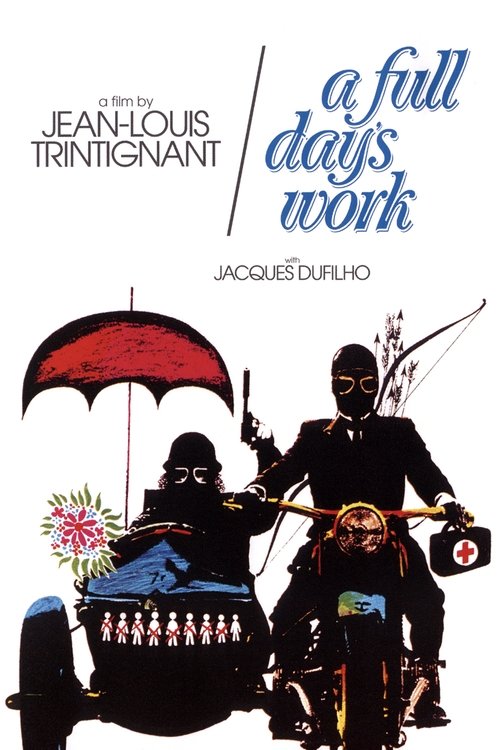 A Full Day's Work (1973)
 La dernière bourrée à Paris (1973)
 Un ange au paradis (1973)
 Cuore (1973)
 The Inheritor (1973)
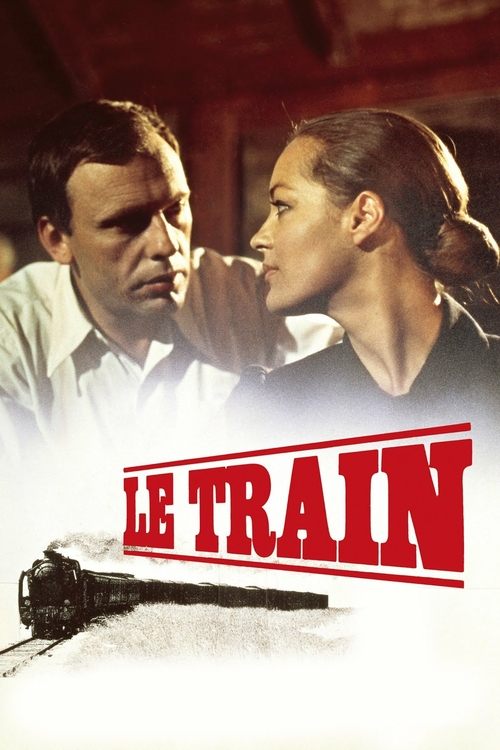 The Train (1973)
 Now Where Did the 7th Company Get to? (1973)
 Sono stato io (1973)
- More like this film, on a shelf you can walk up to.It's the lit case on the top shelf.