Gallipoli (1981)

- Directed by
- Peter Weir
- Genre
- war film, historical film
- Country
- Australia
- Runtime
- 1h 51m
- Rated
- PG
- Rating
- 7.1 of 10 from 545 voters
- Elsewhere
- IMDb
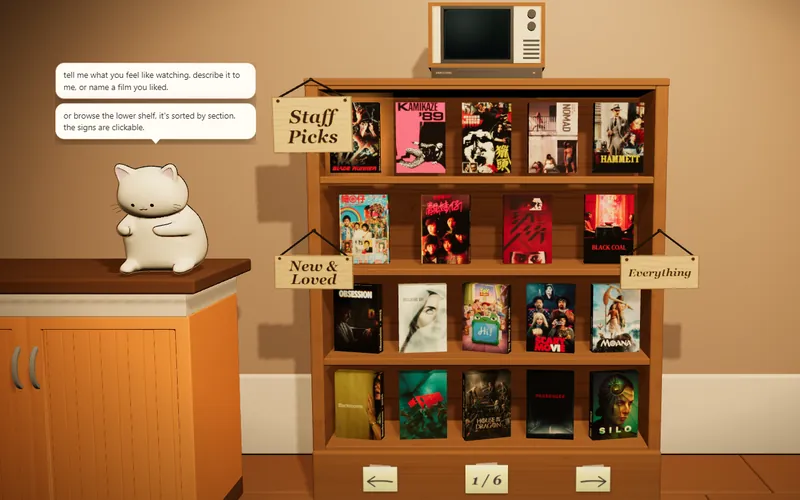
The catalogue in 3D
The film shelves have a room of their own that you can walk around in. The cat behind the counter is the AI Catbot, and they pick real films from the same catalogue when you tell them what you feel like watching. Nothing is for sale, here or in there. Go in from here and this film is already out on the counter, with more like it waiting on the shelf next to it.
How it feels
Young Australian men volunteer for World War I and are sent to fight in the Gallipoli campaign. As they experience the harsh conditions and brutal reality of the battlefield, they lose their initial idealism about war.
tragicpatrioticsomberslow-burnvisually austereearnestbleaknostalgic
What happens
Gallipoli is a 1981 Australian war drama film directed by Peter Weir and produced by Patricia Lovell and Robert Stigwood, starring Mel Gibson and Mark Lee. The film revolves around several young men from Western Australia who enlist in the Australian Army during World War I. They are sent to the Gallipoli peninsula in the Ottoman Empire (modern-day Turkey), where they take part in the Gallipoli campaign. During the course of the film, the young men slowly lose their innocence about the purpose of war. The climax of the film occurs on the Anzac battlefield at Gallipoli, depicting the futile attack at the Battle of the Nek on 7 August 1915. Gallipoli, which had a budget of $2.6 million, provides a faithful portrayal of life in Australia in the 1910s—reminiscent of Weir's 1975 film Picnic at Hanging Rock set in 1900—and captures the ideals and character of the Australians who joined up to fight, as well as the conditions they endured on the battlefield, although its portrayal of British forces has been criticised as inaccurate. It followed the Australian New Wave war film Breaker Morant (1980) and preceded the 5-part TV series Anzacs (1985), and The Lighthorsemen (1987). Themes of these films include the Australian identity, such as mateship and larrikinism, the loss of innocence in war, and the continued coming of age of the Australian nation and its soldiers (later called the Anzac spirit). Gallipoli received heavy international promotion and distribution and helped to elevate the worldwide reputation of the Australian film industry and of later Australian New Wave films. The film also helped to launch the international career of actor Mel Gibson. Due to the Gallipoli battlefields becoming tourist destinations in the 21st century, the film is often shown at the hostels and hotels in Eceabat and Çanakkale on the Dardanelles. In the 20 to 1 episode "Great Aussie Films", Gallipoli was listed as Number 1. (from Wikipedia, CC BY-SA)
More like this
 Outbreak of Hostilities (1981)
 The Spirit of Gallipoli (1928)
 Tell England (1931)
 1915 (1982)
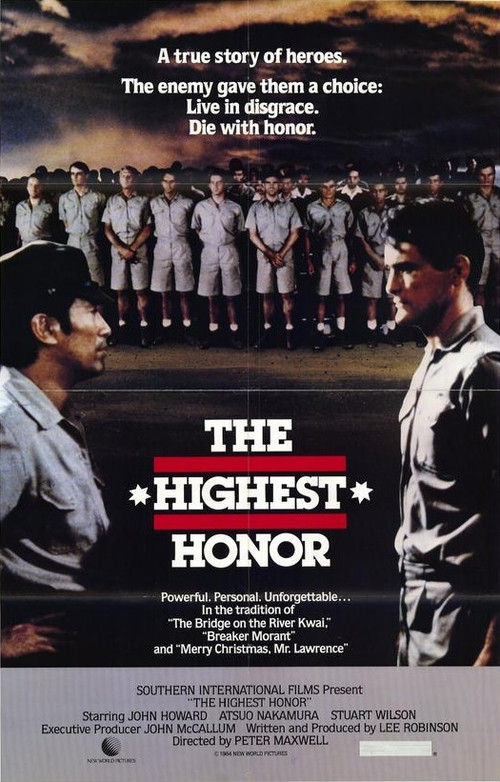 The Highest Honor (1982)
 Outbreak of Love (1981)
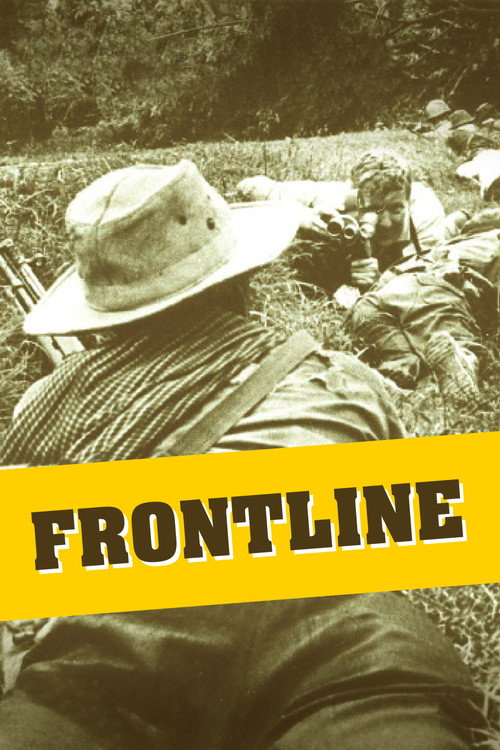 Front Line (1981)
 William Kelly's War (2014)
- More like this film, on a shelf you can walk up to.It's the lit case on the top shelf.