Oro, Plata, Mata (1982)

- Directed by
- Peque Gallaga
- Genre
- war, drama
- Country
- Philippines
- Runtime
- 3h 14m
- Rating
- 7.5 of 10 from 13 voters
- Elsewhere
- IMDb

The catalogue in 3D
The film shelves have a room of their own that you can walk around in. The cat behind the counter is the AI Catbot, and they pick real films from the same catalogue when you tell them what you feel like watching. Nothing is for sale, here or in there. Go in from here and this film is already out on the counter, with more like it waiting on the shelf next to it.
How it feels
During World War II, two wealthy Filipino families from Negros struggle to survive as the war forces them from their comfortable city lives into hiding in the countryside. Their journey takes them from luxury to hardship as they face the brutality of the conflict.
epicemotionalhistoricalslow-burntragicvisceralthoughtfuldark
What happens
Oro, Plata, Mata (English: Gold, Silver, Death) is a 1982 Philippine historical war drama film co-written and directed by Peque Gallaga. The screenplay written and adapted by Jose Javier Reyes was based on the story developed by Gallaga, Mario Taguiwalo, and Conchita Castillo. The film is considered to be Gallaga's most significant contribution to the Philippine cinema. Set in the Philippine island of Negros during World War II, it tells the story of how two hacendero families cope with the changes brought about by the war. In translation, the movie is also known either as "Gold, Silver, Bad Luck" or "Gold, Silver, Death." The title refers to the traditional Spanish Filipino architectural superstition saying that design elements in a house (particularly staircases) should not end in a multiple of three, in keeping with a pattern of oro (gold), plata (silver), and mata (bad luck). The film is structured in three parts that depict this pattern played out in the lives of the main characters, from a life of luxury and comfort in the city ("oro/gold"), to a still-luxurious time of refuge in a provincial hacienda ("plata/silver"), and finally to a retreat deeper into the mountains, where they are victimized by guerilla bandits ("mata/bad luck"). Produced and distributed by Experimental Cinema of the Philippines as its initial offering, the film was theatrically released on January 27, 1982, and it was filmed on location in the whole province of Negros Occidental, primarily in Bacolod and the Mt. Kanlaon National Park. The production team received extensive assistance and support from the Ministry of National Defense, Ministry of Tourism, and the Armed Forces of the Philippines. The film's musical score was provided by Jose Gentica V; the film's photography was handled by Rody Lacap, and the editing was handled by Jesus Navarro. The film's development was financially supported and acknowledged by the Philippine National Bank. In 2013, ABS-CBN Film Archives, in partnership with Central Digital Lab, digitally restored and remastered the film, and it was subsequently released in select theaters for a limited period. The digitally restored version was also released on DVD and iTunes. (from Wikipedia, CC BY-SA)
More like this
 Get My Son Dead or Alive (1982)
 A Case of Honor (1989)
 Manila, Open City (1968)
 Bulung-Bulungan (1962)
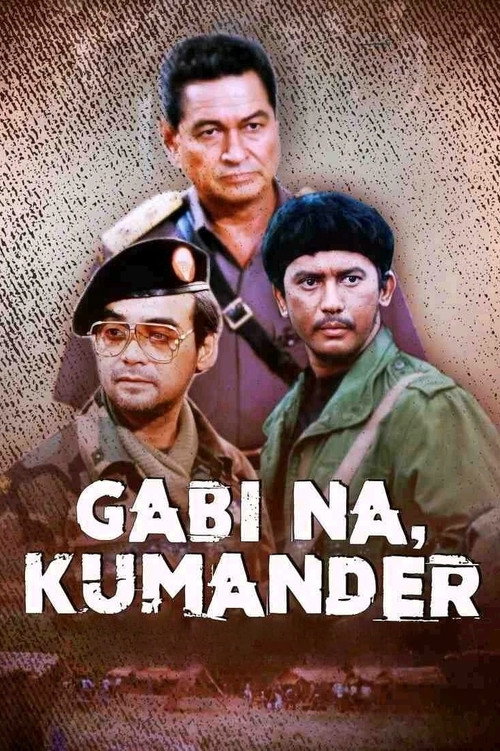 Gabi na, Kumander (1986)
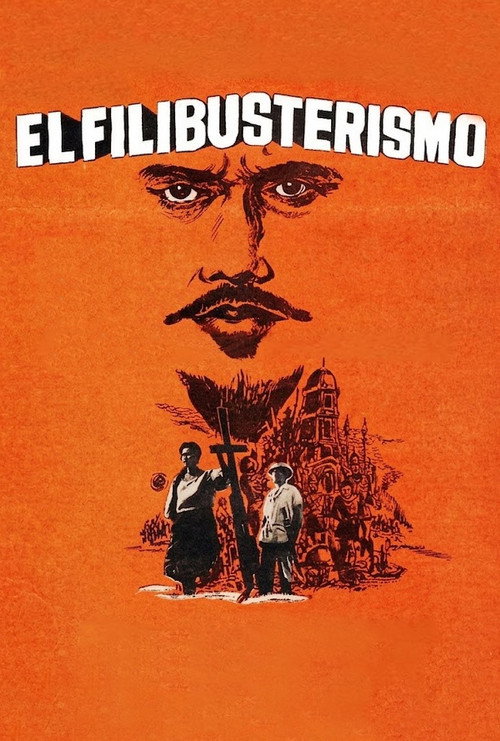 El filibusterismo (1962)
 Panaghoy sa Suba (2004)
 Santiago! (1970)
- More like this film, on a shelf you can walk up to.It's the lit case on the top shelf.