Merry Christmas, Mr. Lawrence (1983)

- Original title
- 戦場のメリークリスマス
- Directed by
- Nagisa Ōshima
- Genre
- drama film, prison film, LGBTQ-related film, Christmas film
- Country
- New Zealand, United Kingdom, Japan
- Runtime
- 2h 03m
- Rated
- R
- Rating
- 7.3 of 10 from 528 voters
- Elsewhere
- IMDb
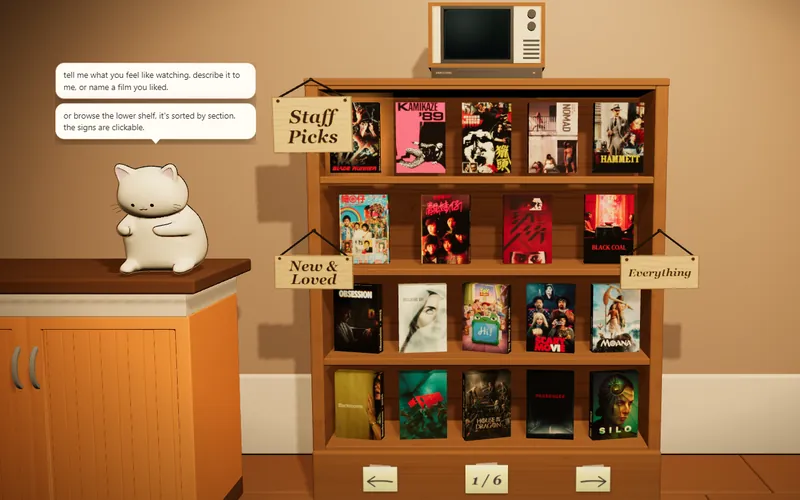
The catalogue in 3D
The film shelves have a room of their own that you can walk around in. The cat behind the counter is the AI Catbot, and they pick real films from the same catalogue when you tell them what you feel like watching. Nothing is for sale, here or in there. Go in from here and this film is already out on the counter, with more like it waiting on the shelf next to it.
How it feels
During World War II, a British officer is held in a Japanese prisoner of war camp in Java. The story examines the clash of cultures and the tense relationships between the prisoners and their captors.
tensemelancholicslow-burnemotionally restrainedunsettlingsomberbroodingpoignant
What happens
Merry Christmas, Mr. Lawrence (Japanese: 戦場のメリークリスマス, Hepburn: Senjō no Merī Kurisumasu; lit. 'Battlefield's Merry Christmas'), also known as Furyo (俘虜, Prisoner of War), is a 1983 war film co-written and directed by Nagisa Ōshima, co-written by Paul Mayersberg, and produced by Jeremy Thomas. The film is based on the experiences of Sir Laurens van der Post (portrayed by Tom Conti as Lt. Col. John Lawrence) as a prisoner of war in Java (Japanese-occupied Dutch East Indies) during World War II, as depicted in his books The Seed and the Sower (1963) and The Night of the New Moon (1970). It stars David Bowie, Ryuichi Sakamoto, Takeshi Kitano and Jack Thompson; Sakamoto also composed and played the score, including the vocal version of the main theme, "Forbidden Colours", with lyrics written and sung by David Sylvian. The film was entered into the 1983 Cannes Film Festival in competition for the Palme d'Or. Sakamoto's score won the film a BAFTA Award for Best Film Music. (from Wikipedia, CC BY-SA)
More like this
 The Bridge on the River Kwai (1957)
 King Rat (1965)
 Another Time, Another Place (1983)
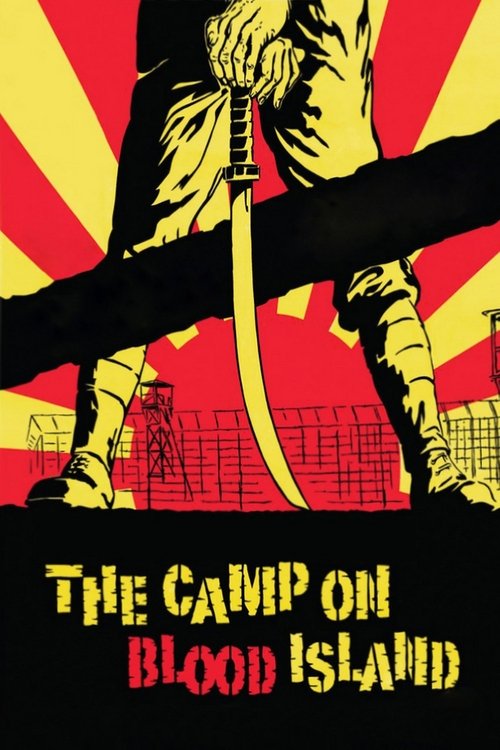 The Camp on Blood Island (1958)
 The Boy in the Striped Pajamas (2008)
 Female Prisoner: Cage (1983)
 Stalag 17 (1953)
 Empire of the Sun (1987)
- More like this film, on a shelf you can walk up to.It's the lit case on the top shelf.