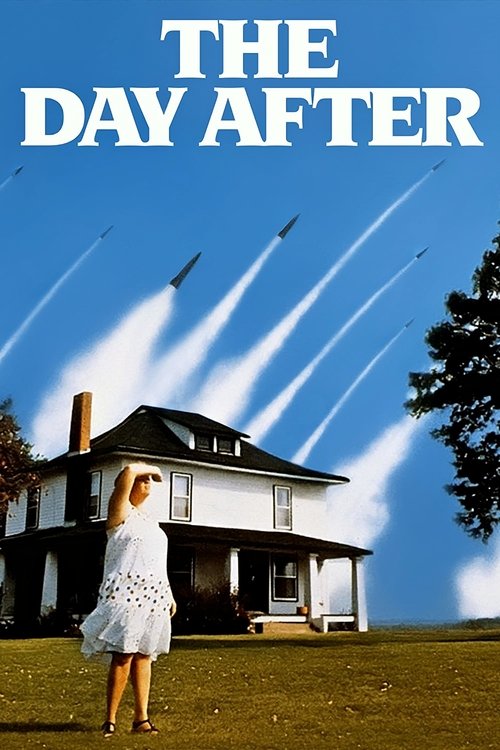
The Day After (1983)
- Directed by
- Nicholas Meyer
- Genre
- drama film, disaster film, post-apocalyptic film
- Country
- United States
- Runtime
- 2h 06m
- Rated
- NR
- Rating
- 6.8 of 10 from 449 voters
- Elsewhere
- IMDb
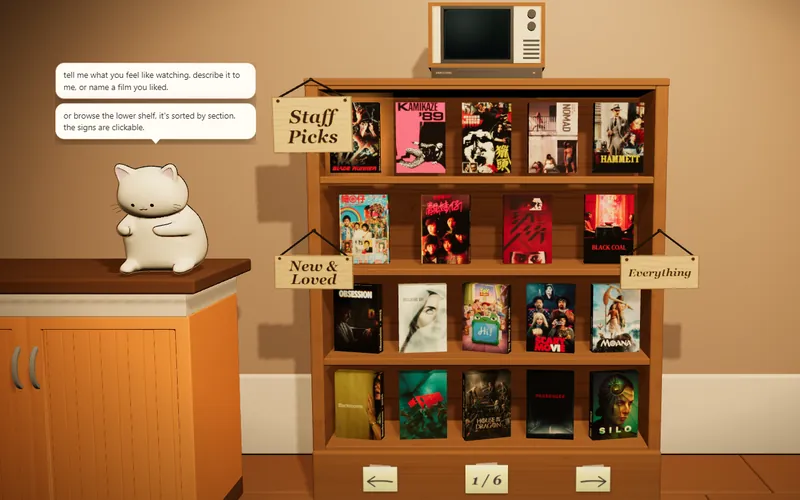
The catalogue in 3D
The film shelves have a room of their own that you can walk around in. The cat behind the counter is the AI Catbot, and they pick real films from the same catalogue when you tell them what you feel like watching. Nothing is for sale, here or in there. Go in from here and this film is already out on the counter, with more like it waiting on the shelf next to it.
How it feels
This TV film shows what happens when a war between NATO and the Warsaw Pact turns into a nuclear exchange between the US and the Soviet Union. It follows people in and around Lawrence and Kansas City as they try to survive the bombing and its aftermath.
grimbleakslow-burntensesomberdisturbingrealisticunnervingsobering
What happens
The Day After is a 1983 American television film directed by Nicholas Meyer. The war film postulates a fictional conflict between NATO and the Warsaw Pact over Germany that rapidly escalates into a full-scale nuclear exchange between the United States and the Soviet Union. The action itself focuses on the residents of Lawrence, Kansas, and Kansas City, Missouri, and several family farms near American missile silos. The cast includes JoBeth Williams, Steve Guttenberg, John Cullum, Jason Robards, and John Lithgow. The film was written by Edward Hume and produced by Robert Papazian, with clips from the 1979 Air Force documentary First Strike used. More than 100 million people, in nearly 39 million households, watched the film when it first aired on November 20, 1983, on the ABC television network. With a 46 rating and a 62% share of the viewing audience during the initial broadcast, the film was the seventh-highest-rated non-sports show until then, and in a 2009 Nielsen TV Ratings list was one of the highest-rated television films in U.S. history. The film was broadcast on Soviet state television in 1987, during the negotiations on Intermediate-Range Nuclear Forces Treaty. The producers demanded that the Russian translation conform to the original script and that the broadcast not be interrupted by commentary. (from Wikipedia, CC BY-SA)
More like this
 Testament (1983)
 Threads (1984)
 Відлуння далекого вибуху (1983)
 In the Nuclear Shadow: What Can the Children Tell Us? (1983)
 Anxious Sunday (1983)
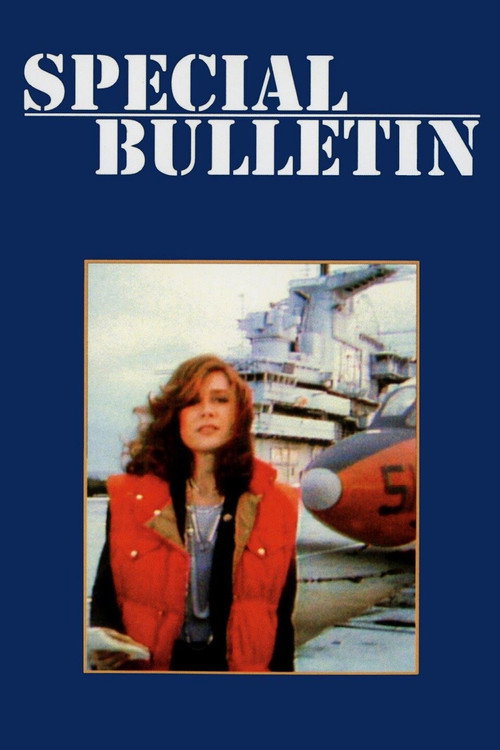 Special Bulletin (1983)
 Children of Nagasaki (1983)
 Barefoot Gen (1983)
- More like this film, on a shelf you can walk up to.It's the lit case on the top shelf.