Danton (1983)

- Directed by
- Andrzej Wajda
- Genre
- drama film, biographical film, historical film
- Country
- Germany, France, Poland
- Runtime
- 2h 16m
- Rated
- PG
- Rating
- 6.8 of 10 from 175 voters
- Elsewhere
- IMDb
The catalogue in 3D
The film shelves have a room of their own that you can walk around in. The cat behind the counter is the AI Catbot, and they pick real films from the same catalogue when you tell them what you feel like watching. Nothing is for sale, here or in there. Go in from here and this film is already out on the counter, with more like it waiting on the shelf next to it.
How it feels
A historical drama about the final weeks of French revolutionary Georges Danton as he clashes with Maximilien Robespierre. The film follows Danton's arrest and trial during the Reign of Terror.
tensepoliticalbleakcerebralslow-burnintensehistoricalaustere
What happens
Danton (French pronunciation: [dɑ̃tɔ̃]) is a 1983 French-language film depicting the last weeks of Georges Danton, one of the leaders of the French Revolution. It is an adaptation of the 1929 play The Danton Case by Stanisława Przybyszewska. The film stars Gérard Depardieu in the title role, with Wojciech Pszoniak as Maximilien Robespierre, and Patrice Chéreau as Camille Desmoulins. It was directed by the Polish director Andrzej Wajda and was an international co-production between companies in France, Poland and West Germany. All supporters of Danton (with the exception of Bourdon, who would later betray him) are played by French actors, while Robespierre's allies are played by Poles. Alain Depardieu, Gérard's brother, is listed in the credits as Director of Production. The film is not always rigidly historical. It was seen as drawing parallels between the Reign of Terror during the French Revolution and the situation in contemporary Poland, in which the Solidarity movement was struggling against the oppression of the Soviet-backed Polish communist government; however, this was denied by the filmmakers. The film had 1,392,779 admissions in France. (from Wikipedia, CC BY-SA)
More like this
 Danton (1931)
 Danton's Death (1963)
 Danton (1932)
 La terreur et la vertu - Première partie: Danton (1964)
 La Révolution française (1989)
 Danton (1921)
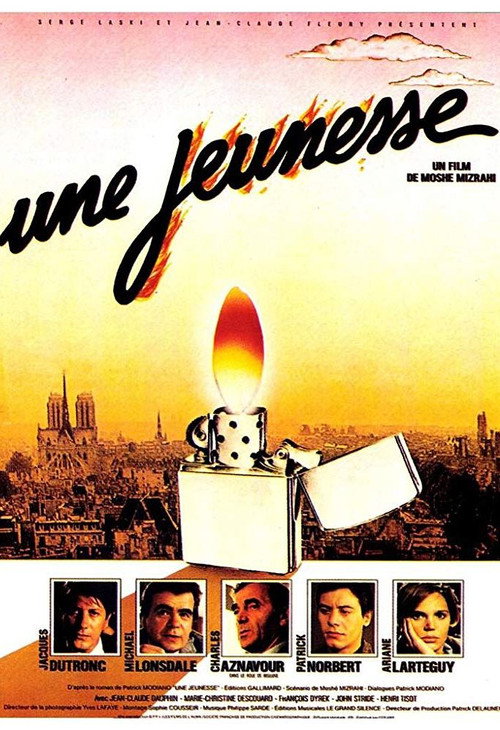 Une jeunesse (1983)
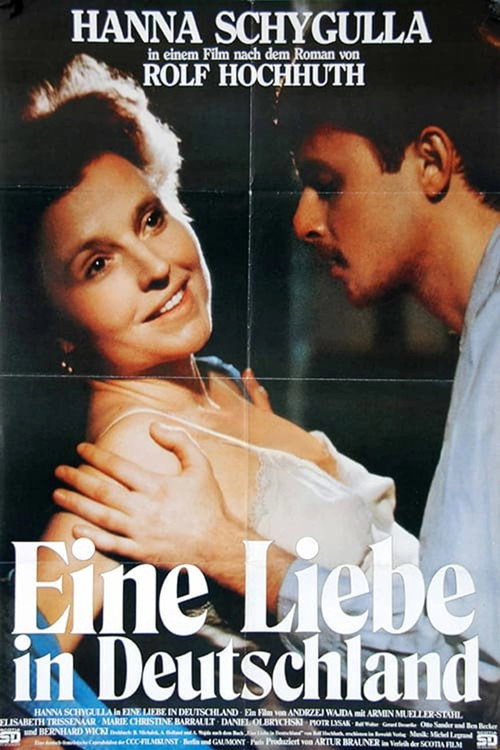 A Love in Germany (1983)
- More like this film, on a shelf you can walk up to.It's the lit case on the top shelf.