Pulgasari (1985)

- Original title
- 불가사리
- Directed by
- Shin Sang-ok
- Genre
- drama film, fantasy film, action film, horror film, speculative fiction film, kaiju
- Country
- North Korea
- Runtime
- 1h 35m
- Rated
- ALL
- Rating
- 5.5 of 10 from 55 voters
- Elsewhere
- IMDb

The catalogue in 3D
The film shelves have a room of their own that you can walk around in. The cat behind the counter is the AI Catbot, and they pick real films from the same catalogue when you tell them what you feel like watching. Nothing is for sale, here or in there. Go in from here and this film is already out on the counter, with more like it waiting on the shelf next to it.
How it feels
In feudal Korea, a blacksmith's daughter brings a metal-eating monster to life. The creature was made by her late father to fight the monarchy.
mythicgrimunsettlingmonstrouschaotichistoricalbleak
What happens
Pulgasari is a 1986 monster film directed and produced by Shin Sang-ok during his North Korean abduction. A co-production between North Korea, Japan, and China, it is supposedly a remake of Bulgasari, a 1962 South Korean film that also depicts Bulgasari/Pulgasari, a creature from Korean folklore. The ensemble cast includes Chang Sŏnhŭi, Ham Kisŏp, Ri Chongguk, Ri Ingwŏn, and Yu Kyŏngae, with Kenpachiro Satsuma in the title role. Set during the Goryeo dynasty, Pulgasari follows a blacksmith's daughter who brings to life a metal-eating monster her late father created to defeat the monarchy. Shin and his wife, Choi Eun-hee, were kidnapped in 1978 by agents of Kim Jong Il and held captive in North Korea. Pulgasari was put forward in February 1985 to capitalize on the success of The Return of Godzilla (1984) and became Shin's last film made under Kim Jong Il's orders. Kim Seryun and Ri Chun-gu collaborated on the screenplay. Principal photography took place in Pyongyang from June to August 1985 on an estimated ¥200–300 million ($2–3 million) budget, making it one of the most expensive films produced in North Korea to that time. Some sources suggest that North Korean filmmaker Chong Gon-jo, who was given sole director credit, completed filming on behalf of Shin. A team of 15 Toho employees, including Teruyoshi Nakano, handled special effects photography from September to December. Pulgasari premiered in North Korea on February 28, 1986, with plans for subsequent international release later that year. However, the film was banned in March after Shin and Choi escaped North Korean supervision and fled to the United States, where Shin later worked on a remake. Pulgasari eventually debuted on VHS in Japan on January 21, 1995, and had its official premiere in Tokyo on July 4, 1998, to commercial success. Critical reception in Japan was positive, with many favorable comparisons to Godzilla (1998). It has since become the most-widely-seen North Korean film internationally and a cult classic. (from Wikipedia, CC BY-SA)
More like this
 Love, Love, My Love (1985)
 The Tale of Fifteen Children (1985)
 The Tale of Shim Chong (1985)
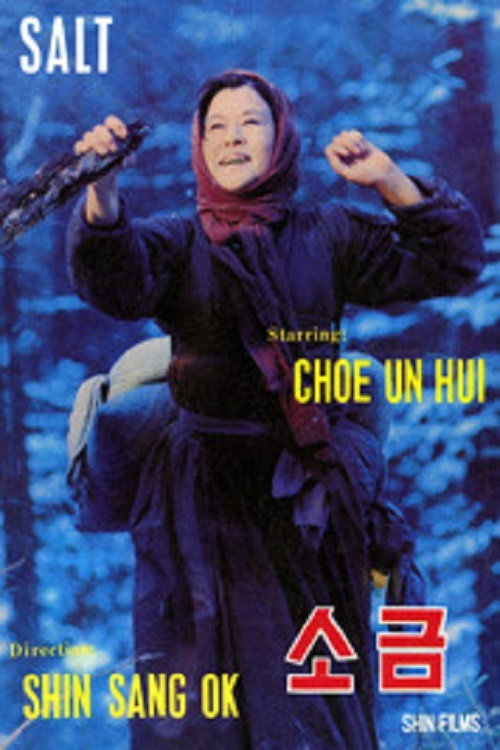 Salt (1985)
 Hong-Do Mirror (1985)
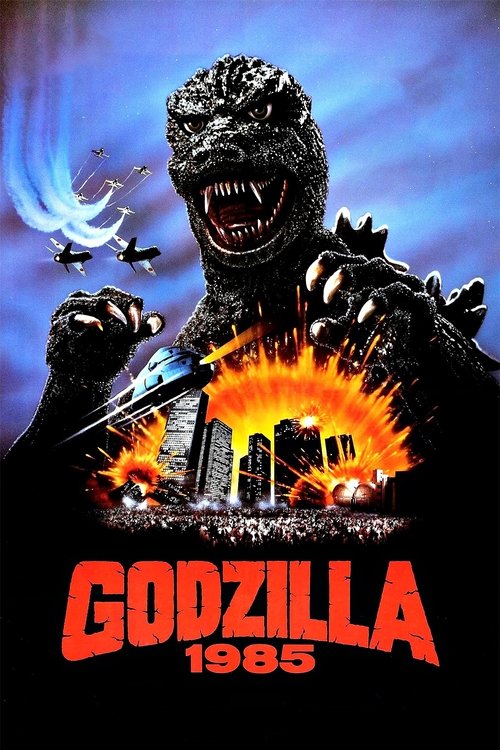 Godzilla 1985 (1985)
 The Great Jungle Escape (1985)
 Mother (1985)
- More like this film, on a shelf you can walk up to.It's the lit case on the top shelf.