Vambhathi


The catalogue in 3D
The film shelves have a room of their own that you can walk around in. The cat behind the counter is the AI Catbot, and they pick real films from the same catalogue when you tell them what you feel like watching. Nothing is for sale, here or in there. Go in from here and this film is already out on the counter, with more like it waiting on the shelf next to it.
How it feels
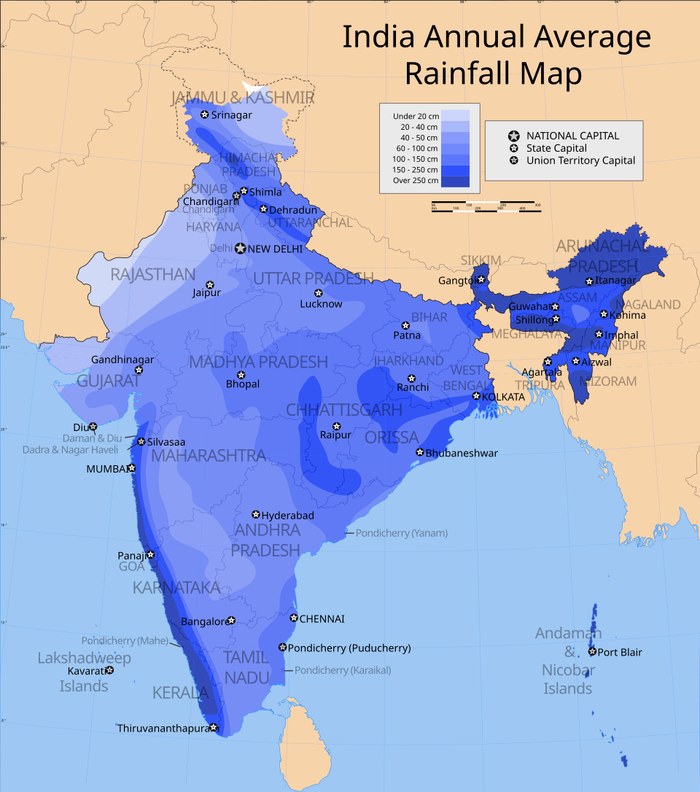
A documentary about India's rainfall patterns and water resources. It discusses the amount of precipitation the country receives each year and how the rainfall is distributed across different regions and seasons.
informationaldryfactualneutraleducationalanalytical
What happens
India receives an average annual precipitation of 1,170 millimetres (46 in), amounting to approximately 4,000 cubic kilometres (960 mi3) of rainfall or about 1,720 cubic metres (61,000 cu ft) of freshwater each year. The country accounts for 18% of the world's population but has access to only about 4% of the world's water resources. One of the proposed measures to address India's water challenges is the Indian Rivers Interlinking Project. Approximately 80% of India's land area receives rainfall of 750 millimetres (30 in) or more annually. However, the distribution of rainfall is uneven, both temporally and geographically. Most rainfall occurs during the monsoon season, from June to September, with the northeastern and northern regions receiving significantly higher rainfall compared to the western and southern parts of the country. Apart from rainfall, the melting of snow in the Himalayas after winter contributes to the flow of northern rivers, though the extent varies. In contrast, southern rivers exhibit greater seasonal variability in water flow. The Himalayan basin, in particular, experiences periods of flooding during some months and water scarcity in others. Despite India's extensive river network, the availability of safe, clean drinking water and adequate water for irrigation remains a persistent challenge. This shortage is partly due to the limited utilisation of the country's surface water resources. As of 2010, India harnessed only 761 cubic kilometres (183 mi3), or 20%, of its renewable water resources, with a significant portion sourced through unsustainable groundwater extraction. Of the total water withdrawn from rivers and groundwater, approximately 688 cubic kilometres (165 mi3) were allocated for irrigation, 56 cubic kilometres (13 mi3) for municipal and drinking water purposes, and 17 cubic kilometres (4.1 mi3) for industrial applications. A significant portion of India falls under a tropical climate, which remains favourable for agriculture throughout the year due to warm and sunny conditions, provided a reliable water supply is available to offset the high rate of evapotranspiration from cultivated land. While the country's overall water resources are sufficient to meet its needs, the temporal and spatial variability in water availability necessitates the interlinking of rivers to bridge these supply gaps. Approximately 1,200 billion cubic metres of water currently flow unused into the sea annually, even after accounting for the moderate environmental and salt-export requirements of all rivers. Ensuring food security in India is closely linked to achieving water security, which, in turn, depends on energy security. Adequate and reliable electricity supply is essential to power the water-pumping infrastructure required for the successful implementation of the rivers interlinking project. Instead of relying on large-scale, centralised water transfer projects, which require significant time and resources to yield results, a more cost-effective alternative is the widespread use of shade nets over cultivated lands. This approach can enhance the efficient utilisation of locally available water resources throughout the year. Plants utilise less than 2% of the total water for metabolic processes, while the remaining 98% is lost through transpiration, primarily for cooling purposes. The installation of shade nets or polytunnels, designed to withstand diverse weather conditions, can significantly reduce evaporation by reflecting excessive and harmful sunlight, thereby preventing it from directly impacting the cropped area. (from Wikipedia, CC BY-SA)
More like this
 The Big Bang (2019)
 Symphony of the Soil (2013)
 The Monsoon Oracle (2013)
 Looking for Challan
 Last Drop (2020)
 Lokshahi (2024)
 Kalira Atita (2020)
 Funral (2022)
- More like this film, on a shelf you can walk up to.It's the lit case on the top shelf.