Cry Freedom (1987)

- Directed by
- Richard Attenborough
- Genre
- drama film, biographical film
- Country
- United Kingdom, Italy
- Runtime
- 2h 37m
- Rated
- PG
- Rating
- 7.0 of 10 from 235 voters
- Elsewhere
- IMDb
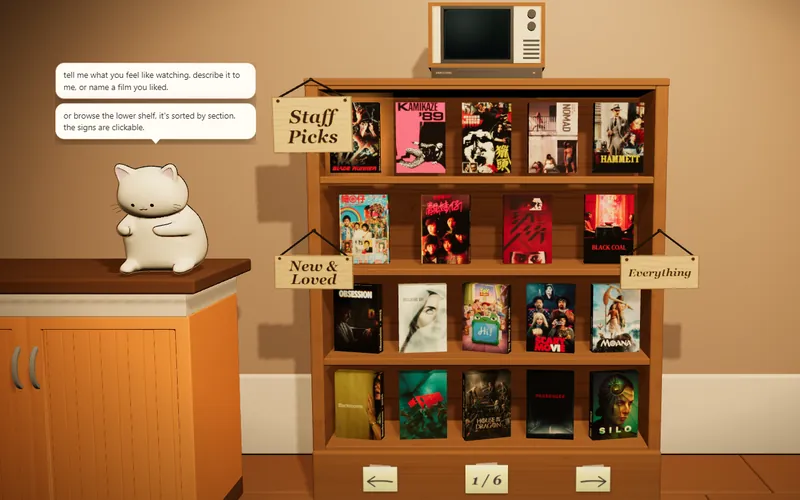
The catalogue in 3D
The film shelves have a room of their own that you can walk around in. The cat behind the counter is the AI Catbot, and they pick real films from the same catalogue when you tell them what you feel like watching. Nothing is for sale, here or in there. Go in from here and this film is already out on the counter, with more like it waiting on the shelf next to it.
How it feels
A white journalist in apartheid-era South Africa slowly comes to understand a Black activist who is later killed by police. The journalist struggles with his own prejudices before working to expose the truth about his friend's death.
tensesomberearnestdeliberateemotionalconfrontationalhopefulpolitical
What happens
Cry Freedom is a 1987 epic biographical drama film directed and produced by Richard Attenborough, set in apartheid-era South Africa in 1977. The screenplay was written by John Briley based on a pair of books by journalist Donald Woods. The film centres on the real-life events involving South African activist Steve Biko and his friend Woods, who initially finds him too radical, and attempts to understand his way of life. Denzel Washington stars as Biko, while Kevin Kline portrays Woods. Penelope Wilton co-stars as Woods's wife Wendy. Cry Freedom delves into the ideas of racism, segregation, disenfranchisement, socioeconomic inequality, political corruption, and the repercussions of violence. A joint collective effort to commit to the film's production was made by Universal Pictures and Marble Arch Productions and the film was primarily shot on location in Zimbabwe due to not being allowed to film in South Africa at the time of production. It was commercially distributed by Universal Pictures, opening in the United States on 6 November 1987. South African authorities unexpectedly allowed the film to be screened in cinemas without cuts or restrictions, despite the publication of Biko's writings being banned at the time of its release. The film was generally met with favourable reviews and earned theatrical rentals of $15 million worldwide. The film was nominated for multiple awards, including Academy Award nominations for Best Supporting Actor (for Washington), Best Original Score, and Best Original Song. It was nominated for seven BAFTA Awards, including Best Film and Best Direction, and won Best Sound. (from Wikipedia, CC BY-SA)
More like this
 The Kitchen Toto (1987)
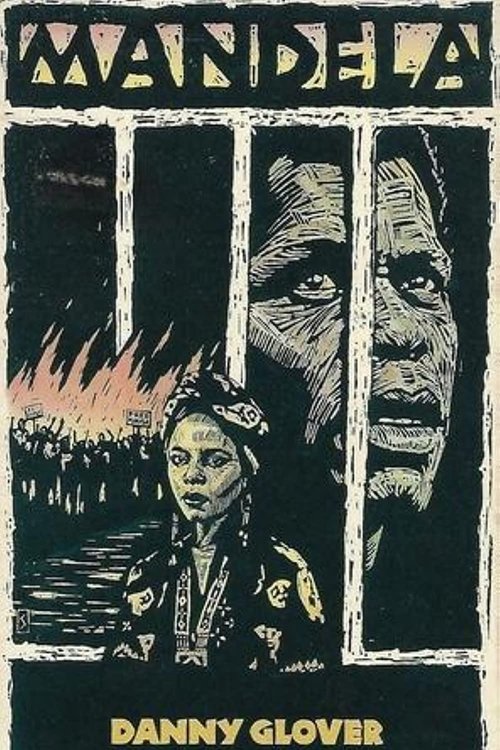 Mandela (1987)
 The Family (1987)
 A Child from the South (1991)
 The Belly of an Architect (1987)
 Regina (1987)
 A World Apart (1988)
 Classified People (1987)
- More like this film, on a shelf you can walk up to.It's the lit case on the top shelf.