Is It Easy to Be Young? (1987)

- Original title
- Vai viegli būt jaunam?
- Directed by
- Juris Podnieks
- Genre
- documentary film
- Country
- Soviet Union
- Runtime
- 1h 23m
- Rating
- 4.8 of 10 from 12 voters
- Elsewhere
- IMDb
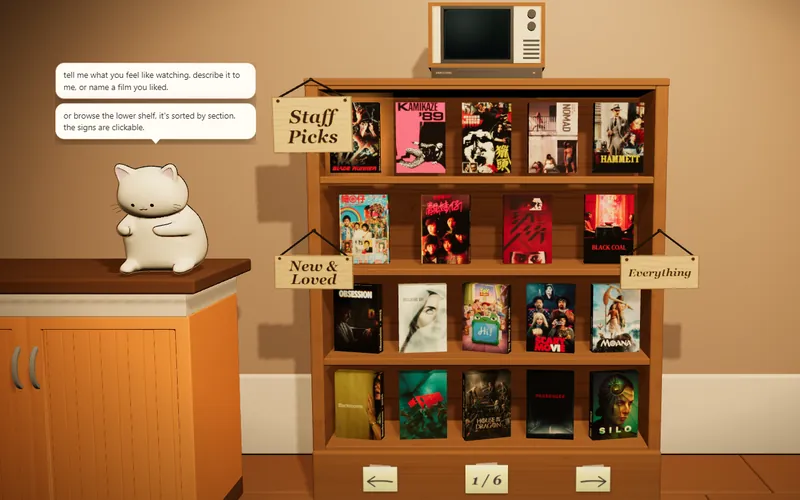
The catalogue in 3D
The film shelves have a room of their own that you can walk around in. The cat behind the counter is the AI Catbot, and they pick real films from the same catalogue when you tell them what you feel like watching. Nothing is for sale, here or in there. Go in from here and this film is already out on the counter, with more like it waiting on the shelf next to it.
How it feels
The film follows young people in the late Soviet Union as they struggle with authority, war, religion, and the aftermath of the Chernobyl disaster. It shows their conflicts with parents and teachers, and their search for meaning in a society that offers little hope.
unsettlingtensemelancholicthoughtfulsoberingrawbleakintrospective
What happens
Is It Easy to Be Young? (Latvian: Vai viegli būt jaunam?, Russian: Легко ли быть молодым?) is a Soviet-era Latvian documentary film directed by Juris Podnieks. It was filmed in 1986 with dialogue in both Latvian and Russian, and is considered to be among the most controversial movies of its era. It was one of the five winners of the 1987 International Documentary Association awards. The movie speaks about young people who perished as a result of growing up in Soviet society—their conflicts with parents and society, the patronizing attitudes of their teachers and the authorities, the fear that there is no meaning to their lives. Among the young people portrayed are high-schoolers looking for their place in life, a young mother worried about the future of her daughter after the Chernobyl catastrophe, a young man follower of the Hare Krishna movement (an 'unusual' religion that was discouraged even more than 'usual' ones by the Soviet government), as well young adults returning from compulsory military service in the Soviet–Afghan War and having become ones of 'the lost generation'. The film's opening scene documents a concert by the banned Latvian rock band, Pērkons. The movie had a major impact in the Soviet Union. It was seen by at least 28 million people during its first year. In all, 85 countries bought the rights to show the movie. In 1986 the film received Latvian Film Prize for the best documentary. Its international debut was at the 1987 Kraków Film Festival, where it received the FIPRESCI Award. It was also screened out of competition at the 1987 Cannes Film Festival. The film was re-released in 2007 by Jura Podnieka Studija; the new edition includes oral history interviews with Podnieks's colleagues. After Latvia regained independence, Antra Cilinska filmed two sequels (Is It Easy to Be? in 1998, and Is it Easy? in 2010), featuring interviews with people filmed by Podnieks. (from Wikipedia, CC BY-SA)
More like this
 The Bell of Chernobyl (1987)
 Мі-кро-фон! (1988)
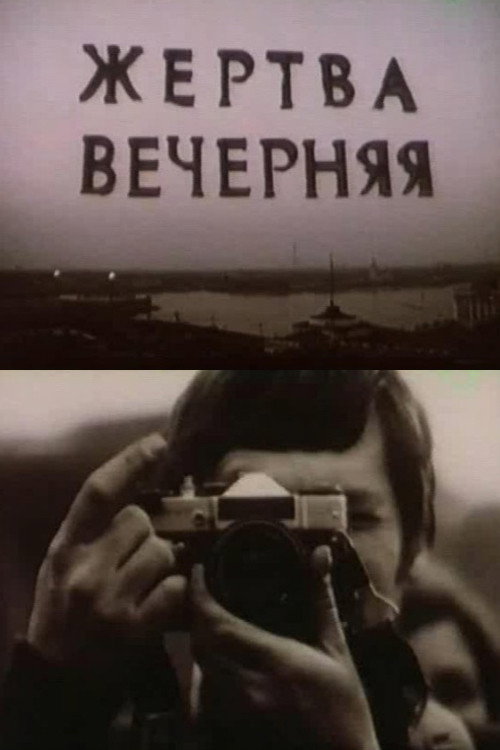 Zhertva vechernyaya (1987)
 Threshold (1989)
 Kond (1987)
 Chernobyl: Chronicle of Difficult Weeks (1986)
 Исповедь. Хроника отчуждения (1988)
 Rok (1987)
- More like this film, on a shelf you can walk up to.It's the lit case on the top shelf.