A City of Sadness (1989)
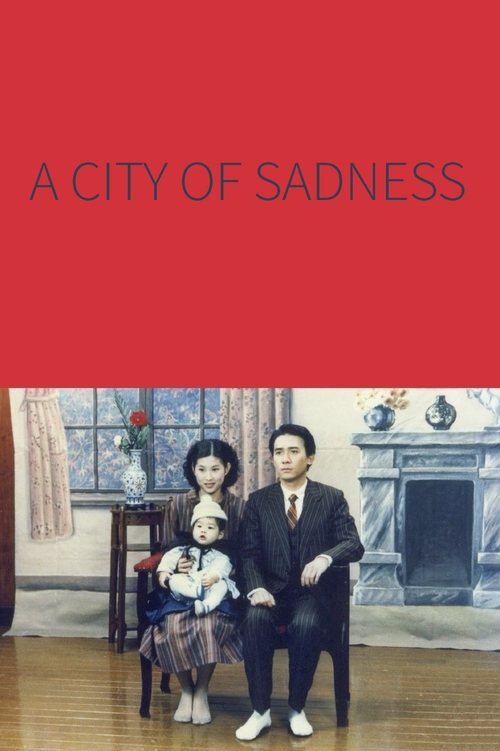
- Original title
- 悲情城市
- Directed by
- Hou Hsiao-Hsien
- Genre
- drama film
- Country
- Taiwan
- Runtime
- 2h 38m
- Rated
- NR
- Rating
- 7.5 of 10 from 153 voters
- Elsewhere
- IMDb

The catalogue in 3D
The film shelves have a room of their own that you can walk around in. The cat behind the counter is the AI Catbot, and they pick real films from the same catalogue when you tell them what you feel like watching. Nothing is for sale, here or in there. Go in from here and this film is already out on the counter, with more like it waiting on the shelf next to it.
How it feels
A City of Sadness follows the Lin family in Taiwan after World War II. The family is caught in the political violence of the February 28 Incident and the White Terror that followed.
melancholicslow-burnsomberreflectiveharrowingintimatesubduedhistoricalquietly devastating
What happens
A City of Sadness (Chinese: 悲情城市; pinyin: Bēiqíng chéngshì) is a 1989 Taiwanese historical drama directed by Hou Hsiao-hsien. It tells the story of the Lin family amid the political turmoil surrounding the February 28 Incident of 1947 and the emergence of the political repression that later became known as Taiwan's "White Terror". The film was the first to deal openly with the Kuomintang government's (KMT) authoritarian rule after its 1945 takeover of Taiwan following Japan's defeat in World War II, and the first to depict the February 28 Incident in Taiwanese cinema. Scholars have also regarded the film as an important work in Taiwan's ongoing engagement with the memory and legacy of the White Terror.” A City of Sadness was the first (of three) Taiwanese films to win the Golden Lion award at the Venice Film Festival, and is often considered Hou's masterpiece. The film was selected as the Taiwanese entry for the Best Foreign Language Film at the 62nd Academy Awards, but was not accepted as a nominee. This film is regarded as the second installment in the Wu Nien-jen trilogy as well as the first installment in a loose trilogy of Hsiao-Hsien's films that deal with Taiwanese history, which also includes The Puppetmaster (1993) and Good Men, Good Women (1995). These films are collectively called the "Taiwan Trilogy" by academics and critics. (from Wikipedia, CC BY-SA)
More like this
 The Dull Ice Flower (1989)
 Seven Wolves (1989)
 A Brighter Summer Day (1991)
 Full Moon in New York (1989)
 Seven Foxes 2 (1989)
 Banana Paradise (1989)
 A Fish Out Of Water 2017 (2017)
 Love's Lone Flower (2005)
- More like this film, on a shelf you can walk up to.It's the lit case on the top shelf.