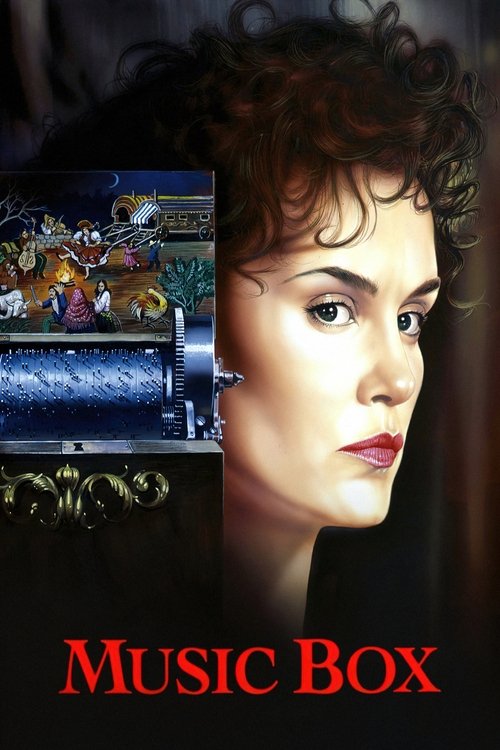
Music Box (1989)
- Directed by
- Costa-Gavras
- Genre
- drama film, thriller film, trial film
- Country
- United States
- Runtime
- 2h 04m
- Rated
- PG-13
- Rating
- 7.1 of 10 from 182 voters
- Elsewhere
- IMDb
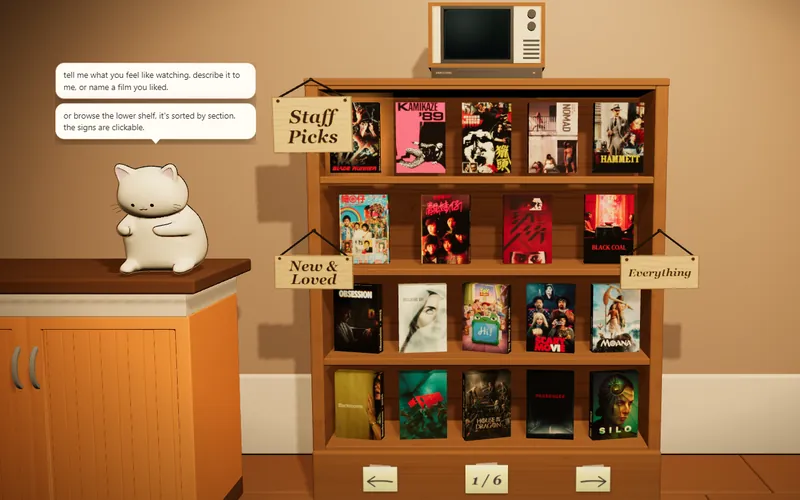
The catalogue in 3D
The film shelves have a room of their own that you can walk around in. The cat behind the counter is the AI Catbot, and they pick real films from the same catalogue when you tell them what you feel like watching. Nothing is for sale, here or in there. Go in from here and this film is already out on the counter, with more like it waiting on the shelf next to it.
How it feels
A woman defends her Hungarian-American father, an immigrant accused of being a war criminal. As she works on his case, she struggles with the possibility that the charges might be true.
tenseemotionally heavysuspensefulmoral ambiguityslow-burnbleakthought-provokinggripping
What happens
Music Box is a 1989 American legal thriller film by Costa-Gavras that tells the story of a Hungarian-American immigrant who is accused of having been a war criminal. The plot revolves around his daughter, an attorney, who defends him, and her struggle to uncover the truth. The film was written by Joe Eszterhas and directed by Costa-Gavras. It stars Jessica Lange, Armin Mueller-Stahl, Frederic Forrest, Donald Moffat and Lukas Haas. The film won the Golden Bear at the 40th Berlin International Film Festival. It is loosely based on the real life case of John Demjanjuk. According to Joe Eszterhas's book Hollywood Animal, Eszterhas wrote the screenplay for Music Box almost ten years before learning, at age 45, that his father, Count István Esterházy, had concealed his wartime involvement in Hungary's Fascist and militantly racist Arrow Cross Party. According to Eszterhas, his father "organized book burnings and had cranked out the vilest anti-Semitic propaganda imaginable." After this discovery, he severed all contact with his father, never reconciling before István's death. Eszterhas had given his father a copy of the script to read before the movie was made, never thinking that his life would soon reflect his art. (from Wikipedia, CC BY-SA)
More like this
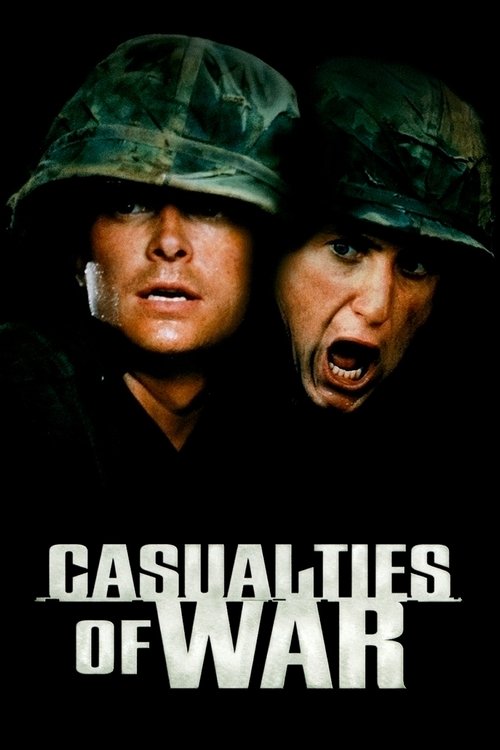 Casualties of War (1989)
 Desperate for Love (1989)
 The Rose Garden (1989)
 True Believer (1989)
 Presumed Innocent (1990)
 Naked Lie (1989)
 Mother's Day (1989)
 The Judge (2014)
- More like this film, on a shelf you can walk up to.It's the lit case on the top shelf.