Doorie (1989)

- Country
- India
- Elsewhere
- IMDb

The catalogue in 3D
The film shelves have a room of their own that you can walk around in. The cat behind the counter is the AI Catbot, and they pick real films from the same catalogue when you tell them what you feel like watching. Nothing is for sale, here or in there. Go in from here and this film is already out on the counter, with more like it waiting on the shelf next to it.
How it feels
A woman navigates a complex personal relationship that challenges her sense of identity and emotional boundaries. The story unfolds through quiet moments and charged exchanges between the characters.
melancholicpoignantslow-burnintimateemotionally rawreflectivequietly intense
What happens
Sharmila Tagore (Bengali: [ʃɔɾˈmila ˈʈʰakuɾ] ; born 8 December 1944), also known by her married name Begum Ayesha Sultana, is an Indian actress whose career has spanned over six decades across Hindi and Bengali films. In recognition of her contributions to cinema, she was honoured with Commander of Order of Arts and Letters by Government of France in 1999, and Padma Bhushan, India's third highest civilian award, in 2013. Tagore is also a recipient of two National Film Awards and a Filmfare Award. Born into the prominent Tagore family, one of the leading families of Calcutta and a key influence during the Bengali Renaissance, Tagore made her acting debut at age 14 with Satyajit Ray's acclaimed Bengali epic drama The World of Apu (1959). She went on to collaborate with Ray on numerous other films, including Devi (1960), Nayak (1966), Aranyer Din Ratri (1970), and Seemabaddha (1971), her other Bengali films over the time included Barnali (1963), Shes Anko (1963), Nirjan Saikate (1965), Amanush (1975), Anand Ashram (1977), and Kalankini Kankabati (1981); thus establishing herself as one of the most acclaimed actresses of Bengali cinema. Tagore's career further expanded when she ventured into Hindi films with Shakti Samanta's romance Kashmir Ki Kali (1964). She established herself as one of the leading actresses of Hindi cinema with films like Waqt (1965), Anupama (1966), Devar (1966), An Evening in Paris (1967), Aamne Saamne (1967), Mere Hamdam Mere Dost (1968), Satyakam (1969), Aradhana (1969), Safar (1970), Amar Prem (1972), Daag (1973), Aa Gale Lag Jaa (1973), Avishkaar (1974), Chupke Chupke (1975), Mausam (1975), Ek Mahal Ho Sapno Ka (1975) and Namkeen (1982). She won the Filmfare Award for Best Actress for Aradhana and the National Film Award for Best Actress for Mausam. This was followed by intermittent film appearances in the subsequent decades, including in Sunny (1984), Swati (1986), New Delhi Times (1986), Mira Nair's Mississippi Masala (1991) and Goutam Ghose's Abar Aranye (2002), which won her the National Film Award for Best Supporting Actress, Shubho Mahurat (2003), and in the Hindi films Aashik Awara (1993), Mann (1999), Viruddh (2005), Eklavya (2007) and Break Ke Baad (2010). Following a hiatus of 13 years, she made her film comeback with the drama Gulmohar (2023) followed by a critically acclaimed performance in Puratawn (2025). Tagore served as the chairperson of the Central Board of Film Certification from October 2004 to March 2011. In December 2005, she was chosen as a UNICEF Goodwill Ambassador. (from Wikipedia, CC BY-SA)
More like this
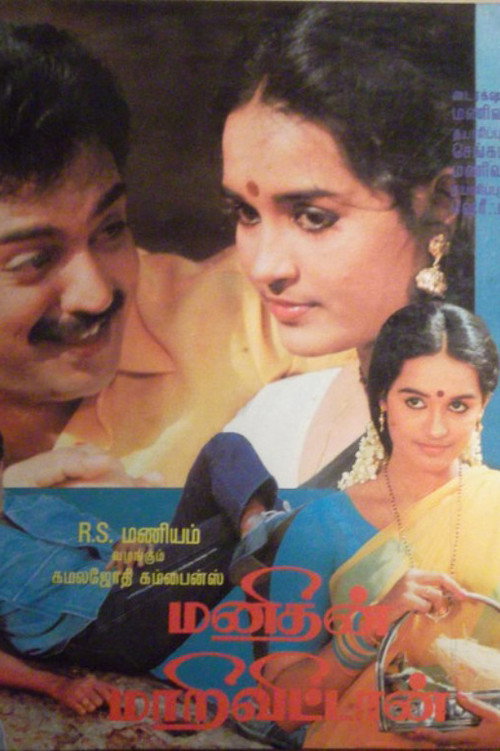 Manidhan Marivittan (1989)
 Aval Oru Sindhu (1989)
 Aararo Aaariraro (1989)
 Daddy (1989)
 Krooran (1989)
 Bhadrachitta (1989)
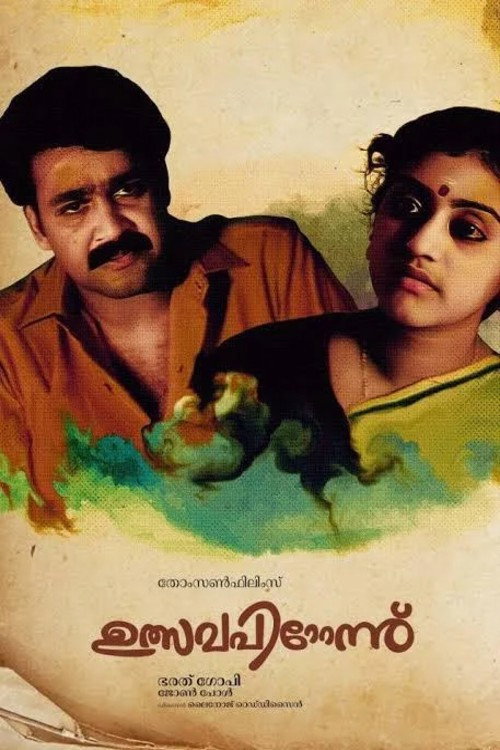 Ulsavapittennu (1989)
 Oru Sayahnathinte Swapnam (1989)
- More like this film, on a shelf you can walk up to.It's the lit case on the top shelf.