Nostos: The Return (1989)

- Original title
- Nostos: il ritorno
- Directed by
- Franco Piavoli
- Genre
- epic film
- Country
- Italy
- Runtime
- 1h 27m
- Rating
- 7.3 of 10 from 37 voters
- Elsewhere
- IMDb

The catalogue in 3D
The film shelves have a room of their own that you can walk around in. The cat behind the counter is the AI Catbot, and they pick real films from the same catalogue when you tell them what you feel like watching. Nothing is for sale, here or in there. Go in from here and this film is already out on the counter, with more like it waiting on the shelf next to it.
How it feels
A man travels home across the Mediterranean Sea after a war. He faces natural obstacles and his own memories. The film uses almost no words and focuses on landscapes and nature.
meditativeslow-burncontemplativedreamlikevisually lushminimalistatmosphericmelancholic
What happens
Nostos: The Return (Italian: Nostos: Il ritorno) is a 1989 Italian adventure drama film directed by Franco Piavoli, starring Luigi Mezzanotte and Branca De Camargo. Drawing from Homer's Odyssey, the film depicts Odysseus' homeward journey across the Mediterranean Sea following the Trojan War, and his struggles against natural obstacles and inner torments. The film relies on visual storytelling and the portrayal of nature; dialogue is minimal, without subtitles, and spoken in an imaginary Mediterranean language. Nostos: The Return explores themes of homecoming, the memory of war, time, and man's relationship with nature. Piavoli began to make films in the 1950s, but Nostos: The Return was his first feature-length fiction film. Envisioning it as "symphonic" as opposed to "theatrical" cinema, Piavoli was in control of most of the creative process and a cast with little film experience. The processes of preparing, filming, and editing the project each took one year to complete. Nostos: The Return premiered at the 1989 Locarno Festival and received a limited release in Italy in 1990. Reception has been largely positive, with critics describing the film's depiction of nature as beautiful. The story has been interpreted as a lyrical version of Homer's epic poem, as a simplified retelling, and as an original narrative. (from Wikipedia, CC BY-SA)
More like this
 A Step Away from the Dawn (1989)
 Marco e Laura dieci anni fa (1989)
 Rebus (1989)
 What Time Is It? (1989)
 Law of the Desert (1989)
 Beyond the Ocean (1990)
 Rito d'amore (1989)
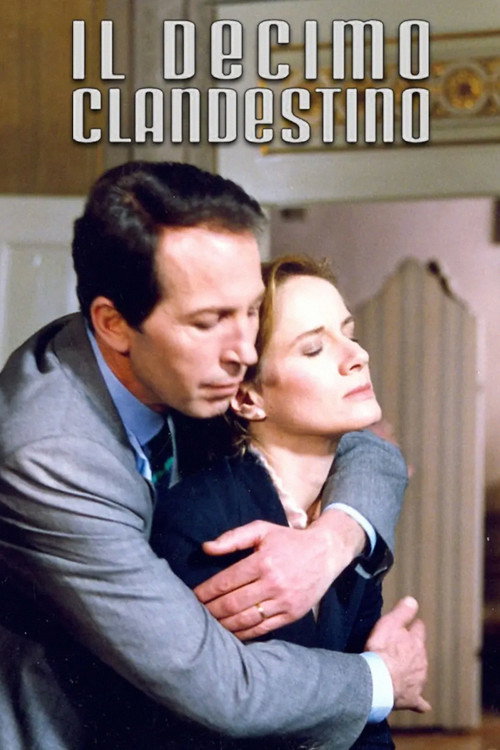 The Tenth One in Hiding (1989)
- More like this film, on a shelf you can walk up to.It's the lit case on the top shelf.