Minoru: Memory of Exile (1992)

- Directed by
- Michael Fukushima
- Genre
- animation, war, drama, history
- Country
- Canada
- Runtime
- 19 min
- Rated
- G
- Rating
- 9.0 of 10 from 2 voters
- Elsewhere
- IMDb

The catalogue in 3D
The film shelves have a room of their own that you can walk around in. The cat behind the counter is the AI Catbot, and they pick real films from the same catalogue when you tell them what you feel like watching. Nothing is for sale, here or in there. Go in from here and this film is already out on the counter, with more like it waiting on the shelf next to it.
How it feels
An animated documentary about a Japanese Canadian family's internment during World War II. It follows the filmmaker's father who was sent to camps in British Columbia and later chose to move to Japan. The film uses animation and archival material to tell this personal story.
anecdotalreflectivepoignantquiethistoricalpersonalgentlesomber
What happens
Minoru: Memory of Exile is a 1992 animated documentary about the Japanese Canadian internment by Michael Fukushima. The film recreates the experiences of the filmmaker's father, Minoru, who as a child was sent along with his family and thousands of other Japanese Canadians to internment camps in the interior of British Columbia. The film explores the narrow range of options available to internees after the war, with Minuro's father choosing the option of repatriation to Japan, even though his children were born in Canada. The film concludes with a description of the Canadian government's redress of 1988, which took place one year after the filmmaker's mother's death. Produced by William Pettigrew for the National Film Board of Canada, Minoru: Memory of Exile combines animation with archival material, and was narrated by Minoru Fukushima. The 19 minute film received several awards, including Best Short Documentary at Hot Docs. The film received some production funding from the National Association of Japanese Canadians (NAJC), and has been screened at national and regional Japanese Canadian events, such as the NAJC's 1992 HomeComing conference. It has also been distributed by the NFB to Canadian schools. (from Wikipedia, CC BY-SA)
More like this
 The Colours of My Father: A Portrait of Sam Borenstein (1992)
 The Art of the Animator Part I (1993)
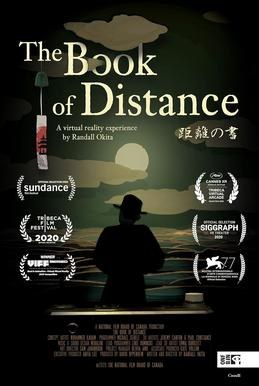 The Book of Distance (2020)
 The Light Fantastick (1974)
 The Mighty River (1993)
 Le Pardon (1992)
 The Valour and the Horror (1992)
 War Against the Indians (1992)
- More like this film, on a shelf you can walk up to.It's the lit case on the top shelf.