Farewell My Concubine (1993)

- Original title
- 霸王别姬
- Directed by
- Chen Kaige
- Genre
- drama film, romance film, historical film
- Country
- People's Republic of China
- Runtime
- 2h 51m
- Rated
- R
- Rating
- 7.9 of 10 from 693 voters
- Elsewhere
- IMDb

The catalogue in 3D
The film shelves have a room of their own that you can walk around in. The cat behind the counter is the AI Catbot, and they pick real films from the same catalogue when you tell them what you feel like watching. Nothing is for sale, here or in there. Go in from here and this film is already out on the counter, with more like it waiting on the shelf next to it.
How it feels
This film follows the intertwined lives of two Peking opera performers and a woman over several decades of political upheaval in 20th-century China. One actor struggles with his identity and unrequited love for his stage partner.
melancholictenseepicslow-burnvisually lushtragicemotionally intensesomberhistorical
What happens
Farewell My Concubine (Chinese: 霸王别姬, lit. 'The Hegemon-King Bids Farewell to His Concubine') is a 1993 epic historical drama film, directed by Chen Kaige, starring Leslie Cheung, Gong Li and Zhang Fengyi. Based on the novel of the same name by Lilian Lee, the film is set in unstable 20th-century China, from the early formations of the Republic of China, to the aftermath of the Cultural Revolution. The film describes the troubled relationships between Peking opera actors Cheng Dieyi, Duan Xiaolou, and Xiaolou's wife Gong Juxian, and their interactions with Chinese politics and society. The film's themes include identity confusion and blurred lines between real life and the stage, portrayed by the revered opera actor Dieyi, whose unrequited love for Xiaolou persists throughout. The film also addressed themes of political and societal disturbances in 20th-century China, which is typical of Chinese Fifth Generation cinema. A co-production between China and Hong Kong, Farewell My Concubine premiered on 1 January 1993 in Hong Kong. Upon release, the film received generally positive reviews from contemporary critics, and jointly won the Palme d'Or with The Piano at the 1993 Cannes Film Festival, becoming the first Chinese-language film to receive the award. It won further accolades, including a Golden Globe for Best Foreign Language Film and a BAFTA for Best Film Not in the English Language, and received two nominations at the 66th Academy Awards for Best Cinematography and Best Foreign Language Film. A few weeks after its release in China, the politburo demanded changes to be made to the film, due to unconventional depictions of traditional values and political sensitivities in its portrayal of the Communist Youth League of China. While allowing a premiere in Beijing, the government objected to the film's representation of homosexuality and gender identity, the suicide of a leading character, and its showing of China's 1960s turmoil. The film was approved for further exhibition in September 1993, less than a year after its original release. However, the re-release had 14 minutes removed from the original film by state censors. Chinese officials felt that a re-release, as opposed to maintaining a full ban, would silence an ever-growing international backlash, and to also help their bid to host the 2000 Olympic Games in Beijing. Farewell My Concubine is considered one of the landmark films of the Fifth Generation movement that brought Chinese film directors to world attention. In 2005, the film was selected as one of the "100 Best Films in Global History" by Time magazine. (from Wikipedia, CC BY-SA)
More like this
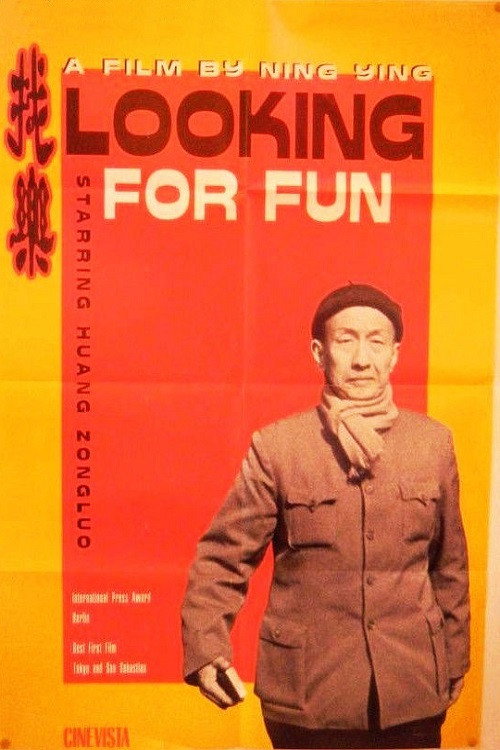 Looking for Fun (1993)
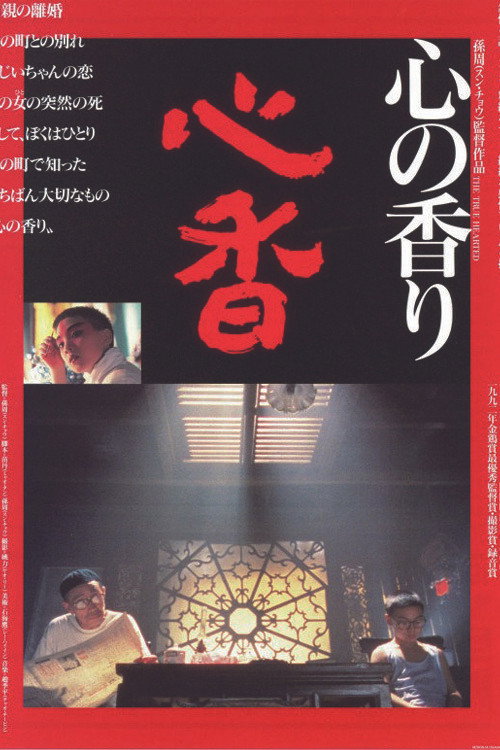 The True-Hearted (1991)
 Beijing Bastards (1993)
 A Wedding in the Dream (1948)
 The Blue Kite (1993)
 In That Distant Place (1993)
 The Palace (2013)
 Chatterbox (1993)
- More like this film, on a shelf you can walk up to.It's the lit case on the top shelf.