Unishe April (1994)

- Original title
- উনিশে এপ্রিল
- Directed by
- Rituparno Ghosh
- Genre
- drama film
- Country
- India
- Runtime
- 2h 13m
- Rated
- U
- Rating
- 7.8 of 10 from 10 voters
- Elsewhere
- IMDb
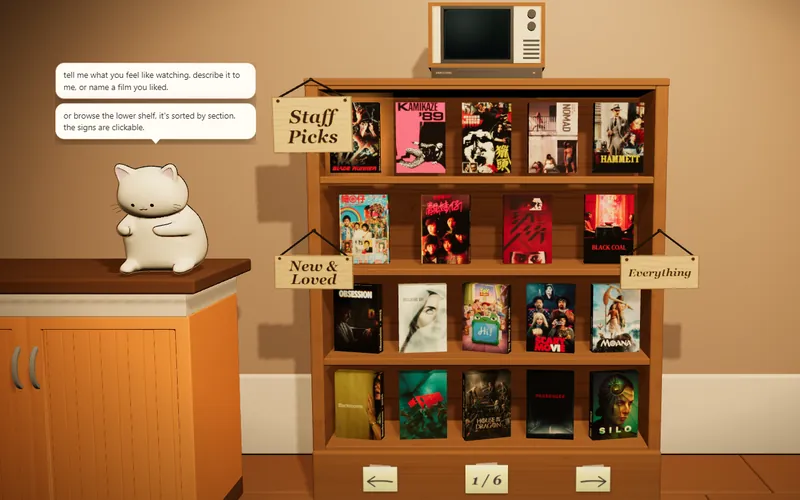
The catalogue in 3D
The film shelves have a room of their own that you can walk around in. The cat behind the counter is the AI Catbot, and they pick real films from the same catalogue when you tell them what you feel like watching. Nothing is for sale, here or in there. Go in from here and this film is already out on the counter, with more like it waiting on the shelf next to it.
How it feels
A woman and her estranged daughter confront their painful history when they meet again. The film explores the long-lasting impact of a mother's emotional absence on her child.
tensemelancholicemotionally rawcontemplativeintimatebittersweetslow-burnsomber
What happens
Unishe April (Bengali pronunciation: [u̯niʃe epril], transl. April 19) is a 1994 Indian Bengali-language drama film directed by Rituparno Ghosh and produced by Renu Roy under the banner of Spandan Films. It stars Aparna Sen, Debashree Roy, Prosenjit Chatterjee, Boddhiswatta Majumdar and Deepankar De. The music of the film was composed by Jyotishka Dasgupta. Unishe April marked Ghosh's second directorial venture after Hirer Angti (1992). A loose remake of Ingmar Bergman's film Autumn Sonata (1978), it opened to widespread acclaim, with critical praise drawn towards the screenplay and performances by the lead actors—especially that of Sen and Roy, the latter eventually winning the National film Award for Best Actress. Ghosh, besides directing the film, also wrote the screenplay while the cinematography was handled by Sunirmal Mazumdar. The film's narrative revolves around the tensed relationship between a woman who is an uninvolved parent and her daughter, depicting how their inter-personal matters lead to a bitter aspect of life. Considered way ahead of its time, the huge success of the film was instrumental in ending the era of action films in Bengali film industry and rejuvenating the genre of art films. Roy's award-winning performance further consolidated her position as the 'undisputed queen of Bengali cinema'. At the 42nd National Film Awards, it won Best Feature Film and was nominated for the New Currents Award at the Busan International Film Festival of 1996. (from Wikipedia, CC BY-SA)
More like this
 Karulina Koogu (1994)
 Pavithra (1994)
 Mani Rathnam (1994)
 Pakshe (1994)
 Anjaam (1994)
 Saajan Ka Ghar (1994)
 Sevvanthi (1994)
 The Broken Journey (1994)
- More like this film, on a shelf you can walk up to.It's the lit case on the top shelf.