El elefante y la bicicleta (1994)

- Directed by
- Juan Carlos Tabío
- Genre
- drama film, comedy film
- Country
- Cuba
- Runtime
- 1h 21m
- Rating
- 7.0 of 10 from 5 voters
- Elsewhere
- IMDb

The catalogue in 3D
The film shelves have a room of their own that you can walk around in. The cat behind the counter is the AI Catbot, and they pick real films from the same catalogue when you tell them what you feel like watching. Nothing is for sale, here or in there. Go in from here and this film is already out on the counter, with more like it waiting on the shelf next to it.
How it feels
A former convict returns to an allegorical island in the 1920s with a silent movie projector. The community starts to see their own revolutionary struggle reflected in the film.
whimsicalplayfulthought-provokingdreamlikenostalgicquirkymetatextualpoeticslow-burn
What happens
The Elephant and the Bicycle (Spanish: El elefante y la bicicleta) is a 1994 Cuban surrealist comedy film directed by Juan Carlos Tabío, and written by Tabío and Eliseo Alberto. The film makes use of magical realism and metatextuality to create a parable of Cuban history from its first conquest through the Cuban Revolution, and pay homage to 100 years of cinema. The film stars Luis Alberto García, Liliam Vega, and Raúl Pomares, and was produced by Rafael Rey. Set in 1925 on an allegorical version of Cuba (an island called La Fe), the film follows El Isleño, an ex-con who returns to his island with a silent movie projector and a print of a version of "Robin Hood". When repeated viewings of the film reaffirm the revolutionary sentiment in the air, the film is transformed in the eyes of its audience into a drama paralleling their own struggle – one in which the underdogs rise up against the island's unpopular landowner, with the villages themselves taking part in the action. It premiered at the sixteenth Havana Film Festival in 1994, where it won two awards, and was later nominated for a Goya Award for Best Spanish Language Foreign Film in 1996. The film was co-produced internationally by ICAIC in Cuba and Channel 4 in the United Kingdom. (from Wikipedia, CC BY-SA)
More like this
 Madagascar (1994)
 Abraham and Eugenia: Stories from Jewish Cuba (1994)
 Aquella larga noche (1979)
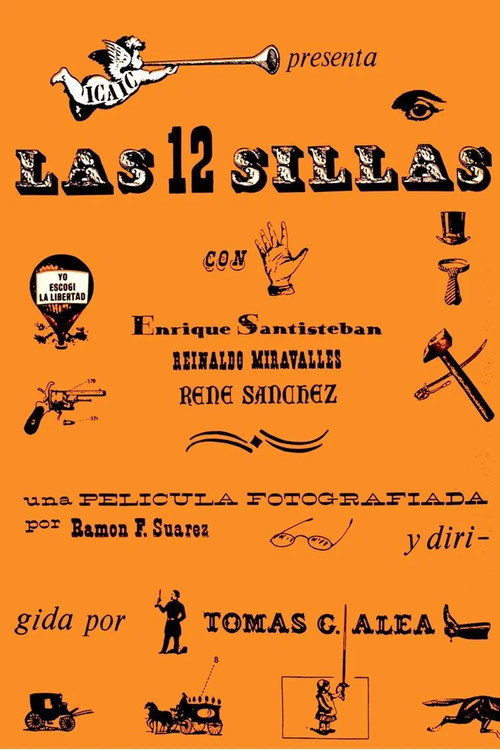 The Twelve Chairs (1962)
 Beloved (1982)
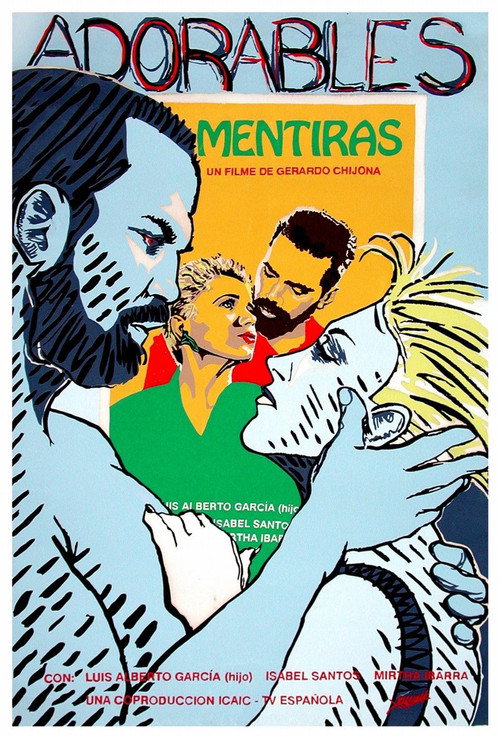 Adorable Lies (1992)
 Portrait of Teresa (1979)
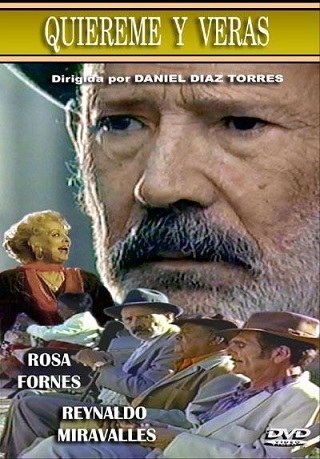 Quiéreme y verás... (1995)
- More like this film, on a shelf you can walk up to.It's the lit case on the top shelf.