Vivir la Utopia (1997)

- Original title
- Vivir la utopía
- Directed by
- Juan A. Gamero
- Genre
- documentary film
- Country
- Spain
- Runtime
- 1h 35m
- Rating
- 7.7 of 10 from 11 voters
- Elsewhere
- IMDb
The catalogue in 3D
The film shelves have a room of their own that you can walk around in. The cat behind the counter is the AI Catbot, and they pick real films from the same catalogue when you tell them what you feel like watching. Nothing is for sale, here or in there. Go in from here and this film is already out on the counter, with more like it waiting on the shelf next to it.
How it feels
This documentary explores the social revolution that happened in Spain during the Spanish Civil War. It shows how workers took control of factories and land in many areas.
informativeeducationalreflectivesoberhistoricaldetailedearnestthoughtful
What happens
The Spanish Revolution was a social revolution that began at the outbreak of the Spanish Civil War in 1936, following the attempted coup to overthrow the Second Spanish Republic and arming of the worker movements and formation of militias to fight the Nationalists. It featured takeover of power at local levels by the Spanish workers' organizations and social movements, seizure and reorganization of economic facilities directed by trade union groups and local committees, and widespread implementation of socialist, more narrowly, libertarian socialist organizational principles throughout various portions of the Republican zone, primarily Catalonia, Aragon, Andalusia, and parts of the Valencian Community. Much of the economy of Spain was put under worker control; in anarchist strongholds like Catalonia, the figure was as high as 75%. Factories were run through worker committees, and agrarian areas became collectivized and run as libertarian socialist communes. Many small businesses, such as hotels, barber shops, and restaurants, were also collectivized and managed by their former employees. The revolutionary principles implemented with the revolution continued to evolve as much as the Republican zone existed, until the end of the civil war with the victory of the Nationalists. The character of the revolution has been described as collectivist and pluralist, carried out by a variety of distinct, often mutually competitive and hostile, political forces and parties; the main forces behind the socioeconomic and political changes were the anarcho-syndicalists of the Confederación Nacional del Trabajo (CNT, National Confederation of Labor) and the Federación Anarquista Ibérica (FAI, Iberian Anarchist Federation), the revolutionary socialists of the Partido Socialista Obrero Español (PSOE, Spanish Socialist Workers' Party), and also the Marxist party Partido Obrero de Unificación Marxista (POUM, Workers' Party of Marxist Unification). The collectivization effort, which took place rather in agriculture than in industry, was primarily organized by the CNT and the UGT; the collectives could be organized wholly by one of the two trade unions, or by both of them as joint organizations, with the POUM, the Communist Party of Spain (PCE) and sometimes the Republican Left also participating in some areas. Along with collectivization, the revolution produced a variety of other changes, including socialization of industry, which meant workers' control over enterprises or, more broadly, over an entire branch of production; in order to achieve the latter, small production and trade plants were disestablished, and their personnel was concentrated in bigger plants, or grouped together and coordinated into cartels. The late Second Spanish Republic and the Nationalists under Francisco Franco suppressed the revolution in their respective territories after its third phase in 1937. (from Wikipedia, CC BY-SA)
More like this
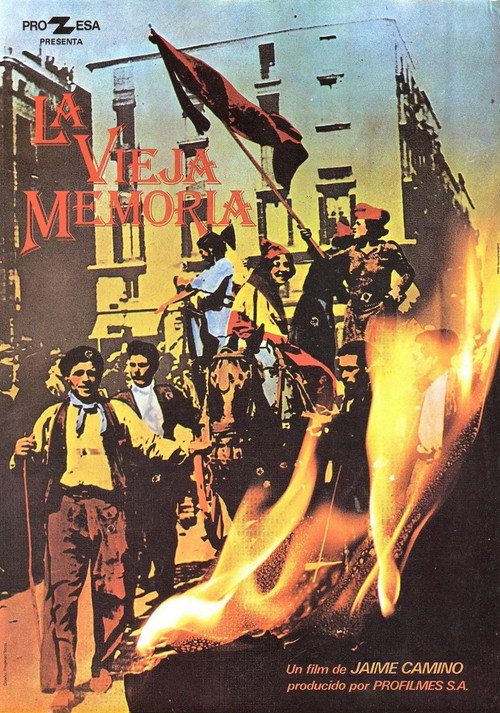 The Old Memory (1979)
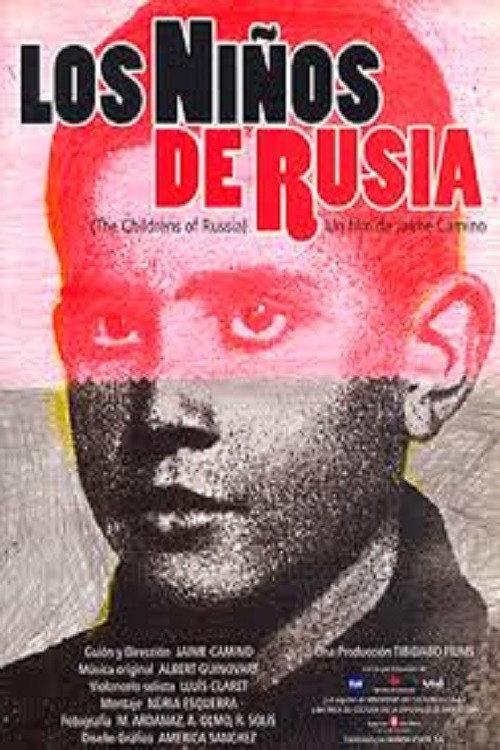 The Children of Russia (2001)
 Noticias de una guerra (2007)
 Escoréu, 24 d'Avientu de 1937 (2017)
 A War in Hollywood (2009)
 La ciutat foradada (1998)
 To Die in Madrid (1963)
 Lesa humanitat (2017)
- More like this film, on a shelf you can walk up to.It's the lit case on the top shelf.