The Pinco Triangle (1999)

- Original title
- The pINCO Triangle
- Directed by
- Patrick Crowe, Tristan R. Whiston
- Genre
- documentary film, LGBTQ-related film
- Country
- Canada
- Runtime
- 47 min
- Elsewhere
- IMDb
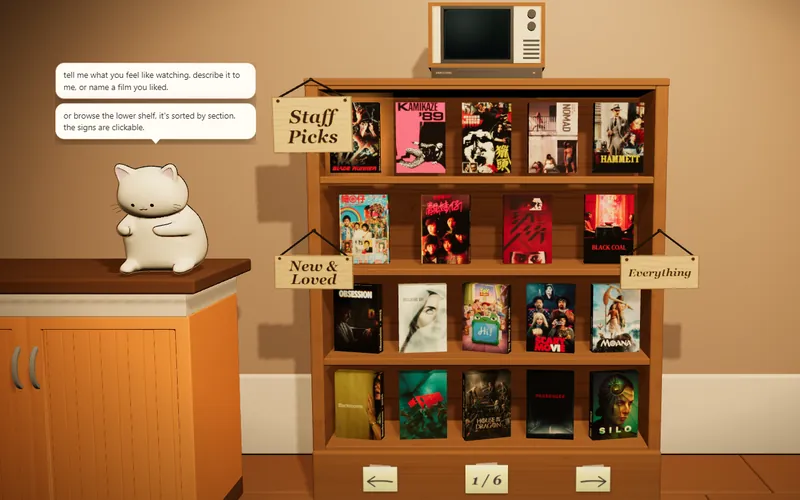
The catalogue in 3D
The film shelves have a room of their own that you can walk around in. The cat behind the counter is the AI Catbot, and they pick real films from the same catalogue when you tell them what you feel like watching. Nothing is for sale, here or in there. Go in from here and this film is already out on the counter, with more like it waiting on the shelf next to it.
How it feels
This Canadian documentary combines interviews with past and present LGBT residents of Sudbury Ontario with reenactments of the filmmakers' own childhoods in the city. The film builds to a drag performance in front of the Big Nickel landmark.
intimatereflectivepersonalinterviewscommunity-focusednostalgicdocumentary-stylelocal-history
What happens
The Pinco Triangle is a Canadian documentary film, directed by Patrick Crowe and Tristan R. Whiston and released in 1999. A profile of LGBT life in Sudbury, Ontario, the film mixes interviews with past and present LGBT residents of the city with vignettes depicting aspects of the directors' own childhoods in the city, acted by a cast including Michael "Bitch Diva" Fitzgerald and Lorraine Segato. The film takes its name from blending the pink triangle, a common LGBT symbol, with the INCO Triangle, the former employee magazine of INCO's mining operations in Sudbury. The interviewees included Michael Boyuk, a performer now associated with The B-Girlz drag comedy troupe, and Paulette Gagnon, an arts administrator who was previously profiled in the documentary film Mum's the Word (Maman et Ève) in 1996. The film's climax is a drag production number staged in front of the Big Nickel. The directors started making the film in 1992, while Crowe was working for the National Film Board of Canada; it began when Crowe made a "pinco triangle" to carry with him at that year's Toronto Pride Parade, and conducted "person on the street" interviews with former Sudburians he met while displaying the symbol. Due to limited financing, the film was not fully completed until 1998. (from Wikipedia, CC BY-SA)
More like this
 Laugh in the Dark (1999)
 Mum's the Word (1996)
 Take Me to Prom (2019)
 Full Blast (1999)
 Drag Kids (2019)
 The Grace of God (1998)
 Queering the Script (2019)
 Deep Inside Clint Star (1999)
- More like this film, on a shelf you can walk up to.It's the lit case on the top shelf.