Rabbit-Proof Fence (2002)

- Directed by
- Phillip Noyce
- Genre
- drama film, adventure film, biographical film, historical film
- Country
- Australia
- Runtime
- 1h 34m
- Rated
- PG
- Rating
- 7.0 of 10 from 390 voters
- Elsewhere
- IMDb
The catalogue in 3D
The film shelves have a room of their own that you can walk around in. The cat behind the counter is the AI Catbot, and they pick real films from the same catalogue when you tell them what you feel like watching. Nothing is for sale, here or in there. Go in from here and this film is already out on the counter, with more like it waiting on the shelf next to it.
How it feels
In 1931 Australia, three Aboriginal girls are taken from their families and placed in a government settlement. They escape and walk over 1,500 miles along a fence to return home, while authorities chase them.
harrowingdeterminedbittersweetvisceralsomberresilienttenseemotionally raw
What happens
Rabbit-Proof Fence is a 2002 Australian epic drama film directed and produced by Phillip Noyce. It was based on the 1996 book Follow the Rabbit-Proof Fence by Doris Pilkington Garimara, an Aboriginal Australian author. It is loosely based on the author's mother Molly Craig, aunt Daisy Kadibil, and cousin Gracie, who escaped from the Moore River Native Settlement, north of Perth, Western Australia, to return to their Aboriginal families. They had been removed from their families and placed there in 1931. The film follows the Aboriginal girls as they walk for nine weeks along 1,600 km (990 mi) of the Australian rabbit-proof fence to return to their community at Jigalong. They were pursued by white law enforcement officials and an Aboriginal tracker. The film explores the official child removal policy that existed in Australia between approximately 1905 and 1967. Its victims, who were taken from their families, now are called the "Stolen Generations". The soundtrack to the film, called Long Walk Home: Music from the Rabbit-Proof Fence, is by English singer and songwriter Peter Gabriel. British producer Jeremy Thomas, who has a long connection with Australia, was executive producer of the film. He sold it internationally through his company HanWay Films. In 2005, the British Film Institute included this film in the BFI list of the "50 films one should see by the age of 14." (from Wikipedia, CC BY-SA)
More like this
 Lost in the Bush (1973)
 Yolngu Boy (2001)
 The Tracker (2002)
 Life at the End of the Rainbow (2002)
 Croker Island Exodus (2012)
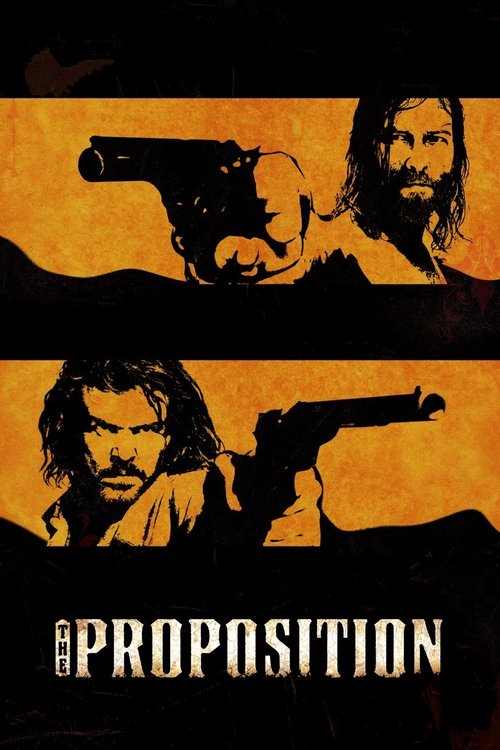 The Proposition (2005)
 Beneath Clouds (2002)
 Teesh and Trude (2002)
- More like this film, on a shelf you can walk up to.It's the lit case on the top shelf.