Radical Harmonies (2002)

- Directed by
- Dee Mosbacher
- Genre
- documentary film, LGBTQ-related film
- Country
- United States
- Runtime
- 1h 28m
- Rating
- 3.8 of 10 from 4 voters
- Elsewhere
- IMDb

The catalogue in 3D
The film shelves have a room of their own that you can walk around in. The cat behind the counter is the AI Catbot, and they pick real films from the same catalogue when you tell them what you feel like watching. Nothing is for sale, here or in there. Go in from here and this film is already out on the counter, with more like it waiting on the shelf next to it.
How it feels
The documentary tells the history of women's music, a genre created by women for women. It uses old performance footage and interviews with musicians, producers, and others who built this cultural network.
archivalcelebratoryearnesteducationalhistoricalinsidernostalgicoral-history
What happens
Radical Harmonies is a 2002 American independent documentary film directed and executive produced by Dee Mosbacher that presents a history of women's music, which has been defined as music by women, for women, and about women. The film was screened primarily at LGBTQ film festivals in 2003 and 2004. Using archival performance footage, still photographs, and interviews with many women involved in the early years and heyday of women's music, Radical Harmonies presents a history of the genre that one scholar has described as "the soundtrack for the cultural arm of radical feminism". The film depicts "women's music as both a cultural network comprising visual arts, dance, theater, and music, and as a utopian vision of women's community". The interviewees include not only women's music pioneers such as Cris Williamson, Holly Near, Linda Tillery, Mary Watkins, Ferron, Alix Dobkin and Bernice Johnson Reagon but also festival producers, concert promoters, sound engineers, sign language interpreters, dancers, comedians, choral conductors, photographers, journalists, record distributors, and record label executives who were part of the cultural movement that was essentially unknown to mainstream audiences. Younger musicians and bands such as Toshi Reagon, Ubaka Hill, Bitch and Animal, and Tribe 8 are also featured, as well as interviews with mainstream artists Amy Ray and Ani DiFranco who "insist on the importance of the women's music movement to their own careers". The documentary is a Woman Vision film. Director Mosbacher, a lesbian feminist activist filmmaker and psychiatrist, established Woman Vision as a nonprofit organization "to promote equal treatment of all people through the production and use of educational media". Musicians involved in the film's production include June Millington as associate director, Margie Adam as associate producer, and Judith Casselberry as production consultant. (from Wikipedia, CC BY-SA)
More like this
 The Cockettes (2002)
 Fabulous! The Story of Queer Cinema (2006)
 When Boys Fly (2002)
 Daddy & Papa (2002)
 Nitrate Kisses (1992)
 Reel in the Closet (2015)
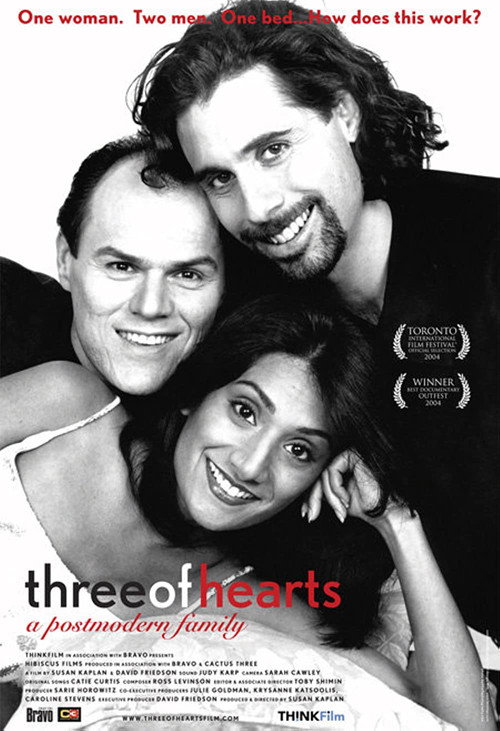 Three of Hearts: A Postmodern Family (2004)
 D.I.Y. or Die: How to Survive as an Independent Artist (2002)
- More like this film, on a shelf you can walk up to.It's the lit case on the top shelf.