Sretno dijete (2003)
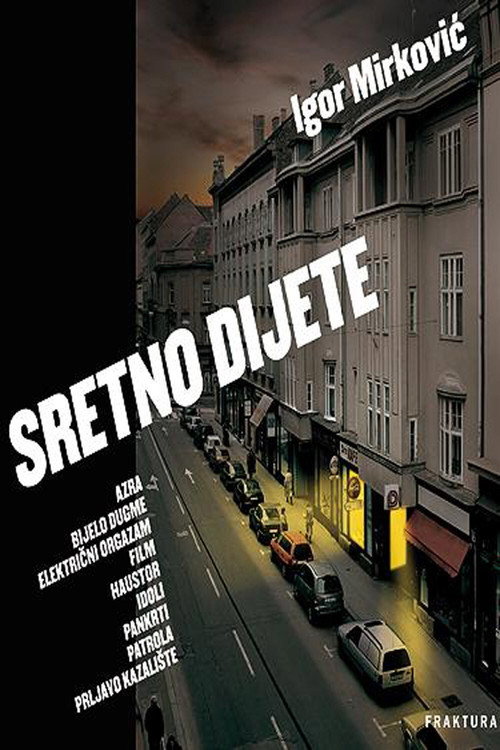
- Directed by
- Igor Mirković
- Genre
- documentary film
- Country
- Croatia
- Runtime
- 1h 37m
- Rating
- 6.6 of 10 from 5 voters
- Elsewhere
- IMDb

The catalogue in 3D
The film shelves have a room of their own that you can walk around in. The cat behind the counter is the AI Catbot, and they pick real films from the same catalogue when you tell them what you feel like watching. Nothing is for sale, here or in there. Go in from here and this film is already out on the counter, with more like it waiting on the shelf next to it.
How it feels
This film looks back at the director's teenage years in Croatia during the late 1970s and early 1980s. It focuses on the punk and new wave music scenes of that time, with interviews and rare footage of bands from across the former Yugoslavia.
nostalgicenergeticreflectiveyouthfulupbeatpersonaldocumentary-style
What happens
Sretno dijete (English: Happy child) is a Croatian documentary film directed by Igor Mirković, and produced by Rajko Grlić, an Ohio University professor of film, in 2003. The film is a nostalgic autobiographical overview of the author's adolescence in SR Croatia in the former Socialist Federal Republic of Yugoslavia during the late 1970s and early 1980s which corresponded with the emergence of the Yugoslav punk rock and new wave scenes, both which the author affiliated to, thus turning this film into a rockumentary. The film features interviews and rare footage of some of the top former Yugoslav rock acts ever such as: Azra, Film and Haustor from the author's hometown Zagreb, Croatia where most of the story takes place; then members of Električni orgazam and Idoli whom the author visits in Belgrade, Serbia; as well as Pankrti and Buldožer from Ljubljana, Slovenia. Beside materials filmed around former Yugoslavia, the film also contains interviews with important former Yugoslav artists who currently live abroad. For example, Darko Rundek is interviewed in Paris, France, Mirko Ilić in New York City in the United States, and there are also scenes shot on locations in the Netherlands, Germany, Hungary and other countries. The film is named after a song by Prljavo kazalište from their first self-titled album. (from Wikipedia, CC BY-SA)
More like this
 Bunarman (2003)
 Generation of ’68 (2016)
 The One Who Will Stay Unnoticed (2003)
 Srbenka (2018)
 Going Home (2003)
 Gdje je nestalo? Ili nije?
 The War Reporter (2011)
 The Doctor of Craziness (2003)
- More like this film, on a shelf you can walk up to.It's the lit case on the top shelf.