Sinbad: Legend of the Seven Seas (2003)

- Directed by
- Tim Johnson
- Genre
- fantasy film, comedy film, adventure film, pirate film, children's film
- Country
- United States
- Runtime
- 1h 26m
- Rated
- PG
- Rating
- 7.1 of 10 from 2,246 voters
- Elsewhere
- IMDb

The catalogue in 3D
The film shelves have a room of their own that you can walk around in. The cat behind the counter is the AI Catbot, and they pick real films from the same catalogue when you tell them what you feel like watching. Nothing is for sale, here or in there. Go in from here and this film is already out on the counter, with more like it waiting on the shelf next to it.
How it feels
A pirate named Sinbad must steal a magical book back from the goddess of chaos to save his childhood friend from execution. He sails across dangerous seas with his loyal crew and a stubborn woman who is engaged to his friend.
adventurouslightheartedwhimsicalbriskfamily-friendlyswashbucklingcharming
What happens
Sinbad: Legend of the Seven Seas (or simply Sinbad) is a 2003 American animated fantasy adventure film directed by Tim Johnson and Patrick Gilmore and written by John Logan, featuring the character Sinbad. Produced by DreamWorks Animation and distributed by DreamWorks Pictures, it stars the voices of Brad Pitt, Catherine Zeta-Jones, Michelle Pfeiffer, Joseph Fiennes, and Dennis Haysbert. The film tells the story of Sinbad (voiced by Pitt), a pirate who travels the sea with his dog and his loyal crew, alongside Marina (voiced by Zeta-Jones), the fiancée of his childhood friend Prince Proteus (voiced by Fiennes), to recover the stolen Book of Peace from Eris (voiced by Pfeiffer) to save Proteus from approving Sinbad's death sentence. Development began when Ted Elliott and Terry Rossio developed the story of Sinbad in the vein of the story of Damon and Pythias before settling on a love triangle. The project was canceled in 1993, though Jeffrey Katzenberg decided to restart some ideas when he left the Walt Disney Company and co-founded DreamWorks Pictures in 1994 during the production of The Prince of Egypt (1998). Johnson, who attempted to direct his follow-up CGI animated film Tusker following Antz (1998), before eventually scrapped the project, was recruited to direct Sinbad and teamed with Gilmore. Like the studio's previous film, Spirit: Stallion of the Cimarron (2002), the film combines traditional animation and computer animation. The film blends elements from One Thousand and One Nights and classical mythology. The film's traditional animation and its final line services were provided by Stardust Pictures and Bardel Entertainment, with PDI/DreamWorks handling its computer animation technology and CG character animation. The score for the film was composed by Harry Gregson-Williams. Sinbad was released on July 2, 2003, and received mixed reviews from critics, who praised the animation, action sequences, and voice performances, but criticized the storyline, polarizing CGI, and the film's departure from its Arabic origin. Grossing $80 million on a $60 million budget, Sinbad was considered by analysts to be a box-office failure, causing DreamWorks to suffer a $125 million loss on a string of films. The film is also listed as one of the biggest box-office bombs of all time, which nearly bankrupted the studio. To date, this soon became the final DreamWorks Animation film to use traditional animation as the studio abandoned and discontinued it in favor of computer animation. However, DreamWorks brought 2D animation back for the 5-minute short film Bird Karma in 2018. Until the releases of Rise of the Guardians and Ruby Gillman, Teenage Kraken in 2012 and 2023 respectively, Sinbad: Legend of the Seven Seas was DreamWorks Animation's biggest box office failure. (from Wikipedia, CC BY-SA)
More like this
 Sinbad and the Cyclops Island (2003)
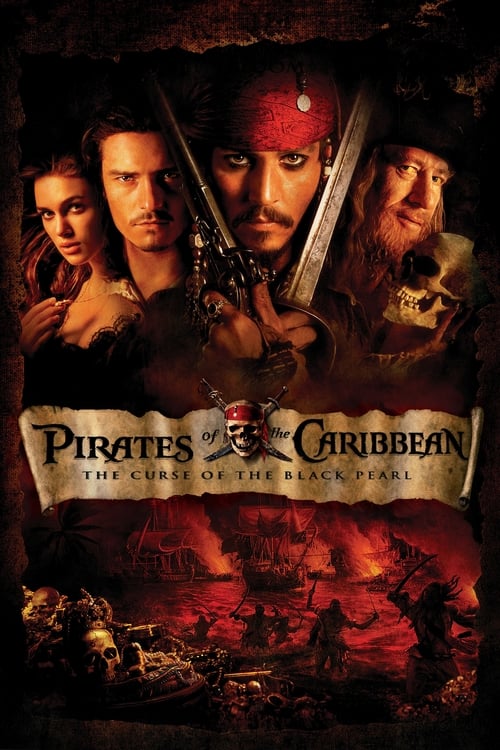 Pirates of the Caribbean: The Curse of the Black Pearl (2003)
 The 7th Voyage of Sinbad (1958)
 Pirates of the Caribbean: At World's End (2007)
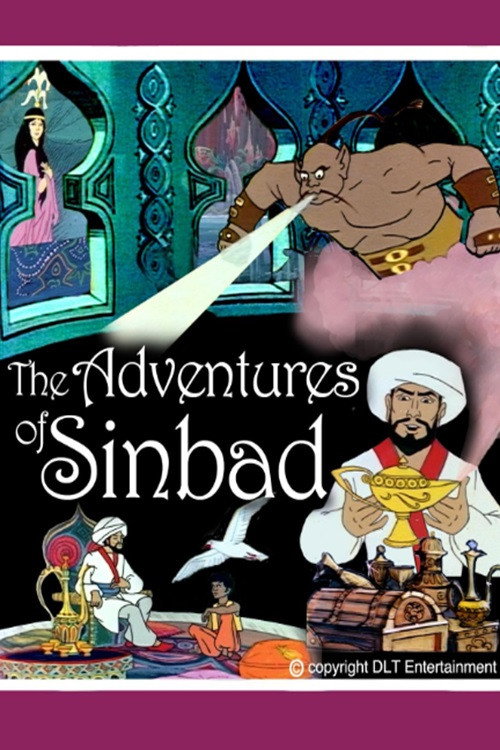 The Adventures of Sinbad (1979)
 The Adventures of Sinbad (2013)
 The Golden Voyage of Sinbad (1973)
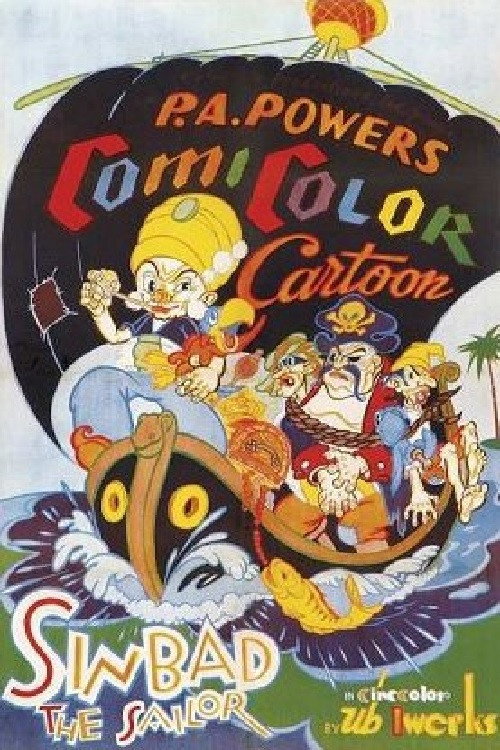 Sinbad the Sailor (1935)
- More like this film, on a shelf you can walk up to.It's the lit case on the top shelf.