Blacksmith Scene (1893)

- Original title
- Blacksmithing Scene
- Directed by
- William Kennedy Dickson
- Genre
- documentary film, silent film, docufiction
- Country
- United States
- Runtime
- 34 min
- Rating
- 5.6 of 10 from 113 voters
- Elsewhere
- IMDb
The catalogue in 3D
The film shelves have a room of their own that you can walk around in. The cat behind the counter is the AI Catbot, and they pick real films from the same catalogue when you tell them what you feel like watching. Nothing is for sale, here or in there. Go in from here and this film is already out on the counter, with more like it waiting on the shelf next to it.
How it feels
Two blacksmiths hammer at an anvil and take a drink. The film shows a simple reenactment of this work scene.
historicalbriefsilentstraightforwardobservationalstagedquaintold-fashioned
What happens
Blacksmith Scene (also known as Blacksmith Scene #1 and Blacksmithing Scene) is an 1893 American short black-and-white silent film directed by William K.L. Dickson, the Scottish-French inventor who, while under the employ of Thomas Edison, developed one of the first fully functional motion picture cameras. It is historically significant as the first Kinetoscope film shown in public exhibition on May 9, 1893, and is the earliest known example of actors performing a role in a film. It was also the first U.S. motion picture film ever copyrighted that same year. 102 years later, in 1995, Blacksmithing Scene was selected for preservation in the United States National Film Registry by the Library of Congress as being "culturally, historically, or aesthetically significant". It is the second-oldest film included in the Registry, after Newark Athlete (1891). (from Wikipedia, CC BY-SA)
More like this
 New Blacksmith Shop (1895)
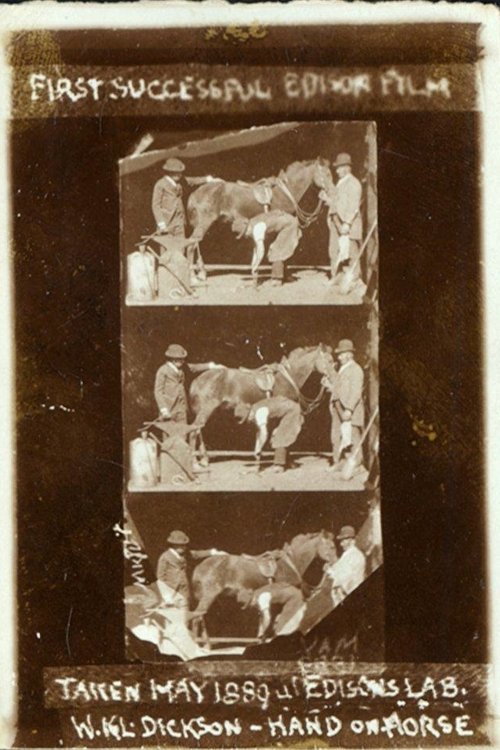 Horse Shoeing (1893)
 Les Forgerons (1895)
 Where Golden Bars Are Cast (1902)
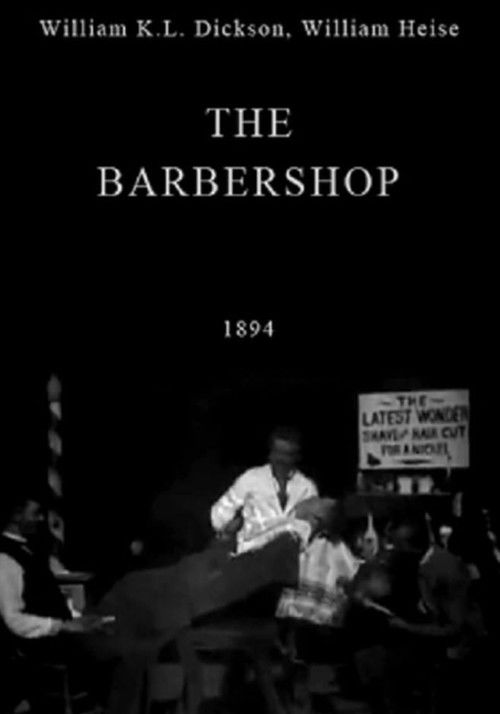 The Barbershop (1893)
 Blackton Sketches, No. 2 (1896)
 Beef Extract Room (1901)
 Duncan and Another, Blacksmith Shop (1891)
- More like this film, on a shelf you can walk up to.It's the lit case on the top shelf.