Celsius 41.11 (2004)

- Directed by
- Kevin Knoblock
- Genre
- documentary film
- Country
- United States
- Runtime
- 1h 12m
- Rated
- R
- Rating
- 5.5 of 10 from 4 voters
- Elsewhere
- IMDb

The catalogue in 3D
The film shelves have a room of their own that you can walk around in. The cat behind the counter is the AI Catbot, and they pick real films from the same catalogue when you tell them what you feel like watching. Nothing is for sale, here or in there. Go in from here and this film is already out on the counter, with more like it waiting on the shelf next to it.
How it feels
This documentary defends President George W. Bush against criticisms from Michael Moore's film Fahrenheit 9/11. It also attacks Democratic presidential candidate John Kerry. The movie was made quickly and released just before the 2004 election.
polemicalpartisanfast-pacedconfrontationalinformationalargumentativerhetoricaltopical
What happens
Celsius 41.11 is a 2004 political documentary film inspired by, and partially in response to Michael Moore's film Fahrenheit 9/11. The title was chosen because, according to the makers of the movie, 41.11 °C is "The Temperature at Which the Brain Begins to Die", which is the film's tag-line. The film addresses five charges made against George W. Bush in Moore's film and criticizes 2004 Democratic Presidential candidate John Kerry. It was released during the run-up to the 2004 United States Presidential general election. It took six weeks to make Celsius 41.11. The production was funded and the film distributed to a limited number of movie theaters by Citizens United, a conservative political organization. Celsius 41.11 performed less well at the box office than comparable left-leaning documentaries and significantly poorer than Fahrenheit 9/11. The producer attributed this to voter fatigue and to a timetabling clash with the World Series. The critics' response was described as "irk[ed]" by the BBC. A number of critics described the film as a campaign advertisement for George W. Bush. Several believed that the movie would appeal primarily to convinced supporters of George W. Bush and was unlikely to sway undecided voters or change the opinion of Kerry supporters. The critics felt the film shared the flaws of Fahrenheit 9/11 without sharing all of its virtues; in particular, it was criticised for a comparative lack of emotion. The reliability of some of the individuals interviewed was questioned by The New York Times and The Boston Globe. Critics frequently compared the style to that of a PowerPoint presentation with some adding that the speed with which the film had been produced was evident in the quality of the finished product. Opinions as to the quality of the arguments advanced varied. (from Wikipedia, CC BY-SA)
More like this
 Fahrenhype 9/11 (2004)
 Fahrenheit 9/11 (2004)
 The Hunting of the President (2004)
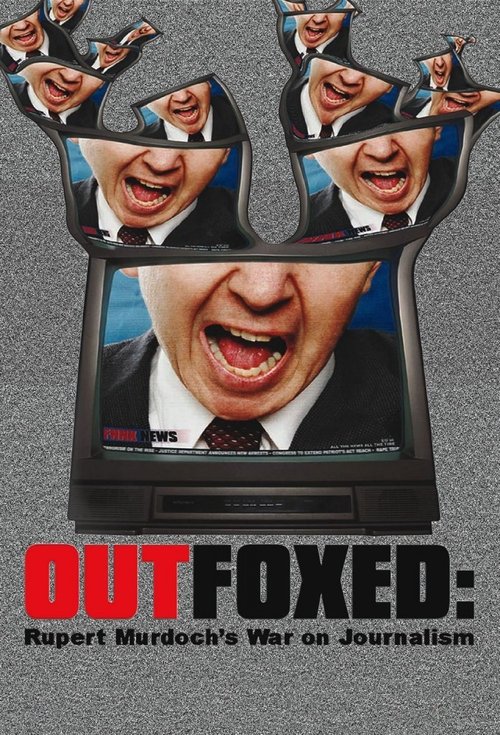 Outfoxed (2004)
 Uncovered: The War on Iraq (2004)
 ...So Goes the Nation (2006)
 Michael Moore Hates America (2004)
 Bush Family Fortunes: The Best Democracy Money Can Buy (2004)
- More like this film, on a shelf you can walk up to.It's the lit case on the top shelf.