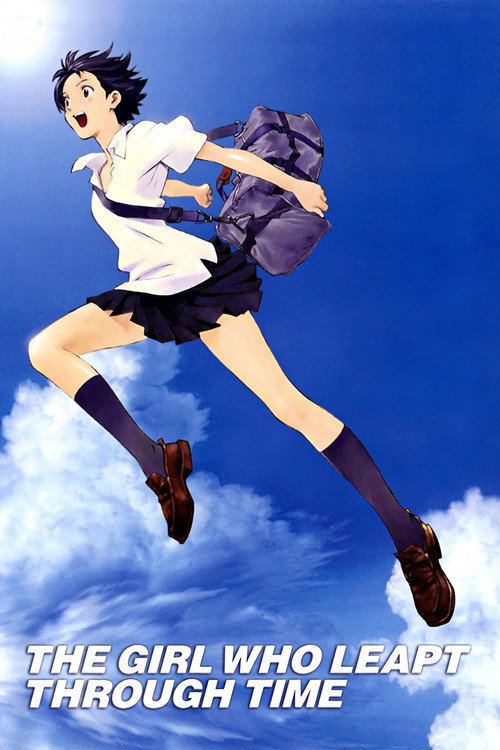
The Girl Who Leapt Through Time (2006)
- Original title
- 時をかける少女
- Directed by
- Mamoru Hosoda
- Genre
- science fiction film, romance film, coming-of-age film, time-travel film, romance anime and manga, science fiction anime
- Country
- Japan
- Runtime
- 1h 40m
- Rated
- NR
- Rating
- 7.8 of 10 from 2,270 voters
- Elsewhere
- IMDb
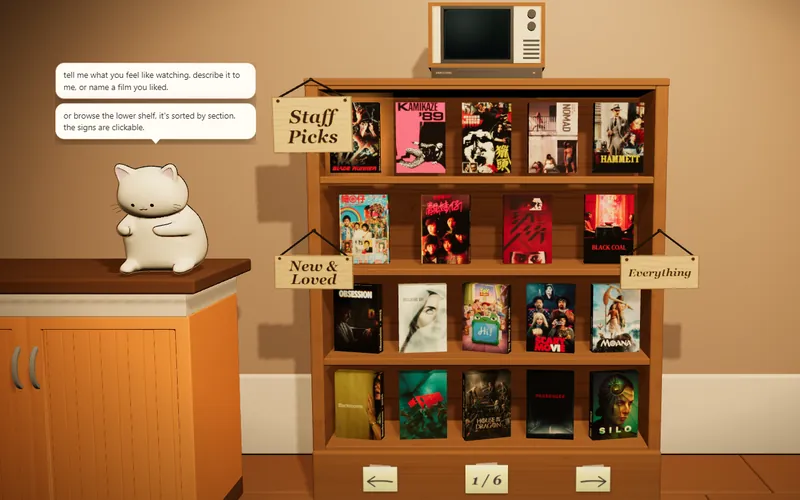
The catalogue in 3D
The film shelves have a room of their own that you can walk around in. The cat behind the counter is the AI Catbot, and they pick real films from the same catalogue when you tell them what you feel like watching. Nothing is for sale, here or in there. Go in from here and this film is already out on the counter, with more like it waiting on the shelf next to it.
How it feels
A teenage girl gains the ability to jump back in time and uses it to fix small problems in her daily life. She learns that messing with time can have unexpected consequences on her friendships and the people around her.
lightheartedplayfulbittersweetwhimsicalenergeticnostalgicemotionalsweetreflective
What happens
The Girl Who Leapt Through Time (時をかける少女, Toki o Kakeru Shōjo) is a 2006 Japanese animated science fiction romance film, directed by Mamoru Hosoda, written by Satoko Okudera, and produced by Madhouse. It is a loose sequel to the 1967 novel of the same name by Yasutaka Tsutsui and shares the basic premise, but with a different story and characters than the novel. The protagonist is Makoto Konno, a teenage girl who learns the power of time travel from Kazuko Yoshiyama, her aunt and the protagonist to the original story. She begins using the time-leaps frivolously to fix problems, and repeatedly relives the same day in a time loop. Makoto is voiced by Riisa Naka, who would later portray Makoto's cousin, Akari Yoshiyama, the protagonist of the 2010 live-action film Time Traveller: The Girl Who Leapt Through Time, which follows a different story. The Girl Who Leapt Through Time was released by Kadokawa Herald Pictures on July 15, 2006, and received positive reviews. It won numerous awards, including the Japan Academy Film Prize for Animation of the Year. The English version was licensed and produced by Kadokawa Pictures U.S., with dubbing supplied by Ocean Productions, and released by Bandai Entertainment in 2008 and re-released by Funimation in 2016. (from Wikipedia, CC BY-SA)
More like this
 Love Letter So Renka (2006)
 Sugar and Spice (2006)
 First Love (2006)
 I Am Nipponjin (2006)
 STAY (2006)
 Rough (2006)
 The Gift from Heaven (2007)
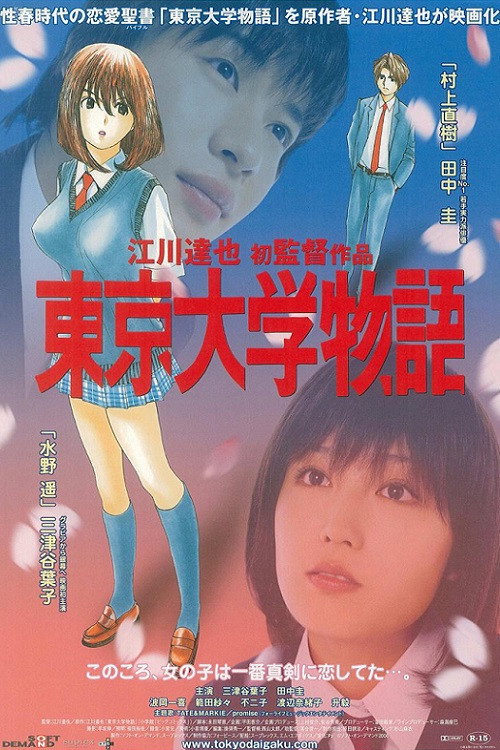 Tokyo Daigaku Monogatari (2006)
- More like this film, on a shelf you can walk up to.It's the lit case on the top shelf.