Ozhimuri (2012)
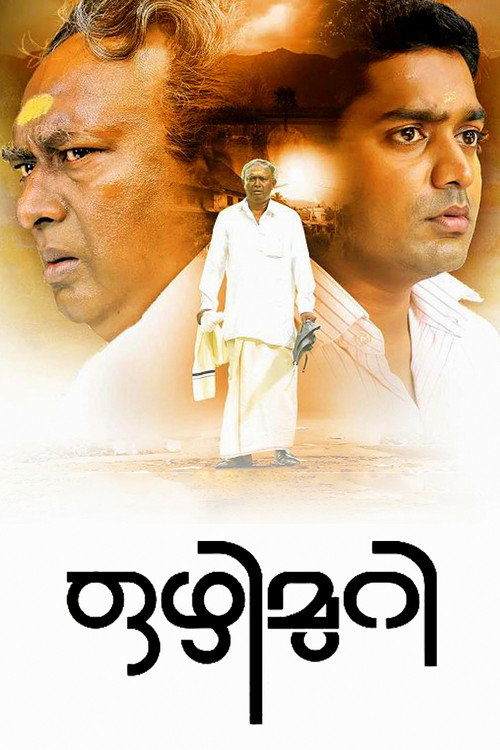
- Original title
- ഒഴിമുറി
- Directed by
- Madhupal
- Genre
- drama
- Country
- India
- Runtime
- 2h 07m
- Rating
- 7.7 of 10 from 9 voters
- Elsewhere
- IMDb
The catalogue in 3D
The film shelves have a room of their own that you can walk around in. The cat behind the counter is the AI Catbot, and they pick real films from the same catalogue when you tell them what you feel like watching. Nothing is for sale, here or in there. Go in from here and this film is already out on the counter, with more like it waiting on the shelf next to it.
How it feels
This film is set in mid-20th century Travancore and follows the lives of people in a Nair community as the traditional matrilineal system fades away. It centers on family relationships, property rights, and the formal divorce records called ozhimuri. The story shows how these changes affect gender roles and personal connections.
thoughtfulslow-burnmelancholiccontemplativeemotionally complexvisually richgroundedintrospective
What happens
Ozhimuri (transl. divorce record) is a 2012 Indian Malayalam-language period drama film directed by Madhupal and written by Jeyamohan. The film stars Lal, Mallika, Asif Ali, Bhavana, and Shwetha Menon. The music was composed by Bijibal. The film received critical acclaim but underperformed at the box office. It was selected for the Indian Panorama section at the 43rd International Film Festival of India. It has been described by critics as one of the notable films of the Malayalam New Wave cinema movement. The film is based on the book Uravidangal by Jeyamohan. It explores the matrilineal system that existed in the Nair community in the former region of Travancore. In this system, property and lineage were historically traced through women, and divorce was formally recorded using documents known as ozhimuri, or divorce records written on palm leaves. The narrative examines the transition from a matrilineal to a patrilineal social structure in the mid-20th century and its impact on gender roles and family systems in the region. (from Wikipedia, CC BY-SA)
More like this
 Bhoomiyude Avakashikal (2012)
 Parvathi Pura (2012)
 Mayilu (2012)
 Balukabela.com (2012)
 Last Bench (2012)
 Lessons in Forgetting (2012)
 Hou De Jarasa Ushir (2012)
 Bhagirathi (2012)
- More like this film, on a shelf you can walk up to.It's the lit case on the top shelf.