1986: The Act (2020)

- Original title
- 1986: The ACT
- Directed by
- Andrew Wakefield
- Genre
- documentary, drama
- Country
- United States
- Runtime
- 2h 04m
- Rating
- 6.5 of 10 from 2 voters
- Elsewhere
- IMDb
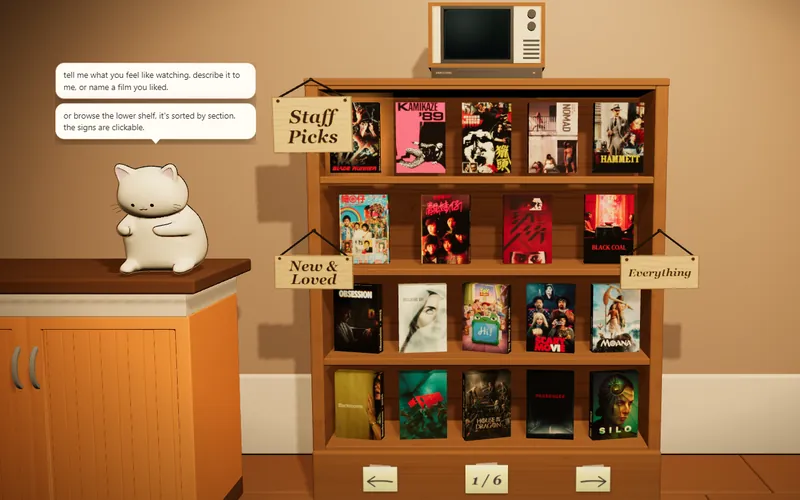
The catalogue in 3D
The film shelves have a room of their own that you can walk around in. The cat behind the counter is the AI Catbot, and they pick real films from the same catalogue when you tell them what you feel like watching. Nothing is for sale, here or in there. Go in from here and this film is already out on the counter, with more like it waiting on the shelf next to it.
How it feels
This film recounts the actions of Andrew Wakefield, a former doctor whose fraudulent research falsely linked vaccines to autism. It covers how his work led to a drop in vaccination rates and subsequent disease outbreaks.
informativecriticalseriousstraightforwardfactualsoberinginvestigative
What happens
Andrew Jeremy Wakefield (born 3 September 1956) is an English fraudster and anti-vaccine activist. Formerly a senior surgeon, he was struck off the British medical register in 2010 for "serious professional misconduct" due to his involvement in the fraudulent 1998 Lancet MMR autism report, which falsely claimed a link between the measles, mumps and rubella (MMR) vaccine and autism. The publicity surrounding the study caused a sharp decline in vaccination uptake, leading to a number of outbreaks of measles around the world and many deaths as a result. He was a surgeon on the liver transplant programme at the Royal Free Hospital in London, and became a senior lecturer and honorary consultant in experimental gastroenterology at the Royal Free and University College School of Medicine. He resigned from his positions there in 2001 "by mutual agreement", then moved to the United States. In 2004 he co-founded and began working at the Thoughtful House research centre (later renamed the Johnson Center for Child Health and Development) in Austin, Texas. He served as executive director of the centre until February 2010, when he resigned in the wake of findings against him by the British General Medical Council (GMC), which had struck him off their register. He has subsequently become known for his anti-vaccination activism. Wakefield published his 1998 paper on autism in the British medical journal The Lancet, claiming to have identified a novel form of enterocolitis linked to autism. However, other researchers were unable to reproduce his findings, and a 2004 investigation by The Sunday Times reporter Brian Deer identified undisclosed financial conflicts of interest on Wakefield's part. Wakefield reportedly stood to earn up to US$43 million per year selling test kits. Most of Wakefield's co-authors then withdrew their support for the study's interpretations, and the GMC conducted an inquiry into allegations of misconduct against Wakefield and two former colleagues, focusing on Deer's findings. In 2010 the GMC found that Wakefield had been dishonest in his research, had acted against patients' best interests, had mistreated developmentally delayed children and had "failed in his duties as a responsible consultant". The Lancet fully retracted Wakefield's 1998 publication on the basis of the GMC's findings, noting that elements of the manuscript had been falsified and that the journal had been "deceived" by Wakefield. Three months later, Wakefield was struck off the UK medical register, in part for his deliberate falsification of research published in The Lancet. In a related legal decision, a British court held that "[t]here is now no respectable body of opinion which supports [Wakefield's] hypothesis, that MMR vaccine and autism/enterocolitis are causally linked". In 2016 Wakefield directed the anti-vaccination film Vaxxed: From Cover-Up to Catastrophe. (from Wikipedia, CC BY-SA)
More like this
 Vaxxed II: The People's Truth (2019)
 Vaxxed (2016)
 The Greater Good (2011)
 Hear the Silence (2003)
 The Good Doctor (2017)
 Trace Amounts (2014)
 The Social Dilemma (2020)
 Plandemic (2020)
- More like this film, on a shelf you can walk up to.It's the lit case on the top shelf.