Columbia Unbecoming

- Genre
- documentary film
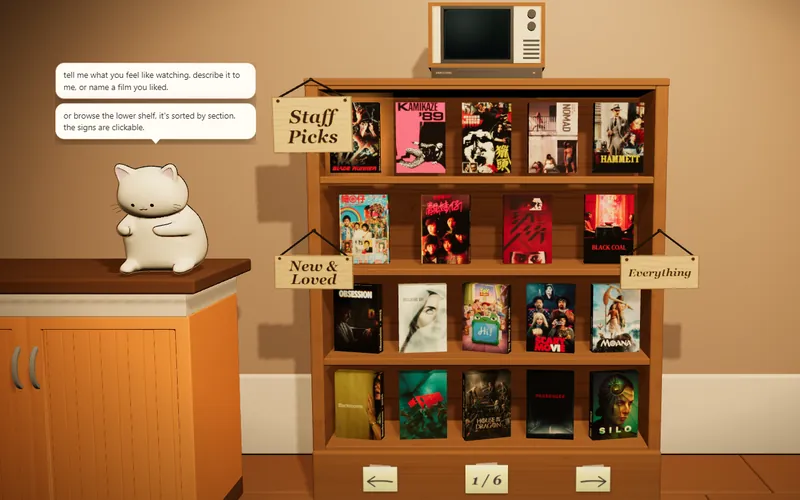
The catalogue in 3D
The film shelves have a room of their own that you can walk around in. The cat behind the counter is the AI Catbot, and they pick real films from the same catalogue when you tell them what you feel like watching. Nothing is for sale, here or in there. Go in from here and this film is already out on the counter, with more like it waiting on the shelf next to it.
How it feels
A group of pro-Israel students at Columbia University made a short documentary film in 2004. They interviewed students and a chaplain who accused certain professors of being biased against Israel and of misconduct. The professors denied the accusations and described the film as a smear campaign.
accusatorypartisantensecontroversialassertiveconfrontationaldivisiveunsettling
What happens
In 2004, during the Second Intifada, a group of pro-Israel students at Columbia University in New York City, along with the pro-Israel campus group The David Project, produced the 25-minute film Columbia Unbecoming presenting interviews with some students and the campus Jewish chaplain Rabbi Charles Sheer about professors in the department of Middle East and Asian Languages and Cultures (MEALAC)—mainly George Saliba, Joseph Massad, and Hamid Dabashi—whom they described as biased against Israel and whom they accused of misconduct. Massad said the episodes concerning him did not take place and that none of the people in the film had been students of his, describing the film project as a "witch-hunt." Saliba too denied that the episode concerning him happened as described in the film. Critics of the film called the film "propaganda" and described it as part of a "smear campaign" against professors critical of Israel. There were select screenings of the film in the autumn of 2004. Some of the students interviewed said they had been intimidated by the three professors over their pro-Israel views. Others complained about an atmosphere that was hostile to Israel. Pro-Israel pundits, including figures such as Anthony Weiner, called for Columbia to fire Joseph Massad, who was not yet tenured at the time. Columbia initiated an inquiry by an ad‑hoc faculty committee, which concluded in 2005 that there was no evidence to support allegations of antisemitism against Massad. The controversy sparked a national debate on the topic of academic freedom and its limits. Many felt that Massad was the target of a witch-hunt for his pro-Palestinian views and that the controversy was part of a larger campaign to rein in academic freedom in the U.S. Some argued that the students' perception of bias against Israel stemmed from their unfamiliarity with the Israeli–Palestinian conflict and the social conditioning of a strongly pro-Israel society. (from Wikipedia, CC BY-SA)
More like this
 Crossing the Line 2: The New Face of Anti-Semitism on Campus (2015)
 Peace, Propaganda & the Promised Land (2004)
 Blind Spot
 Confrontation at Concordia (2003)
 The Occupation of the American Mind (2016)
 Occupation 101 (2006)
 Discordia (2002)
 'Til Kingdom Come (2020)
- More like this film, on a shelf you can walk up to.It's the lit case on the top shelf.