The Amos 'n Andy Show (1928)

- Original title
- Amos 'n' Andy
- Directed by
- Charles Barton
- Genre
- sitcom
- Country
- United States
- Length
- 3 seasons, 58 episodes
- Rating
- 7.6 of 10 from 9 voters
- Elsewhere
- IMDb
The catalogue in 3D
The film shelves have a room of their own that you can walk around in. The cat behind the counter is the AI Catbot, and they pick real films from the same catalogue when you tell them what you feel like watching. Nothing is for sale, here or in there. Go in from here and this series is already out on the counter, with more like it waiting on the shelf next to it.
How it feels
This radio sitcom follows two black friends living in a big city. They get into small adventures and misunderstandings with their social club and neighbors.
comediclighthearteddatedserializedperiod-specificeverydaytalkyconversational
What happens
Amos 'n' Andy is an American radio sitcom about black characters, initially set in Chicago then later in the Harlem section of New York City. While the show had a brief life on 1950s television with black actors, the 1928 to 1960 radio show was created, written, and voiced by two white actors, Freeman Gosden and Charles Correll, who played Amos Jones (Gosden), Andrew Hogg Brown (Correll), and George "Kingfish" Stevens (Gosden) as well as incidental characters. On television from 1951 to 1953, black actors took over the majority of the roles; white characters were infrequent. Amos 'n' Andy began as one of the first radio comedy series and originated from station WMAQ in Chicago. After the first broadcast in 1928, the show became a hugely popular series, first on NBC Radio and later on CBS Radio and Television. Later episodes were broadcast from the El Mirador Hotel in Palm Springs, California. The show ran as a nightly radio serial (1928–43), as a weekly situation comedy (1943–55) and as a nightly disc-jockey program (1954–60). A television adaptation ran on CBS (1951–53) and continued in syndicated reruns (1954–66). It was not shown to a nationwide audience again until 2012. (from Wikipedia, CC BY-SA)
More like this
 You're the One (1998)
 The Good Guys (1968)
 Between Brothers (1997)
 Margie (1961)
 House Rules (1998)
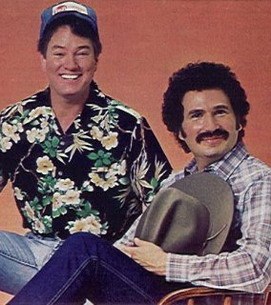 Lewis & Clark (1981)
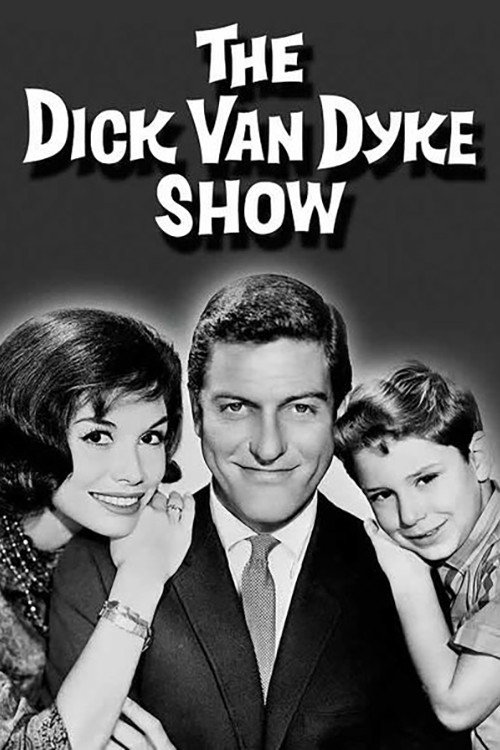 The Dick Van Dyke Show (1961)
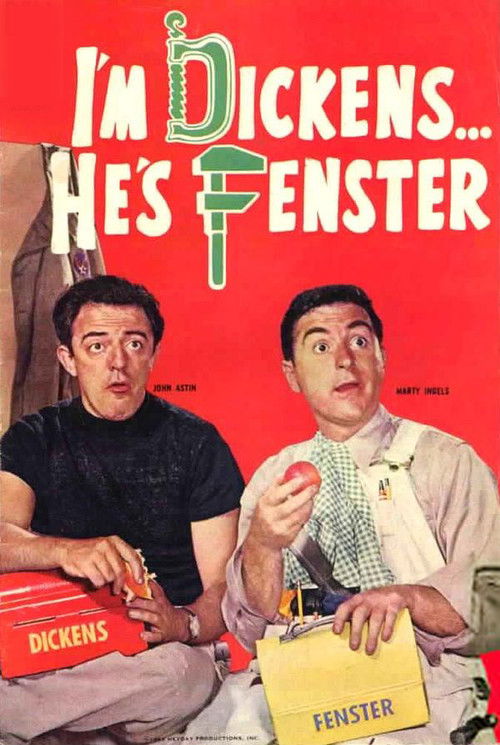 I'm Dickens, He's Fenster (1962)
- More like this series, on a shelf you can walk up to.It's the lit case on the top shelf.