The New Adventures of Pinocchio (1960)

- Directed by
- Tadahito Mochinaga, Arthur Rankin Jr., Jules Bass
- Genre
- animation
- Country
- United States
- Length
- 1 season, 130 episodes
- Rating
- 6.0 of 10 from 1 voters
- Elsewhere
- IMDb
The catalogue in 3D
The film shelves have a room of their own that you can walk around in. The cat behind the counter is the AI Catbot, and they pick real films from the same catalogue when you tell them what you feel like watching. Nothing is for sale, here or in there. Go in from here and this series is already out on the counter, with more like it waiting on the shelf next to it.
How it feels
A stop-motion animated series follows the wooden puppet Pinocchio as he tries to become a real boy. Geppetto the woodcarver and a cricket guide him through short adventures that teach lessons about honesty and growing up.
whimsicallightheartedgentlequirkyepisodicnostalgicplayfulcharming
What happens
The New Adventures of Pinocchio is a 1961 American-Canadian-Japanese syndicated stop motion animated television series produced by Rankin/Bass Productions in the United States and made by Dentsu Studios in Japan. Created by Arthur Rankin, Jr. and his partner Jules Bass, it was based on the 1883 book The Adventures of Pinocchio written by Italian author, Carlo Collodi. The series was Rankin/Bass' first production to be made in "Animagic", a stop motion puppet animation technique which, in association with the company, was done by Tadahito Mochinaga's MOM Productions. A total of 130 five-minute "chapters" were produced in 1960–61. These segments made up a series of five-chapter, 25-minute episodes. The show was deliberately designed to not emulate Walt Disney's popular 1940 version of Pinocchio in character design or characterization; the puppet wore a T-shirt and shorts instead of a Tyrolean hat, the Cricket (not Jiminy Cricket) had a high-pitched, grating voice, and Geppetto was calm and deliberate, unlike Disney's excitable and absent-minded woodcarver. The series premiered the week of February 6, 1961 on select local stations. During 1963–64, the series was also aired in Japan on Fuji TV as part of another stop motion TV series, Prince Ciscorn (シスコン王子, lit. Ciscorn Ōji), based on the manga by Fujiko Fujio and also produced by Tadahito Mochinaga for Studio KAI and Dentsu. Nineteen years later, in 1980, Rankin/Bass produced another stop motion adaptation of the novel for the American Broadcasting Company, a Christmas special called Pinocchio's Christmas, which featured a different voice cast including George S. Irving as Geppetto; Todd Porter as Pinocchio; Alan King as Maestro Fire-Eater; Allen Swift as the Fox; Pat Bright as the Cat; and Diane Leslie as Lady Azura. (from Wikipedia, CC BY-SA)
More like this
 Guillermo del Toro's Pinocchio (2022)
 Pinocchio (1976)
 Geppetto (2000)
 The Adventures of Pinocchio (1975)
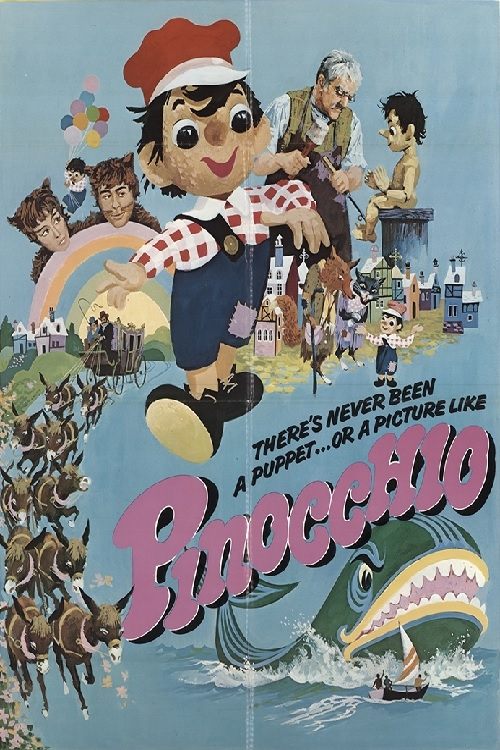 Pinocchio (1968)
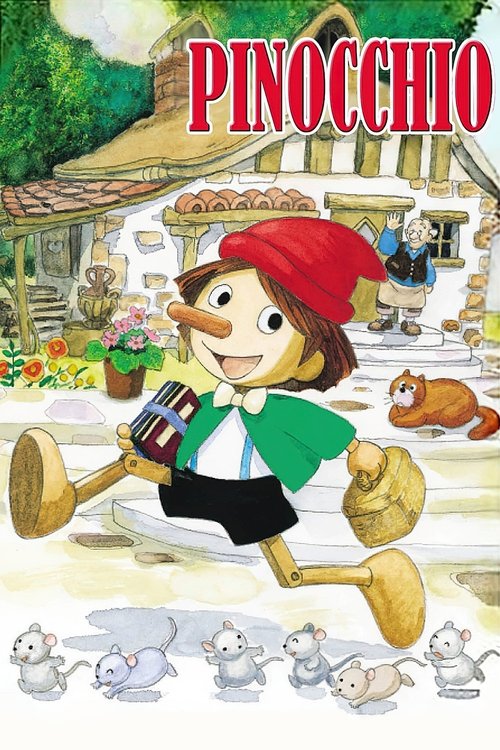 Piccolino no Bōken (1976)
 Pinocchio and Friends (2021)
 The Adventures of Pinocchio (1972)
- More like this series, on a shelf you can walk up to.It's the lit case on the top shelf.