Mito Kōmon (1969)

- Original title
- 水戸黄門
- Cast
- Tani Kanichi, Satomi Kotaro, Ishizaka Koji, Nishimura Ko, Tono Eijiro, Harada Ryuji, Goda Masashi, Yumi Kaoru
- Genre
- Japanese television drama, Jidaigeki
- Country
- Japan
- Length
- 3 seasons, 1227 episodes
- Rating
- 10.0 of 10 from 1 voters
- Elsewhere
- IMDb
The catalogue in 3D
The film shelves have a room of their own that you can walk around in. The cat behind the counter is the AI Catbot, and they pick real films from the same catalogue when you tell them what you feel like watching. Nothing is for sale, here or in there. Go in from here and this series is already out on the counter, with more like it waiting on the shelf next to it.
How it feels
A retired lord travels incognito across Japan with his two samurai companions. They uncover local injustices, defeat the wrongdoers in a fight, and reveal his true identity to set things right.
lightheartedformulaicwholesomeslow-pacedold-fashionedmoralisticaction-packed
What happens
Mito Kōmon (水戸黄門; Japanese pronunciation: [mʲi.to (|) koː.moɴ]) is a Japanese jidaigeki or period drama that was on prime-time television from 1969 to 2011, making it the longest-running jidaigeki in Japanese television history. The title character is the historic Tokugawa Mitsukuni, former vice-shōgun and retired second daimyō of the Mito Domain. In the guise of Mitsuemon, a retired crepe merchant from Echigo, he roams Japan with two samurai retainers, fun-loving Sasaki Sukesaburō (Suke-san) and studious Atsumi Kakunoshin (Kaku-san). An episode typically starts with some injustice perpetrated by a corrupt official, a wealthy merchant, or a gangster. The travelers arrive incognito, discover the injustice and quietly investigate it. The episode concludes with a brawl in which the unarmed, disguised protagonists defeat a crowd of samurai and gangsters, culminating in the presentation of the inrō that reveals the hero's identity. Afterwards, the hero passes judgement on the villains, sets things straight with comments and encouragement, and then continues with his journey. The drama was adapted into a film in 1978. (from Wikipedia, CC BY-SA)
More like this
 Aa Chūshingura
 Unmeitōge (1974)
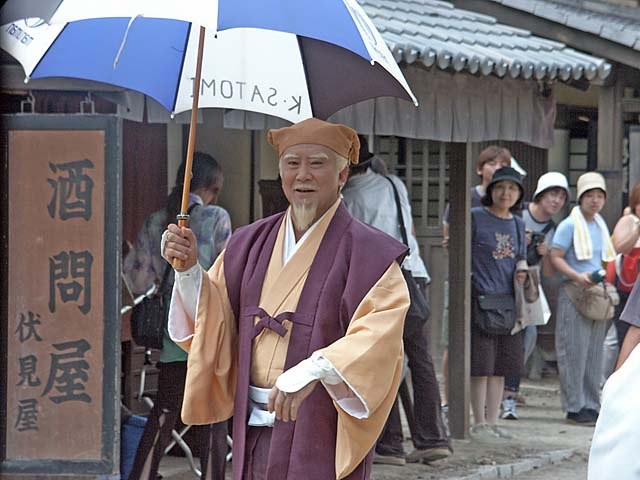 Mito Komon (Part 39-43)
 破れ新九郎 (1978)
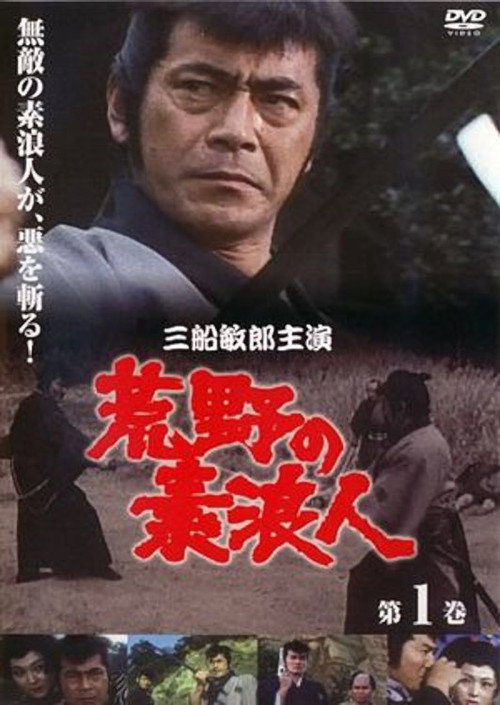 The Lowly Ronin (1972)
 The Veteran Trio (1999)
 Kurayami Shitomenin (1974)
 The Samurai (1962)
- More like this series, on a shelf you can walk up to.It's the lit case on the top shelf.