Star Trek: Phase II (1978)
- Genre
- science fiction
- Country
- United States
The catalogue in 3D
The film shelves have a room of their own that you can walk around in. The cat behind the counter is the AI Catbot, and they pick real films from the same catalogue when you tell them what you feel like watching. Nothing is for sale, here or in there. Go in from here and this series is already out on the counter, with more like it waiting on the shelf next to it.
How it feels
This series was planned as a direct continuation of the original Star Trek, bringing back the same crew for new missions in deep space. It was meant to be the centerpiece of a new television network in the late 1970s but was never filmed.
anticipatednostalgicearnestgrandiosefamiliarvintage sci-fislow-burnhopeful
What happens
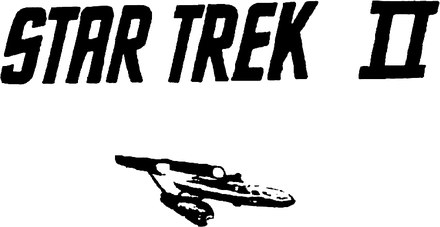
Star Trek: Phase II was the initial working title for what officially became titled Star Trek II, an unproduced American science fiction television series created by Gene Roddenberry as a sequel to (and continuation of) the original Star Trek, which had run from 1966 to 1969. The plans for the series were first developed after several failed attempts to create a feature film based on the property, coupled with plans for a Paramount Television Service (PTS) as a fourth broadcast television network in the United States. Both PTS and the Star Trek revival were announced in early June 1977, with PTS to debut as one evening of programming each Saturday night and to gradually expand to other nights, a strategy successfully employed by the Fox Broadcasting Company a decade later. Star Trek: Phase II was to be the flagship show, and be broadcast at 8pm EST, followed by a movie of the week starting at 9pm. The initial order was for a two-hour pilot, followed by 13 hour-long episodes. With the exception of Leonard Nimoy as Mr. Spock, who had ongoing disputes with Roddenberry and Paramount, the entire regular and recurring cast of The Original Series were contracted to return, notably William Shatner as Captain Kirk. Three new and younger regular characters were created, science officer Lt. Xon, navigator Lt. Ilia, and ship's executive officer Willard Decker. Xon, Decker and Ilia were later influential in the development of characters on Star Trek: The Next Generation, and two of the scripts written for Phase II would be re-developed for use in that series. Behind the cameras, Roddenberry recruited Trek-novices Harold Livingston and Robert Goodwin as producers. Veterans of The Original Series were few, and included costume designer William Ware Theiss and illustrator Mike Minor. Art director Matt Jefferies was otherwise employed and brought in as a "technical advisor" and to update the design of the starship USS Enterprise. Special effects (on set) were to be by Jim Rugg. Science fiction novelist Alan Dean Foster received the assignment to write the story outline for the two-hour pilot, but, with a looming production deadline and unable to find a suitable writer to develop this story into a teleplay, Harold Livingston took on the writing job himself. Of the remaining 12 script assignments handed out, about half were to veterans of The Original Series. Pre-production began in earnest, with the emphasis on what would be the standing sets of the Enterprise, which differed radically in layout, design and detailing from those for The Original Series. Many costumes and props, too, were designed. Ultimately, Paramount's plans for its network and Star Trek's TV return faltered, as the low anticipated advertising revenues for the Paramount Television Service indicated that it was not viable, and the Paramount Pictures parent company Gulf and Western's chairman, Charles Bluhdorn, refused to back the plan, resulting in the eventual exit of Paramount chief executive officer Barry Diller. In August 1977 Paramount president Michael Eisner announced—internally—that the two-hour pilot script was to be the long sought-after feature film story. However, the "cancellation" of the series and network were not immediately disclosed in an effort to prevent negative publicity; accordingly, development of the series and its scripts continued for a further five months, during which time tests were filmed on the incomplete Enterprise sets in widescreen format—a clear indication that whatever Star Trek would be, it would not be a TV movie. On March 28, 1978, any illusions that Star Trek would be returning to television were ended when Paramount announced that instead of a series it would be producing what became the big budget film titled Star Trek: The Motion Picture (1979), which was itself a massive reworking of the "In Thy Image" two-hour pilot script. Preproduction work on the series did not entirely go to waste. The standing Enterprise sets would be extensive (from Wikipedia, CC BY-SA)
More like this
 Star Trek: New Voyages (2004)
 Star Trek: The Original Series (1966)
 Battlestar Galactica (1978)
 Star Trek Continues (2013)
 Star Trek: The Next Generation (1987)
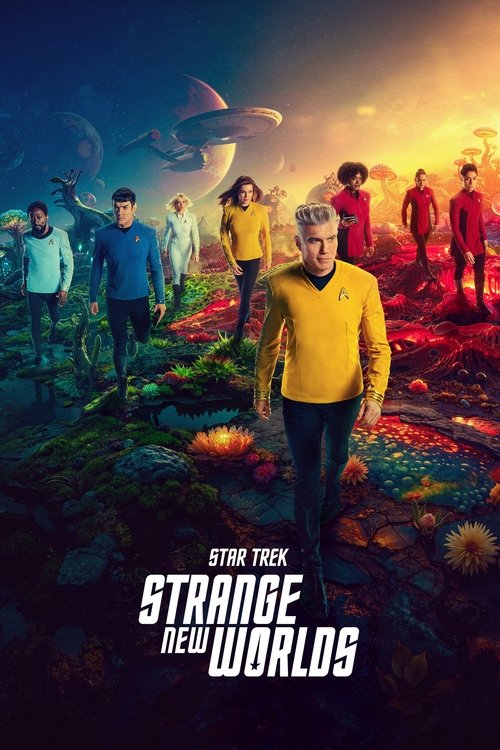 Star Trek: Strange New Worlds (2022)
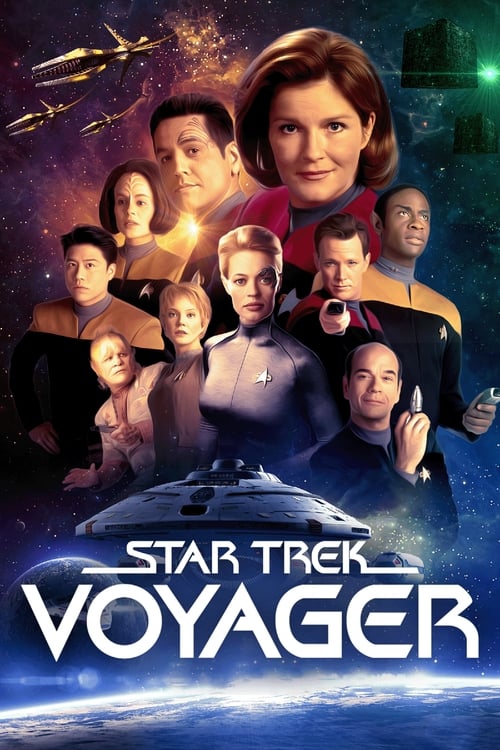 Star Trek: Voyager (1995)
 Star Trek: Of Gods and Men (2008)
- More like this series, on a shelf you can walk up to.It's the lit case on the top shelf.