Life on Earth (1979)

- Genre
- nature documentary
- Country
- United Kingdom
- Length
- 1 season, 13 episodes
- Rated
- G
- Rating
- 9.1 of 10 from 48 voters
- Elsewhere
- IMDb
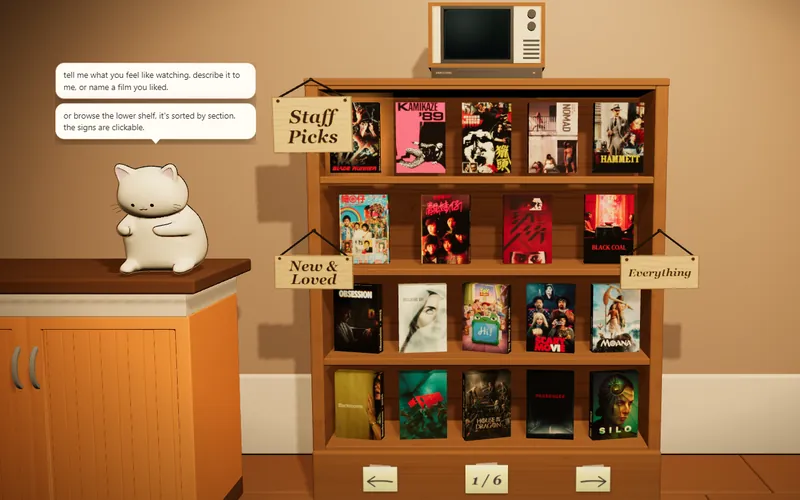
The catalogue in 3D
The film shelves have a room of their own that you can walk around in. The cat behind the counter is the AI Catbot, and they pick real films from the same catalogue when you tell them what you feel like watching. Nothing is for sale, here or in there. Go in from here and this series is already out on the counter, with more like it waiting on the shelf next to it.
How it feels
David Attenborough travels around the world to explain how life evolved on Earth. He visits many different places and talks about the history of plants and animals.
informativewonderleisurelyawe-inspiringeducationalglobalthoughtfulsoothing
What happens
Life on Earth: A Natural History by David Attenborough is a British television natural history series made by the BBC in association with Warner Bros. Television and Reiner Moritz Productions. It was transmitted in the UK from 16 January 1979. During the course of the series presenter David Attenborough, following the format established by Kenneth Clark's Civilisation and Jacob Bronowski's The Ascent of Man (both series which he designed and produced as director of BBC2), travels the globe in order to trace the story of the evolution of life on the planet. Like the earlier series, it was divided into 13 programmes (each of around 55 minutes' duration). The executive producer was Christopher Parsons and the music was composed by Edward Williams. At a cost exceeding £1 million ($1.2 million), it was an immense project that involved filming over 100 locations around the world and took three years in the making by a team of 30 people with the help of more than 500 scientists. Highly acclaimed as a milestone in the history of British wildlife television, it established Attenborough as not only the foremost television naturalist, but also an iconic figure in British cultural life. It is the first in Attenborough's Life series of programmes and was followed by The Living Planet (1984). (from Wikipedia, CC BY-SA)
More like this
 Life (2009)
 A Perfect Planet (2021)
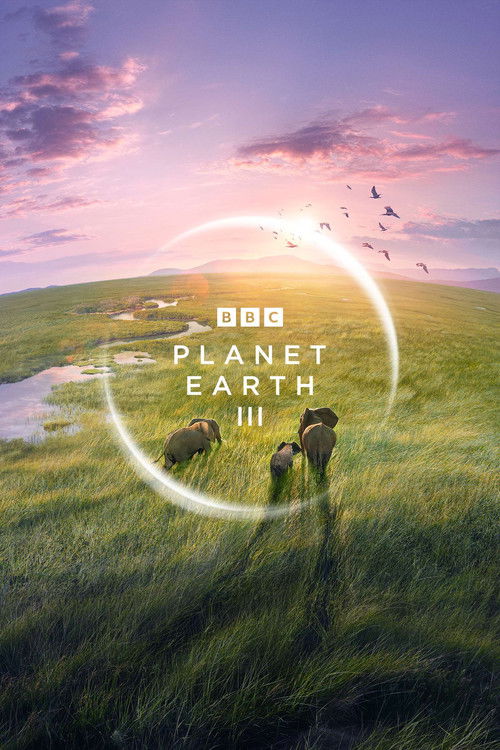 Planet Earth III (2023)
 Our Planet (2019)
 Lost Worlds, Vanished Lives (1989)
 Seven Worlds, One Planet (2019)
 The Living Planet (1984)
 Planet Earth II (2016)
- More like this series, on a shelf you can walk up to.It's the lit case on the top shelf.