Infinite Ryvius (1999)

- Original title
- 無限のリヴァイアス
- Directed by
- Gorō Taniguchi
- Genre
- science fiction anime and manga, mecha, adventure anime and manga, coming-of-age anime and manga, drama anime and manga, Drama
- Country
- Japan
- Length
- 1 season, 26 episodes
- Rated
- PG
- Rating
- 6.9 of 10 from 15 voters
- Elsewhere
- IMDb

The catalogue in 3D
The film shelves have a room of their own that you can walk around in. The cat behind the counter is the AI Catbot, and they pick real films from the same catalogue when you tell them what you feel like watching. Nothing is for sale, here or in there. Go in from here and this series is already out on the counter, with more like it waiting on the shelf next to it.
How it feels
A group of teenagers are stranded on a mysterious spaceship after a disaster. They must learn to govern themselves and deal with conflicts while trying to survive in deep space.
tenseclaustrophobicsurvivalistmelancholiccerebralbleakslow-burncoming-of-age
What happens
Infinite Ryvius (Japanese: 無限のリヴァイアス, Hepburn: Mugen no Rivaiasu) is a 26-episode science fiction drama anime series produced by Sunrise. The character and mecha designs in Ryvius were created by Hisashi Hirai, who later went on to design characters for Gundam SEED. The series is noted for its music, which blends Western R&B/hip-hop with J-pop vocals, including its title song "dis–", performed by bilingual Japanese-American singer Mika Arisaka. Most of the songs were composed by M.I.D., while background instrumentals were created by Katsuhisa Hattori. The anime was originally licensed by Bandai Entertainment in North America until it went out of print in 2012. Following the closure of Bandai Entertainment, Sunrise announced at Otakon 2013 that Sentai Filmworks had rescued Infinite Ryvius, along with a handful of other former BEI titles. A two-volume manga adaptation was released concurrently with the series in 1999–2000, which was then published in English in 2004. A parody spin-off original net animation (ONA) series, Infinite Ryvius: Illusion, was released in 2000. (from Wikipedia, CC BY-SA)
More like this
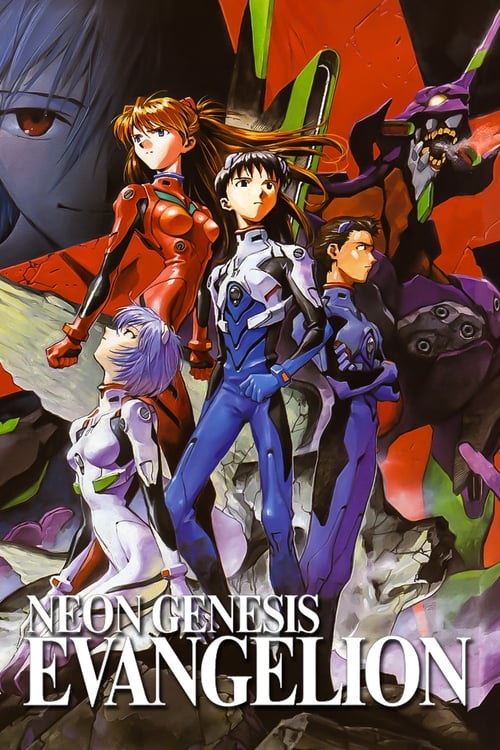 Neon Genesis Evangelion (1995)
 Astra Lost in Space (2019)
 The End of Evangelion (1997)
 Takopi's Original Sin (2025)
 Evangelion: 2.0 You Can (Not) Advance (2009)
 Now and Then, Here and There (1999)
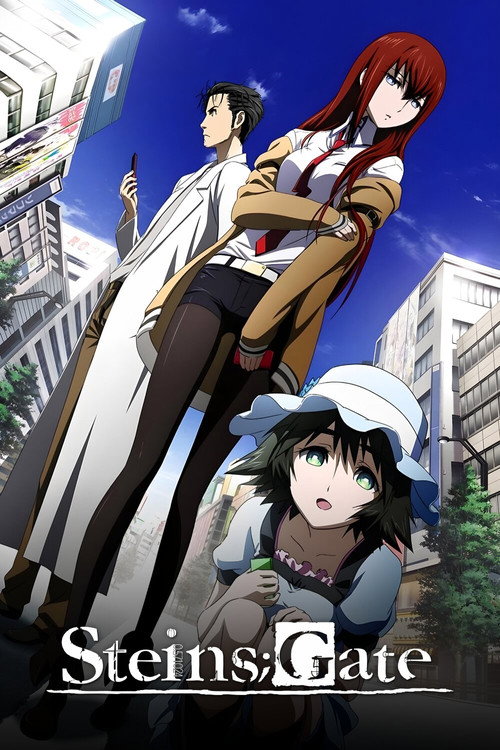 Steins;Gate (2011)
 Evangelion: 3.0+1.0 Thrice Upon a Time (2021)
- More like this series, on a shelf you can walk up to.It's the lit case on the top shelf.