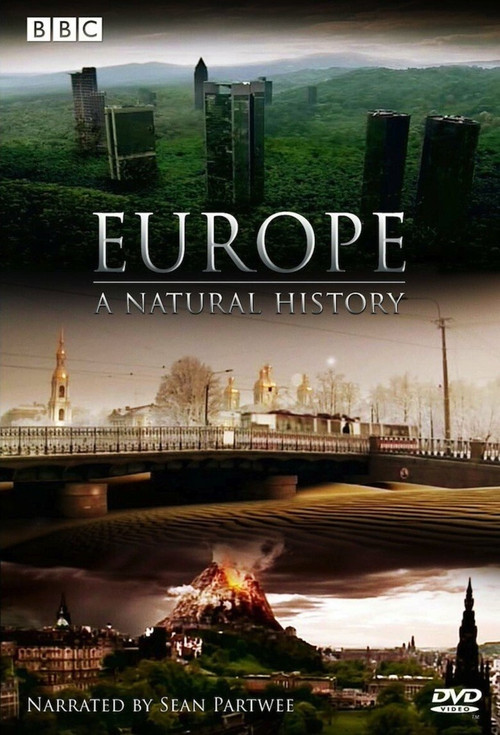
Europe: A Natural History (2005)
- Genre
- nature documentary, documentary television program
- Country
- United Kingdom
- Length
- 1 season, 4 episodes
- Rated
- 0
- Rating
- 8.7 of 10 from 3 voters
- Elsewhere
- IMDb
The catalogue in 3D
The film shelves have a room of their own that you can walk around in. The cat behind the counter is the AI Catbot, and they pick real films from the same catalogue when you tell them what you feel like watching. Nothing is for sale, here or in there. Go in from here and this series is already out on the counter, with more like it waiting on the shelf next to it.
How it feels
This four-part BBC series traces three billion years of natural history and wildlife in Europe. It uses CGI to recreate extinct species and show ancient European landscapes.
informativecalmepicawe-inspiringpacededucationalsweepingreverent
What happens
Europe: A Natural History is a four-part BBC nature documentary series which looks at the events which have shaped the natural history and wildlife of the European continent over the past three billion years. It debuted on UK television on BBC Four in February 2005, and was repeated on BBC Two in September the same year. The series was broadcast in some other territories as Wild Europe. The programmes featured extensive use of CGI to bring to life extinct species and show how the European cities of today would have looked at various points in the past, when the climate was very different. Europe: A Natural History was a co-production between the BBC Natural History Unit and the public-service broadcasters of Germany and Austria, ZDF and ORF respectively. The executive producers were Walter Köhler, Mike Gunton and Reinhard Radke. The music was composed by Barnaby Taylor and performed by the BBC Concert Orchestra, and narration for the BBC broadcasts was provided by actor Sean Pertwee. The series forms part of the Natural History Unit's "Continents" strand. It was preceded by Wild Down Under in 2003 and followed by Wild Caribbean in 2007. (from Wikipedia, CC BY-SA)
More like this
 Planet Earth (2006)
 Planet Earth II (2016)
 British Isles – A Natural History (2004)
 BBC Atlas of the Natural World
 Frozen Planet (2011)
 The Dinosaurs (2026)
 Human Planet (2011)
 Earth's Greatest Spectacles (2016)
- More like this series, on a shelf you can walk up to.It's the lit case on the top shelf.