Muawiya, Hassan and Hussein (2011)

- Original title
- معاوية والحسن والحسين
- Genre
- drama film, biographical film, historical film
- Country
- Arab world, Syria
- Length
- 1 season, 30 episodes
- Rating
- 6.0 of 10 from 1 voters
- Elsewhere
- IMDb

The catalogue in 3D
The film shelves have a room of their own that you can walk around in. The cat behind the counter is the AI Catbot, and they pick real films from the same catalogue when you tell them what you feel like watching. Nothing is for sale, here or in there. Go in from here and this series is already out on the counter, with more like it waiting on the shelf next to it.
How it feels
This TV series tells the story of Hasan and Husayn, the grandsons of the Prophet Muhammad, and their conflicts with companions after Caliph Uthman's death. It shows Jewish conspiracies blamed on Abdullah bin Saba for stirring up trouble. The drama covers the rise of Ali, his death, Hasan's surrender, and Husayn's battle in Karbala.
epicintensehistoricaldramaticsolemnconflict-drivencontroversialthought-provoking
What happens
Mu'awiya, al-Hasan wa al-Husayn (Arabic: معاوية والحسن والحسين, lit. 'Mu'awiya, Hasan and Husayn') is a 2011 Arab television drama series based on the lives of Hasan ibn Ali and Husayn Ibn Ali, the two grandsons of the Islamic prophet Muhammad, and their relationship with their companions and sedition that occurred between them and their companions after the killing of Uthman ibn Affan. It shows alleged Jewish conspiracies through the personality of Abdullah bin Saba, and his role in stirring sedition. The series is a co-production among Qatari, Syrian, Kuwaiti, Moroccan and Jordanian elements. It deals with the epic strife that created a rift across the Islamic Ummah. The period extends from the beginning of the sedition, after the martyrdom of Caliph Uthman, through the assumption of Ali, the martyrdom of him and his son Hasan, and the concession of Hasan alongside the takeover by Muawiya. Husayn in Karbala deals with the serial events of the battle of the two sentences. The series caused a sensation when it objected to the issuance of many religious scholars and Shiites and was boycotted by the Iraqi government and banned from Iraqi channels. (from Wikipedia, CC BY-SA)
More like this
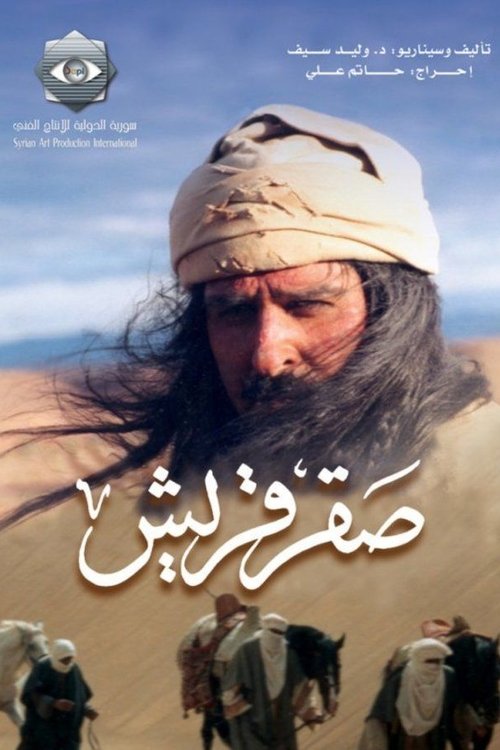 Saqr Qoraish (2002)
 Khalid ibn al-Walid (2006)
 Faris Bany Marawan
 Al-Zahir Baibars (2005)
 Mawkib Al-Ebaa' (2005)
 Saladin
 Salah Al-deen Al-Ayyobi (2001)
 Bab Almorad
- More like this series, on a shelf you can walk up to.It's the lit case on the top shelf.