Ravayat-e Fath (1986)

- Original title
- روایت فتح
- Directed by
- Morteza Avini
- Genre
- war television series, documentary television program
- Country
- Iran
- Length
- 5 seasons
- Elsewhere
- IMDb
The catalogue in 3D
The film shelves have a room of their own that you can walk around in. The cat behind the counter is the AI Catbot, and they pick real films from the same catalogue when you tell them what you feel like watching. Nothing is for sale, here or in there. Go in from here and this series is already out on the counter, with more like it waiting on the shelf next to it.
How it feels
This Iranian documentary series was filmed on the front lines of the Iran-Iraq War in the 1980s. It shows the daily sacrifices of soldiers through footage with narration by the director Morteza Avini. The series has a mystic and spiritual tone.
meditativespiritualsolemnrawintimatecontemplativegrittyaustere
What happens
Ravayat-e Fath (Persian: روایت فتح), variously translated as The Chronicles of Victory, The Tales of Victory, The Narrative of Victory, The Narration of Victory, The Story of Victory, and Witness to Glory, was an Iranian war documentary television series directed by Morteza Avini and filmed on the front lines of the Iran–Iraq War of the 1980s. It is one of Avini's most famous works, and one of the first and most important war documentary films in Iranian cinema. The series presents witnessing discourse through footage of front-line sacrifices set against commentary by Avini. The documentary film "literally brought the details of war into people's living rooms every night". The series had a mystic and spiritual theme. After the Iraqi invasion of Iran, Avini went to the front-line, founded Jihad TV Unit (Persian: گروه تلویزیونی جهاد), and trained its crewmembers ideologically and technically. At least seven Jihad TV crew members, including Avini himself, were killed in the process of making the series. Jihad TV continued to operate as a production unit for years after the war and after Avini. According to Hamid Naficy, what made the documentary series stand out was "its promotion of multiple sacred subjectivities on behalf of the warriors who were filmed, the cameramen who filmed them, and the spectators who watched them". (from Wikipedia, CC BY-SA)
More like this
 Haqiqat
 The Last Days of Winter (2012)
 The Narrative of The Revolution (1999)
 Iran Documentary
 عقل سرخ (2000)
 The Gun Loaded
 Amirli
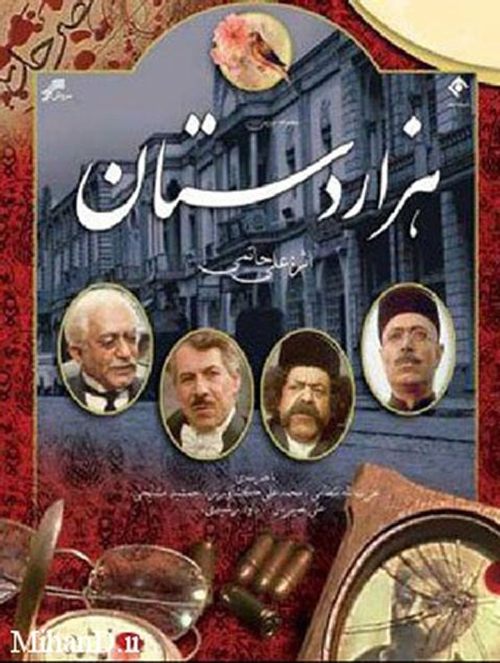 Hezardastan (1987)
- More like this series, on a shelf you can walk up to.It's the lit case on the top shelf.