The Great Train Robbery (1903)

- Directed by
- Edwin Stanton Porter
- Genre
- Western film, action film, silent film, revisionist Western, heist film, Western
- Country
- United States
- Runtime
- 12 min
- Rated
- U
- Rating
- 7.0 of 10 from 705 voters
- Elsewhere
- IMDb
The catalogue in 3D
The film shelves have a room of their own that you can walk around in. The cat behind the counter is the AI Catbot, and they pick real films from the same catalogue when you tell them what you feel like watching. Nothing is for sale, here or in there. Go in from here and this film is already out on the counter, with more like it waiting on the shelf next to it.
How it feels
A gang of outlaws robs a steam train at a station in the American West. They flee across rough country, but a local posse catches up to them and defeats them.
old-fashionedbriskaction-packedstraightforwardstagedoutdoorsilentfast-paced
What happens
The Great Train Robbery is a 1903 American silent Western action film made by Edwin S. Porter for the Edison Manufacturing Company. It follows a gang of outlaws who hold up and rob a steam train at a station in the American West, flee across mountainous terrain, and are finally defeated by a posse of locals. The short film draws on many sources, including a robust existing tradition of Western films, recent European innovations in film technique, the play of the same name by Scott Marble, the popularity of train-themed films, and possibly real-life incidents involving outlaws such as Butch Cassidy. Porter supervised and photographed the film in New York and New Jersey in November 1903; the Edison studio began selling it to vaudeville houses and other venues in the following month. The cast included Justus D. Barnes and G. M. Anderson, who may have also helped with planning and staging. Porter's storytelling approach, though not particularly innovative or unusual for 1903, allowed him to include many popular techniques of the time, including scenes staged in wide shots, a matte effect, and an attempt to indicate simultaneous action across multiple scenes. Camera pans, location shooting, and moments of violent action helped give The Great Train Robbery a sense of rough-edged immediacy. A special close-up shot, which was unconnected to the story and could either begin or end the film depending on the projectionist's whim, showed Barnes, as the outlaw leader, firing his gun directly into the camera. Due in part to its popular and accessible subject matter, as well as to its dynamic action and violence, The Great Train Robbery was an unprecedented commercial success. Though it did not significantly influence or advance the Western film genre upon release, it was widely distributed and copied, including in a parody by Porter himself. During the twentieth century, inaccurate legends about The Great Train Robbery developed, claiming it was the first Western or even the first film to include a plot. However, its commercial success and mythical status in film history nonetheless remain undisputed; the film has since become one of the greatest and most influential Westerns of all time, appearing in numerous film and television references and homages. In 1990, The Great Train Robbery was selected for preservation in the United States National Film Registry by the Library of Congress as being "culturally, historically, or aesthetically significant". (from Wikipedia, CC BY-SA)
More like this
 The Hold-Up of the Leadville Stage (1904)
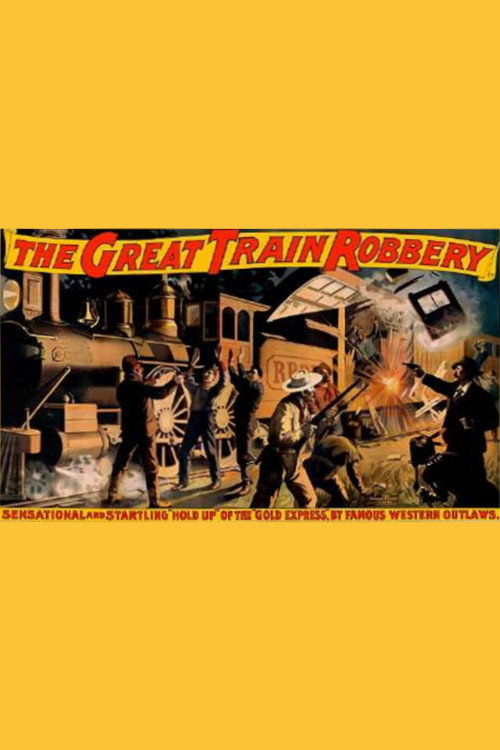 The Great Train Robbery (1904)
 The Pioneers (1903)
 From Leadville to Aspen: A Hold-Up in the Rockies (1906)
 By Indian Post (1919)
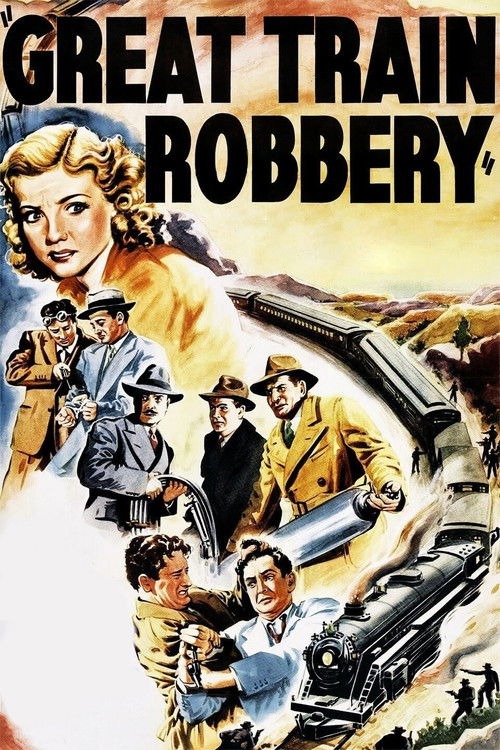 The Great Train Robbery (1941)
 The Fighting Line (1919)
 The Double Hold-Up (1919)
- More like this film, on a shelf you can walk up to.It's the lit case on the top shelf.