To Catch a Copper (2024)

- Genre
- documentary television program
- Country
- United Kingdom
- Length
- 1 season, 3 episodes
- Rating
- 3.0 of 10 from 2 voters
- Elsewhere
- IMDb

The catalogue in 3D
The film shelves have a room of their own that you can walk around in. The cat behind the counter is the AI Catbot, and they pick real films from the same catalogue when you tell them what you feel like watching. Nothing is for sale, here or in there. Go in from here and this series is already out on the counter, with more like it waiting on the shelf next to it.
How it feels
This documentary series follows investigations into police officer misconduct in a British force. It covers specific cases involving mental health, race and sex crimes over three episodes.
seriousinsiderunsettlingmoderate-pacedinvestigativesoberingconfrontational
What happens
To Catch a Copper is a 2024 British documentary series about investigations into officer misconduct within the Avon and Somerset Police. The series has three episodes, which are themed around mental health, race, and sex crimes. Concerns include use of force and racial profiling. In one case, a constable is fired after publishing revenge porn; in another, an officer is acquitted after having sex on duty with an intoxicated woman. The series aired on Channel 4 after four years of filming in collaboration with the Counter-Corruption Unit, who received complaints and sometimes referred them to the Independent Office for Police Conduct (IOPC). The filmmakers intended to make a non-fiction programme in the style of the fictional police procedural Line of Duty, but came to the conclusion that there were systemic issues in the police misconduct process. They also heard that many incidents went unreported due to mistrust in the system. After its release, the Police Federation surveyed local officers and found that most opposed Chief Constable Sarah Crew's co-operation with the documentary, which she believed would increase public trust in policing. Reviewers believed that the documentary raised concerns over policing. External criticisms include the CEO of the sexual abuse charity SARSAS, who said specialist training was needed, and the Independent Scrutiny of Police Powers Panel, who said misconduct procedures "protect the police rather than the public". (from Wikipedia, CC BY-SA)
More like this
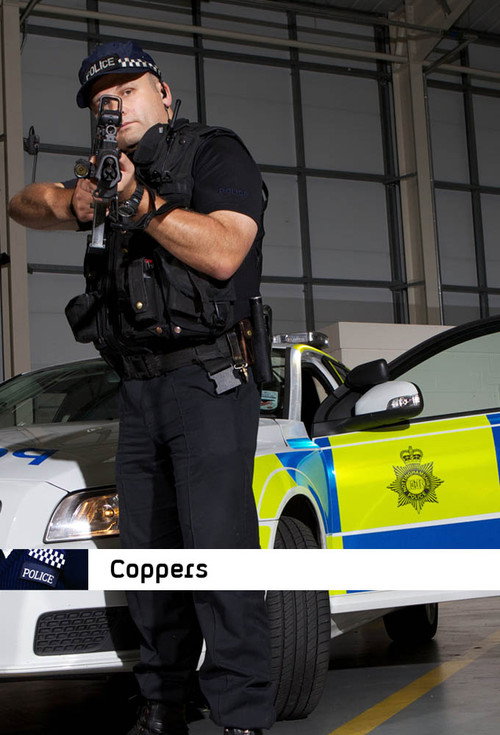 Coppers (2010)
 The Force (2009)
 Street Crime UK
 Secret History (1991)
 Motorway Cops (2008)
 Police Interceptors (2008)
 Exposure (2011)
 The Detectives (2015)
- More like this series, on a shelf you can walk up to.It's the lit case on the top shelf.