The Charge of the Light Brigade (1912)

- Directed by
- J. Searle Dawley
- Genre
- silent film, war film
- Country
- United States
- Runtime
- 12 min
- Rating
- 7.0 of 10 from 2 voters
- Elsewhere
- IMDb

The catalogue in 3D
The film shelves have a room of their own that you can walk around in. The cat behind the counter is the AI Catbot, and they pick real films from the same catalogue when you tell them what you feel like watching. Nothing is for sale, here or in there. Go in from here and this film is already out on the counter, with more like it waiting on the shelf next to it.
How it feels
This silent film recreates the famous 1854 cavalry charge during the Crimean War. British light cavalry attack Russian artillery positions in a battle that proves disastrous but heroic. The movie uses hundreds of real cavalry troops in its action scenes.
old-fashioneddramaticstirringstatelyhistoricalaction-packedbrief
What happens
The Charge of the Light Brigade is a 1912 American silent historical drama film directed by J. Searle Dawley (1877-1949). Produced by the Edison Studios, the film portrays the disastrous yet inspiring military attack in October 1854 by British light cavalry against Imperial Russian artillery positions in the Battle of Balaclava during the Crimean War (1854-1856), in the Crimea of southern Russia along the Black Sea coast. Director Dawley also wrote the scenario for this production, adapting it in part from the famous 1854 narrative poem about the charge by British poet laureate Alfred, Lord Tennyson (1809-1892), who completed his poem just six weeks after the actual battle event. The film's action scenes and landscape footage were shot between late August and early September 1912, while Dawley and his company of players and crew were on location in Cheyenne, Wyoming. In order to produce a sizable and believable recreation of the charge, the director needed a very large number of horsemen. Fortunately for Dawley, the commander of United States Army cavalry at Fort D. A. Russell at Cheyenne agreed to provide "about 800" mounted Army Cavalry troopers and "their trained mounts" to the Edison filming project of the new cinematic invention. The film was originally released in American cinemas on October 11, 1912, and four years later rereleased under a renewed copyright by Thomas Edison, Inc. An 11-minute print of that 1916 rerelease survives, copies of which can be viewed today on various streaming services. (from Wikipedia, CC BY-SA)
More like this
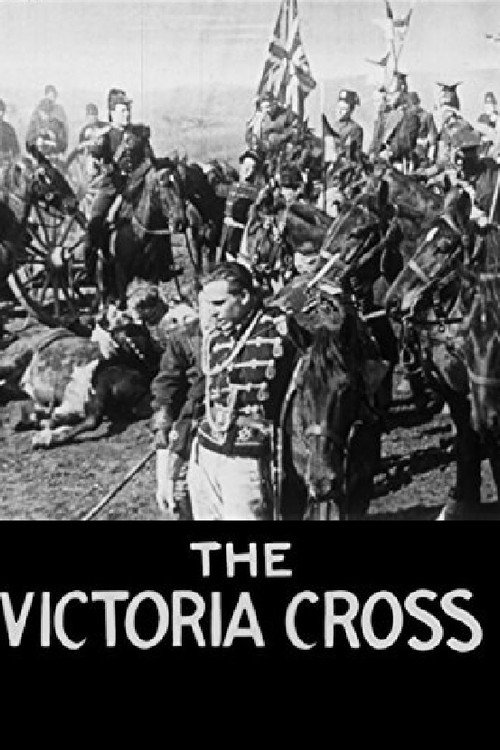 The Victoria Cross (1912)
 Balaclava (1928)
 The Heroes of the Blue and Gray (1912)
 The Bugler of Battery B (1912)
 The Colonel's Escape (1912)
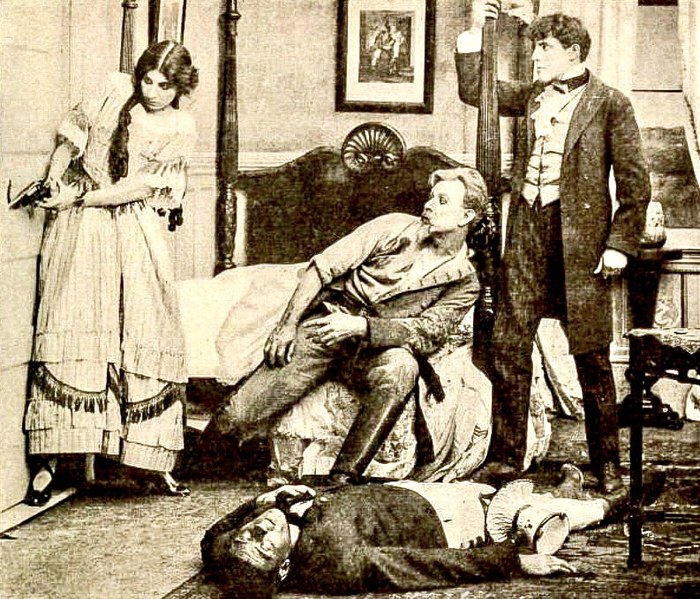 For the Cause of the South (1912)
 1812 (1912)
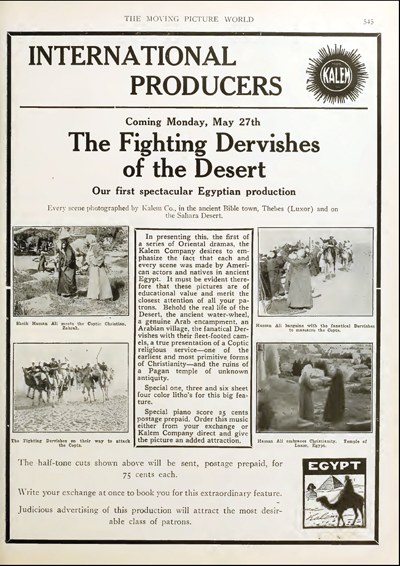 The Fighting Dervishes of the Desert (1912)
- More like this film, on a shelf you can walk up to.It's the lit case on the top shelf.