The Blood Red Tape of Charity (1913)
- Directed by
- Edwin August
- Genre
- drama film, silent film
- Country
- United States
- Runtime
- 10 min
- Elsewhere
- IMDb

The catalogue in 3D
The film shelves have a room of their own that you can walk around in. The cat behind the counter is the AI Catbot, and they pick real films from the same catalogue when you tell them what you feel like watching. Nothing is for sale, here or in there. Go in from here and this film is already out on the counter, with more like it waiting on the shelf next to it.
How it feels
A telegraph lineman is injured and his family cannot get aid from charities due to bureaucratic rules. A gentleman thief robs a charity ball to help them and then turns himself in.
earnestmelodramaticstarksuspensefulsombermoralisticepisodicold-fashioned
What happens
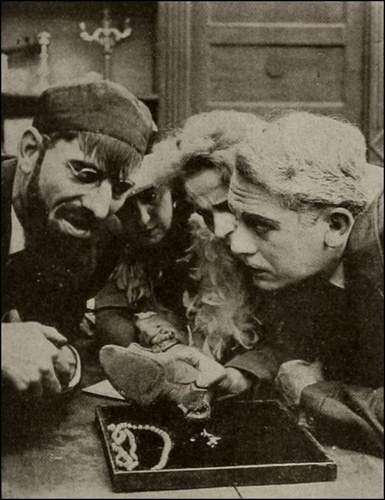
The Blood Red Tape of Charity is a 1913 American silent short propaganda drama film written, directed and starring Edwin August and produced by Pat Powers. August wrote the scenario with the intent to highlight the evils of organized charity while entertaining the viewers. The film focuses on William Weldon, a telegraph lineman who is injured on the job and cannot work for several weeks. The family seeks aid from charity organizations, but "red tape" regulations prevent the family from receiving timely assistance. A gentleman thief named Marx decides to do one last job for the benefit of the family. He forces a doctor to treat the Weldon's invalid daughter Alice before proceeding to rob a charity ball's attendees. Marx pawns the stolen articles and saves the family before turning himself in to the police. The film was released on September 26, 1913, and played in theaters throughout the United States. The unbilled cast list has been stated to include Lon Chaney in the role of the pawn broker. The Charity Organization Societies sought to produce a film to counter the negative portrayal of charities in The Blood Red Tape of Charity. P. L. Whitney stopped short of directly calling the film's portrayal dangerous, but advocated that charity members use the media to highlight the film's faults and exaggerations. Patricia Erens would use the surviving film still of the pawn broker, claimed to be Lon Chaney by scholars, as an example of Jewish character archetypes that were prominent in silent films. The film is now considered lost, with only a surviving still and the plot details available online. (from Wikipedia, CC BY-SA)
More like this
 Fortune's Turn (1913)
 Quicksands (1913)
 The Crook and the Girl (1913)
 The Strong Man's Burden (1913)
 The Stolen Bride (1913)
 A Modest Hero (1913)
 American Born (1913)
 Crooks and Credulous (1913)
- More like this film, on a shelf you can walk up to.It's the lit case on the top shelf.