The Lass from the Stormy Croft (1917)

- Original title
- Tösen från Stormyrtorpet
- Directed by
- Victor Sjöström
- Genre
- drama film, silent film
- Country
- Sweden
- Runtime
- 1h 27m
- Rating
- 6.1 of 10 from 11 voters
- Elsewhere
- IMDb
The catalogue in 3D
The film shelves have a room of their own that you can walk around in. The cat behind the counter is the AI Catbot, and they pick real films from the same catalogue when you tell them what you feel like watching. Nothing is for sale, here or in there. Go in from here and this film is already out on the counter, with more like it waiting on the shelf next to it.
How it feels
A young woman from a poor family faces social judgment and difficult choices when she gets pregnant. Her story unfolds in a rural Swedish community where reputation and honor matter deeply.
melancholicrestrainedearnestquietly intenseold-fashionedpoignantslow-pacedseriousatmospheric
What happens
The Lass from the Stormy Croft (Swedish: Tösen från Stormyrtorpet) is a 1917 silent Swedish drama film directed by Victor Sjöström. It is based on the 1908 novella with the same title by Swedish author Selma Lagerlöf, the first woman to win the Nobel Prize in Literature. It was the first in a series of successful Lagerlöf adaptions by Sjöström, made possible by a deal between Lagerlöf and A-B Svenska Biografteatern (later AB Svensk Filmindustri) to adapt at least one Lagerlöf novel each year. Lagerlöf had for many years denied any proposal to let her novels be adapted for film, but after seeing Sjöström's Terje Vigen she finally decided to give her consent. It was originally released in the US as The Girl from the March Croft and the UK as The Woman He Chose. However it is today generally referred to as The Lass from the Stormy Croft, which is closer to the original Swedish title. Six other adaptions of the same novel have been made, a German and a Turkish in 1935, a Finnish in 1940, another Swedish in 1947, a Danish (Husmandstøsen) in 1952 and another German in 1958. (from Wikipedia, CC BY-SA)
More like this
 A Man There Was (1917)
 Every Man Forges His Own Happiness (1917)
 His Own Slave (1917)
 For Hearth and Home (1917)
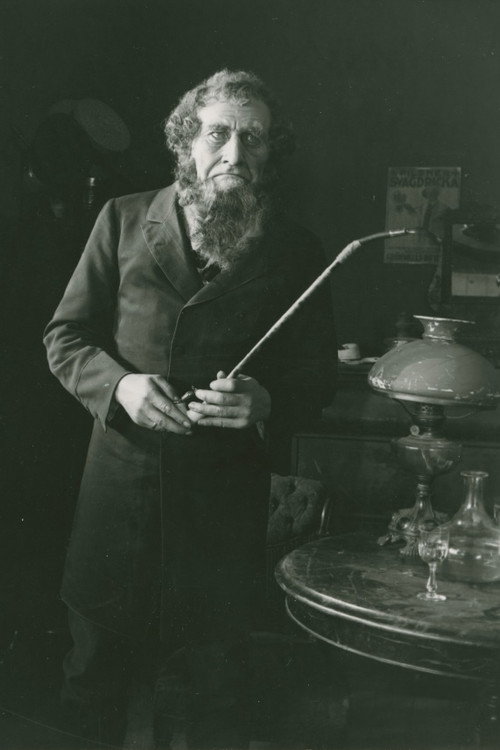 The Living Mummy (1917)
 The Judge (1917)
 I mörkrets bojor (1917)
 The Shadow of a Crime (1917)
- More like this film, on a shelf you can walk up to.It's the lit case on the top shelf.