Jön az öcsém (1919)
- Directed by
- Michael Curtiz
- Genre
- silent film
- Country
- Hungary
- Runtime
- 11 min
- Rating
- 5.5 of 10 from 6 voters
- Elsewhere
- IMDb
The catalogue in 3D
The film shelves have a room of their own that you can walk around in. The cat behind the counter is the AI Catbot, and they pick real films from the same catalogue when you tell them what you feel like watching. Nothing is for sale, here or in there. Go in from here and this film is already out on the counter, with more like it waiting on the shelf next to it.
How it feels
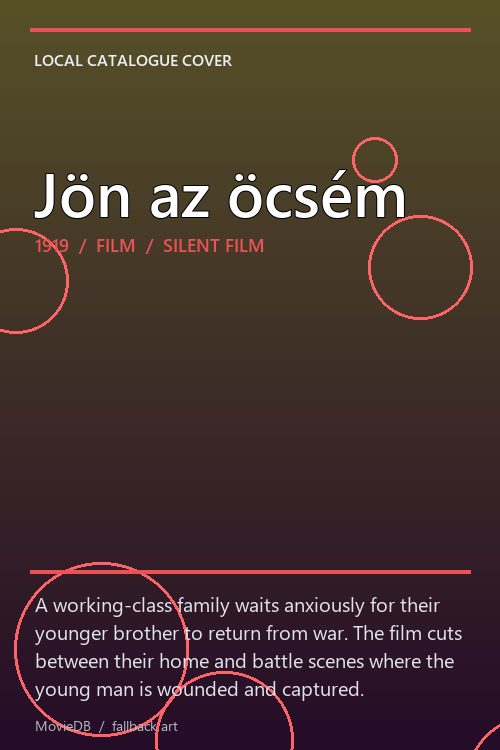
A working-class family waits anxiously for their younger brother to return from war. The film cuts between their home and battle scenes where the young man is wounded and captured.
tensewar-tornpropagandisticvisceralhopefulearnesturgentmelodramatic
What happens
Jön az öcsém (My Brother is Coming, literally "my younger brother is coming") is a 1919 short Hungarian drama film directed by Michael Curtiz. It is one of his few surviving early Hungarian works and was made during the short-lived Hungarian Soviet Republic (Tanácsköztársaság) under Béla Kun. It adapts a propaganda poem by Antal Farkas and serves as explicit communist/revolutionary agitation.  Plot Summary The story centers on a working-class family—a mother (or wife), a young child, and the man of the house (the older brother)—anxiously waiting in their modest home for the return of the younger brother (“the öcs”), who has been away at war.  Intercut with their tense wait are scenes from the front: intense, tinted battle sequences depict soldiers charging and falling in bloody combat. The younger brother is wounded, captured, and imprisoned. In his dark cell, the revolutionary slogan “Proletarians of the world, unite!” (Világ proletárjai, egyesüljetek!) appears as a glowing inscription, inspiring him. He escapes, preserves a red flag (or revolutionary banner), rallies new followers with fiery speeches, and raises a fresh army.  He eventually returns home as a committed revolutionary. The family reunites joyfully—the two brothers embrace, and the child is overjoyed. The film ends with the reunited family watching a victorious revolutionary crowd marching in the street from their window, symbolizing hope and the triumph of the cause.  The narrative blends personal melodrama (the family’s longing) with explicit political messaging: war is portrayed as senseless slaughter of fellow proletarians, while revolution and solidarity bring redemption and victory. Intertitles from the original poem reinforce the propaganda.  This was Curtiz’s last Hungarian film before he left for Austria (and eventually Hollywood). It was banned and copies seized after the regime’s fall, which ironically helped preserve it. The cast includes Oszkár Beregi Sr. as the younger brother, József Kürthy as the older brother, Lucy Doraine (Curtiz’s wife at the time, credited as Ilonka Kovács) as the woman, and a child actor as the kid.  The film stands out for its dynamic visuals, use of tinting, and early propaganda style—quite different from Curtiz’s later Hollywood output (from Wikipedia, CC BY-SA)
More like this
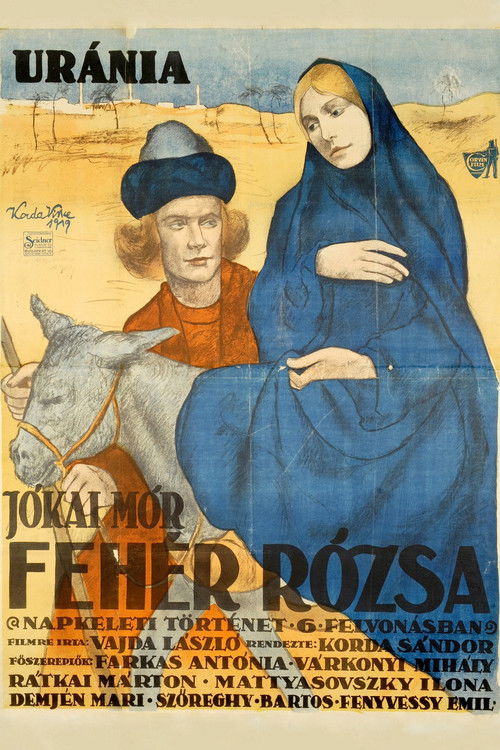 White Rose (1919)
 Neither at Home or Abroad (1919)
 Man of Gold (1919)
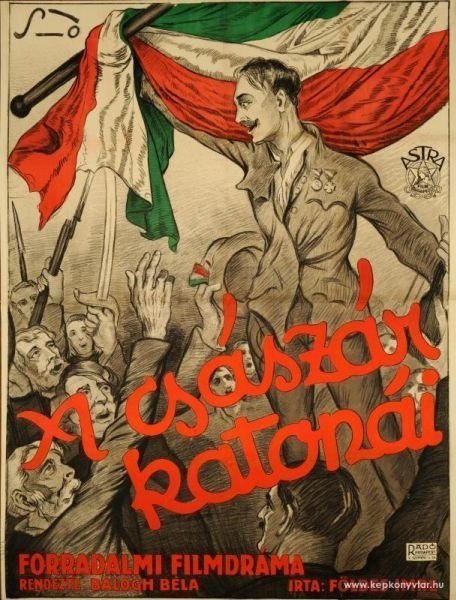 Soldiers of the Emperor (1918)
 Yamata (1919)
 Tartar Invasion (1917)
 Two Prisoners
 Prisoner of the Night (1914)
- More like this film, on a shelf you can walk up to.It's the lit case on the top shelf.