Tkies-khaf (1924)

- Original title
- Tkies khaf
- Directed by
- Zygmunt Turkow
- Genre
- drama film, silent film
- Country
- Poland
- Runtime
- 1h 21m
- Rating
- 5.4 of 10 from 5 voters
- Elsewhere
- IMDb

The catalogue in 3D
The film shelves have a room of their own that you can walk around in. The cat behind the counter is the AI Catbot, and they pick real films from the same catalogue when you tell them what you feel like watching. Nothing is for sale, here or in there. Go in from here and this film is already out on the counter, with more like it waiting on the shelf next to it.
How it feels
Two friends make an oath that their future children will marry each other. Years later, a prophet in disguise tries to make the promise come true while another man plots to steal a hidden fortune.
inventivemoralisticplayfulslow-burnearnestfairy-tale-likedatedatmospheric
What happens
Tkies-kaf (Yiddish: תקיעת-כף, 'The Handshake'; Polish: Ślubowanie, 'The Oath') is a partially lost 1924 Polish silent film. Set mainly in Vilna, it revolves around a vow made between two friends—Khaim and Borekh–that their future children shall marry each other. Many years later, the prophet Elijah, disguised as various characters, works to ensure this oath comes to fruition. These efforts are impaired by Borekh's friend Shmuel, who seeks to marry Khaim's daughter and keep Khaim's hidden fortune. The film's production was troubled by an initial lack of director; Leo Forbert's possible first pick, Sidney M. Goldin, was occupied by another project, leading head actor Zygmunt Turkow (playing Elijah) to volunteer to direct the project. Other prominent actors in the film include Turkow's mother-in-law Ester Rachel Kamińska (playing Khaim's widow), and his wife Ida Kamińska (playing Khaim's daughter Rokhl). Tkies-kaf was released domestically with Polish intertitles, and internationally in Yiddish. It was commercially successful and inspired other Jewish films in Poland, although it provoked negative responses from some Jewish critics. The inclusion of the tomb of the Vilna Gaon in the film sparked outrage from rabbis, who attempted to ban the film. Twelve reels in length, only fragments of the film survive today. An adaptation titled Dem Rebns Koyekh was made by an American team in 1933, adding new scenes and Yiddish audio narration by Joseph Buloff. (from Wikipedia, CC BY-SA)
More like this
 The Unspeakable (1924)
 Isn't Life Wonderful (1924)
 Kaddish (1924)
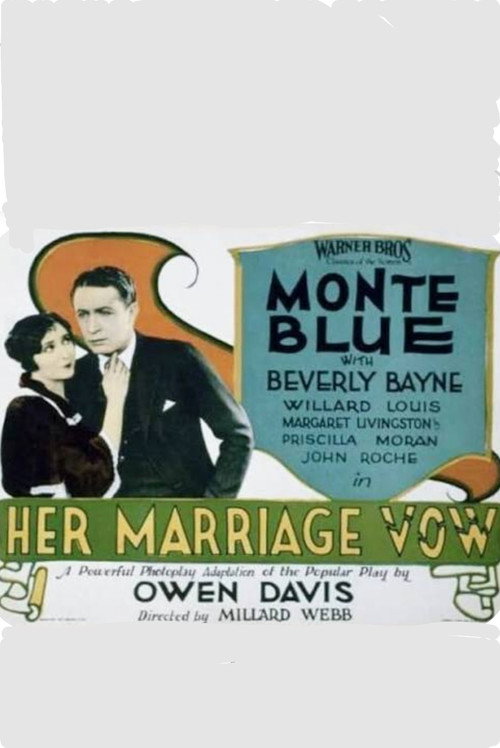 Her Marriage Vow (1924)
 The Power of Darkness (1924)
 Southern Love (1924)
 The Sixth Commandment (1924)
 Rosenmontag (1924)
- More like this film, on a shelf you can walk up to.It's the lit case on the top shelf.