Song of the Fishermen (1934)
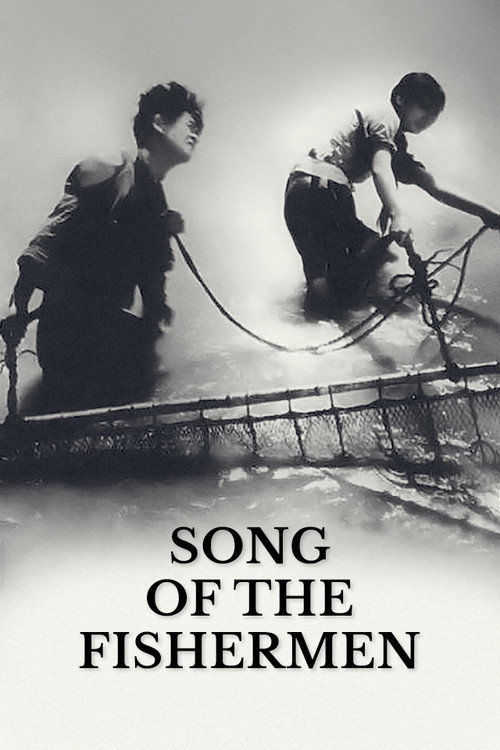
- Original title
- 渔光曲
- Directed by
- Cai Chusheng
- Genre
- drama film, silent film
- Country
- Republic of China
- Runtime
- 57 min
- Rating
- 5.7 of 10 from 9 voters
- Elsewhere
- IMDb

The catalogue in 3D
The film shelves have a room of their own that you can walk around in. The cat behind the counter is the AI Catbot, and they pick real films from the same catalogue when you tell them what you feel like watching. Nothing is for sale, here or in there. Go in from here and this film is already out on the counter, with more like it waiting on the shelf next to it.
How it feels
A fisherman's family is forced from their village into the city. They survive by singing on the streets.
melancholicearthyslowsocially-consciousemotionalharshsinceregritty
What happens
Song of the Fishermen (Chinese: 渔光曲; pinyin: Yú guāng qǔ) is an early Chinese silent film directed by Cai Chusheng in 1934, and produced by the Lianhua Film Company. A successful film, Song of the Fishermen played for 84 straight days in Shanghai. In 1935, Song of Fishermen with a Chinese film delegation participated in the Moscow International Film Festival in the Soviet Union and won an honorable mention award. It was the first Chinese film to win a prize in an international film festival (Moscow Film Festival in 1935). In addition, for the director of the film, Cai Chusheng, who was born on January 12, 1906 and was one of the foremost progressive Chinese directors of the time, Song of the Fishermen, is one of his most critically acclaimed films. It allowed him to become the first Chinese director to win an international award during the Moscow International Film Festival in 1935. The film shows the struggles of the poor—a fisherman's family is forced to leave their village and ends up in the city, where they have to sing on the streets to survive. The story was made possible by the fact that Cai Chusheng, who also worked as a screenwriter of this film, ever since he had begun developing his skill for playwriting, had been involved in the social rights movements of his time, like his involvement in the workers' union in China at the age of just 19. Many of the films part of his larger body of work frequently delve into societal issues about social hierarchy and sexual identity present in China during the early 20th century, namely New Women (1935) and Dawn over the Metropolis (1933). (from Wikipedia, CC BY-SA)
More like this
 The Goddess (1934)
 Plunder of Peach and Plum (1934)
 Night in the City (1933)
 Daybreak (1933)
 The Big Road (1934)
 The Classic for Girls (1934)
 New Women (1935)
 Queen of Sports (1934)
- More like this film, on a shelf you can walk up to.It's the lit case on the top shelf.