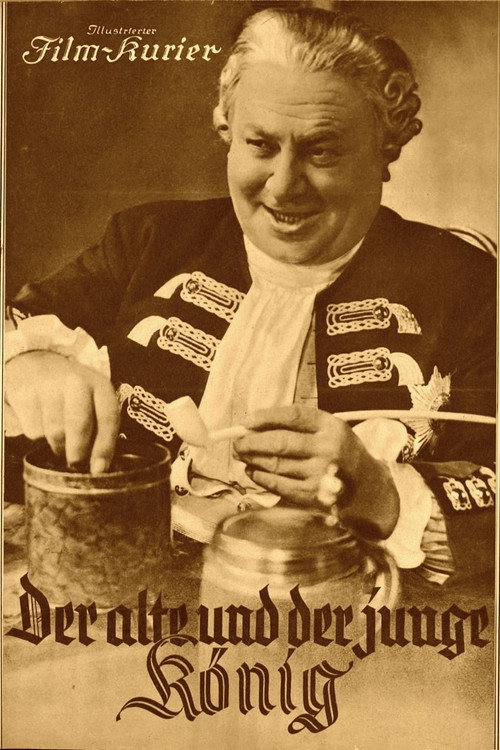
Der alte und der junge König (1935)
- Directed by
- Hans Steinhoff
- Genre
- drama film, biographical film
- Country
- Germany
- Runtime
- 1h 40m
- Rating
- 6.0 of 10 from 4 voters
- Elsewhere
- IMDb

The catalogue in 3D
The film shelves have a room of their own that you can walk around in. The cat behind the counter is the AI Catbot, and they pick real films from the same catalogue when you tell them what you feel like watching. Nothing is for sale, here or in there. Go in from here and this film is already out on the counter, with more like it waiting on the shelf next to it.
How it feels
King Friedrich Wilhelm I clashes harshly with his son Crown Prince Friedrich over the prince's defiance and different interests. The father demands absolute obedience while the son struggles against his father's strict rules.
tensedramaticformalstiffhistoricalauthoritarianaustereserious
What happens
The Old and the Young King (German: Der alte und der junge König) is a 1935 German historical drama film directed by Hans Steinhoff and starring Emil Jannings, Werner Hinz and Leopoldine Konstantin. The film's sets were designed by the art directors Fritz Maurischat and Karl Weber. It was produced by a subsidiary of Tobis Film. Location shooting took place around Potsdam, including at the Garrison Church. Interiors were shot at the Grunewald and Johannisthal Studios. It premiered at the Ufa-Palast am Zoo. Part of the tradition of Prussian films of the Weimar and Nazi eras, the film ostensibly deals with the intense conflict between Prussian King Friedrich Wilhelm I and his son and heir, Crown Prince Friedrich – the future King Friedrich II "The Great". This well-known incident of 18th century German history drew much contemporary attention and subsequently inspired a number of works of art and entertainment, including various stage and screen productions. However, in its specific presentation of this historical theme, the film was a work of Nazi propaganda aimed at extolling the Führerprinzip, i.e. blind obedience to the Leader (the King in the film's plot, Hitler in the reality for which the film was a parable); complaints of "encirclement" and the need for Lebensraum also feature. For that reason, the film was banned by the Allied military government following the Nazi defeat in 1945. However, after the foundation of the Federal Republic of Germany the FSK ("Voluntary Self Regulation of the Movie Industry") reviewed it on 4 August 1958 and ruled that, unlike other films made under the Nazis, the propaganda element in it was not so blatant as to justify its inclusion in the list of "Forbidden Films" (de:Vorbehaltsfilm). (from Wikipedia, CC BY-SA)
More like this
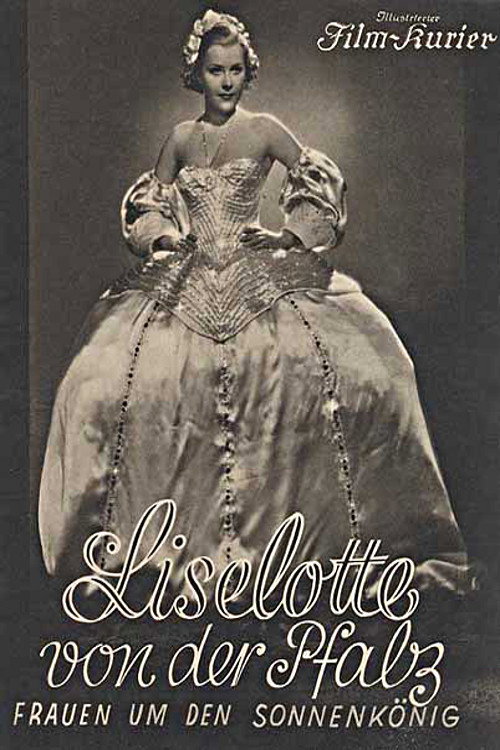 The Private Life of Louis XIV (1935)
 August der Starke (1984)
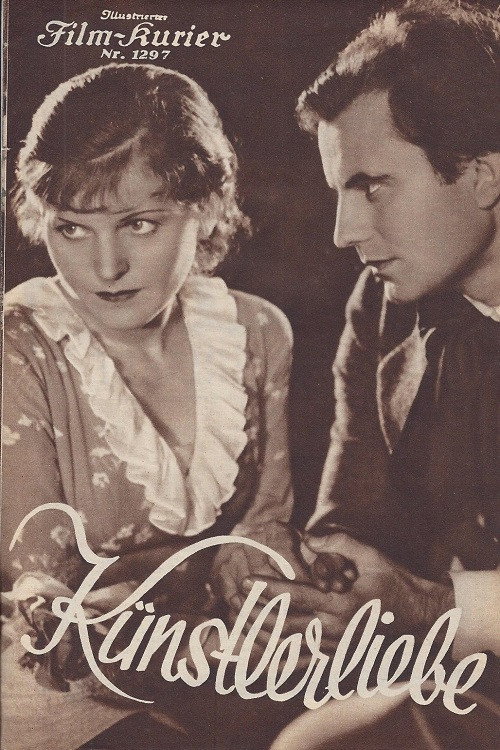 Artist Love (1935)
 The Great King (1942)
 His Late Excellency (1935)
 Anekdoten um den Alten Fritz (1935)
 Fridericus (1937)
 The Higher Command (1935)
- More like this film, on a shelf you can walk up to.It's the lit case on the top shelf.